
We earn a commission if you buy through these links. Learn more
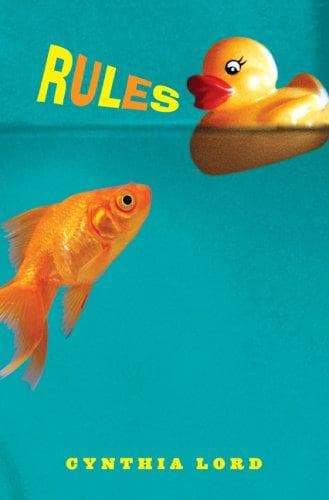
Rules
by Cynthia Lord
Guide by the Books of the Day editors · Updated · How we write our guides
A short, tender middle-grade novel about a girl who loves her autistic brother, is often embarrassed by him, and learns to see both him and herself more clearly through a new friendship.
What Creators Say About Rules
2 creators reviewed Rules on YouTube between 2013 and 2019, with 75K views between them. Their opinions are their own; we picked these reviews, we didn't write them.
What It's About
Rules follows Catherine, twelve, who has spent years managing life around her younger brother David, who is autistic. She keeps a running list of rules for him, a way of making the household predictable and of protecting a little room for her own life, which she worries is being swallowed by his needs. When she befriends Jason, a boy who uses a wheelchair and communicates through picture and word cards, her world widens in ways she did not plan for.
Cynthia Lord writes in close first person, so the book is as much about Catherine's private shame and affection as about the events around her. The prose is plain and quick, the chapters are short, and the emotional beats land through small, concrete moments rather than speeches. Humor comes from David's literal-minded logic and Catherine's dry asides, which keeps the sadness from turning heavy.
Reading it feels like sitting close to a family under strain. It is gentle rather than dramatic, and it asks readers to sit with discomfort, including Catherine's frustrations, which the book does not excuse or tidy up.
Read this if you…
- want a short, emotionally honest novel about siblings and disability
- enjoy quiet stories where the emotional change is gradual and specific
- are a parent, teacher, or sibling looking for a gentle way to talk about autism
Skip it if you…
- want a fast plot with high stakes or a strong central mystery
- prefer fantasy or adventure over realistic family drama
Key Ideas
- 1
Love and embarrassment can coexist
Catherine loves David deeply and is also ashamed of how others see him. The book refuses to pick one feeling over the other. Its honesty about that mix is what makes Catherine's perspective feel real rather than saintly or bitter, and it gives young readers permission to admit their own complicated feelings about siblings.
- 2
Rules as a way to hold on to control
Catherine's list of rules is both a practical tool and an emotional armor. It shows how a child tries to make an unpredictable home manageable. Watching the rules shift over the course of the story gives the reader a quiet, visible measure of Catherine's growth without the book needing to state it outright.
- 3
Friendship that crosses visible difference
Jason's friendship pushes Catherine to look past assumptions about what it means to communicate and to belong. The relationship is not a lesson handed down from above. It develops through ordinary curiosity and small misunderstandings, which keeps it grounded and makes the theme of acceptance feel earned.
- 4
Family strain told from a child's view
The book shows how a family organizes itself around one child's needs and how siblings can end up feeling overlooked. Because we see it through Catherine, the parents' exhaustion and affection are partly visible, and readers are left to notice what Catherine cannot yet articulate.
Limitations
Some readers find the book too tidy in its resolution, and the portrayal of autism is seen through a sibling's eyes, so David's inner life stays mostly outside the reader's reach. The story is also set in a fairly narrow community and focuses on one family, so it does not address wider questions about disability services or school systems. Its voice is intentionally young, which some adult readers may find slight, though it suits its audience well.
Questions Readers Ask
- Is Rules suitable for adults or only for middle-grade readers?
- It is written for middle-grade readers, roughly ages nine to twelve, but many adults read it and find it moving. Its short chapters and plain prose make it an easy read, and its emotional honesty about family life holds up for grown readers. It works especially well as a shared book for parents and children to read together.
- Does Rules portray autism accurately?
- The book is widely read as a thoughtful, affectionate portrayal of an autistic child seen through his sister's eyes. It is not a clinical guide, and David's experiences are shown mainly through Catherine's observations. Readers who want a first-person account from an autistic narrator may want to look at other books alongside this one.
- How does Rules compare to other middle-grade novels about siblings with disabilities?
- Rules is shorter and gentler than many books in this area, and it focuses more on a sibling's ordinary frustrations than on crisis. Readers who want a similar tone often enjoy books about families adjusting to difference, while those wanting more drama may prefer a novel with a stronger plot engine.
- Published
- 2006
- ISBN
- 9780786295593
- Difficulty
- beginner
- Category
- Fiction
Book details and cover from Google Books.
Ready to read Rules?
Get your copy on Amazon, or listen to it on Audible. We earn a commission if you buy through these links.