

The Silver Sword
Ian Serraillier
Like David, the Balicki children cross a war-torn Europe on foot seeking safety, relying on courage, luck and the kindness of strangers in a classic, gently told journey.
Reader-supported: when you buy through links on our site, we may earn an affiliate commission. Learn more
We earn a commission if you buy through these links. Learn more
Find Similar Booksby Anne Holm
A short, quietly powerful novel that follows a boy who has known only confinement as he learns what freedom, trust, and the ordinary world actually mean.
I Am David is a short novel for young readers, first published in Danish in 1963 and later translated into English. It follows a boy who has spent nearly his whole life in a camp, with no memory of anything beyond its walls. When he finally slips away, the story becomes a long, slow journey northward toward a place he has only heard described, and the book tracks how a child with almost no knowledge of everyday life tries to make sense of it.
Holm writes in a plain, close third-person voice that stays with David's point of view. The book explains very little. Instead, simple things he encounters, such as money, beds, mountains, and the sea, carry much of the emotional weight. The prose is spare and calm rather than dramatic, and much of the tension comes from David's watchfulness. He has learned that trusting people can be dangerous, so every kindness he meets raises the question of whom he can believe.
Reading it is an intimate experience for a book this brief. It is written for children, but it does not soften the basic horror of its premise, and it leaves much unsaid, which asks adult readers to fill in the gaps. Expect it to feel more like a parable about freedom than an adventure story, and expect to finish it in one or two sittings.
David has been shaped entirely by confinement, so freedom is not a simple relief for him. He has to learn how to make choices, how to fear the right things, and how to live without being told what to do. The book treats liberation as a process of relearning rather than a single moment of escape.
Because David has no reference points for ordinary life, things most readers overlook become striking. Money, food, weather, and open space all register with a startling clarity. This gives the book its distinctive texture, as the reader sees the world anew alongside a character who has never had the chance to take it for granted.
David's suspicion is not a flaw in the story but its core problem. Every adult who offers help might be an enemy, and the book shows how hard it is to reach for connection when past experience says otherwise. Holm handles this without melodrama, which makes the slow building of trust feel earned.
The book's plainness is deliberate. Holm avoids long explanations of the camp or the politics behind it, letting David's limited understanding define what the reader learns. The result is a story whose gaps and silences often hit harder than direct description would.
The historical setting is deliberately vague, so readers looking for specifics about the regime, the camp, or the events around it will find little. Some readers find the prose too plain and the episodic travel sections repetitive. The book's treatment of its harrowing past is restrained, which some find too gentle for the subject, while others find its hopeful turn more tidy than earned. Its translated style can feel dated to some modern readers.
Reviews from readers on YouTube. Their opinions are their own.
Book details and cover from Google Books.
Ready to read I Am David?
Get your copy on Amazon, or listen to it on Audible. We earn a commission if you buy through these links.
Ian Serraillier
Like David, the Balicki children cross a war-torn Europe on foot seeking safety, relying on courage, luck and the kindness of strangers in a classic, gently told journey.
Lois Lowry
Set in Denmark, David's longed-for destination, this story of a girl helping her Jewish friend escape shares the same quiet bravery and moral clarity.
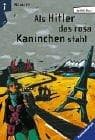
Judith Kerr
A family flees Germany and moves from country to country, and like I Am David it shows a child adjusting to a strange world with honesty and warmth.
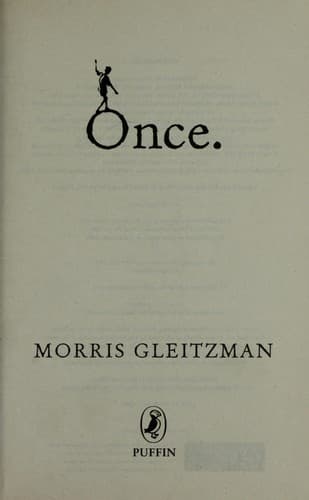
Morris Gleitzman
Felix escapes an orphanage into a dangerous world he only half understands, echoing David's innocence and the gradual, painful discovery of what is happening around him.