
We earn a commission if you buy through these links. Learn more
The Silver Sword
Guide by the Books of the Day editors · Updated · How we write our guides
A short, direct wartime novel about children making their own way across a shattered Europe, worth reading for its clear-eyed courage and its sense of hope under pressure.
What Creators Say About The Silver Sword
2 creators reviewed The Silver Sword on YouTube between 2014 and 2023, with 6.2K views between them. Their opinions are their own; we picked these reviews, we didn't write them.
What It's About
The Silver Sword follows a group of children who are separated from their families during the Second World War and must find their way through a damaged Europe in the years around its end. Ian Serraillier, a teacher and poet, wrote it for younger readers, and the prose is plain and forward-moving. It is a story about travel, hunger, and improvisation more than about battles or politics.
What gives the book its weight is the way it treats ordinary decisions as matters of life and death. The children work out who to trust, how to find food, and when to keep moving. Violence and loss are present but handled matter-of-factly rather than in graphic detail, so the story stays readable for children while never pretending the danger is small. Adult readers will notice how much the book trusts young characters to reason for themselves.
Reading it feels brisk and emotional. The scenery shifts often, and the bonds between the children carry the story more than any single plot turn. It works well in one or two sittings, and it leaves a clear picture of postwar displacement without turning into a history lesson.
Read this if you…
- want a human-scale story of the Second World War told through children
- are reading aloud with or to a child around ten years old and up
- like adventure stories where the emotional stakes are real
Skip it if you…
- want detailed historical analysis of the occupation or the Holocaust
- need morally complex characters or experimental, literary prose
Key Ideas
- 1
Survival as a daily set of choices
Much of the tension comes from small, practical decisions: where to sleep, whom to approach for help, whether to risk a town. The book shows how fear is managed through planning and cooperation rather than heroics, which makes its young characters feel capable without feeling invincible.
- 2
Found family among strangers
The children form a makeshift family that holds together under pressure. Loyalty, quarrels, and protectiveness between siblings and outsiders drive much of the emotional content, and the book suggests that bonds made in crisis can matter as much as blood ties.
- 3
Trust and suspicion in a divided continent
Adults in the story are sometimes kind and sometimes dangerous, and the children have to read them carefully. The book does not sort people neatly into good and bad, which gives older readers a useful way into questions about how ordinary people behaved during the war.
- 4
Hope as a practical habit
Hope in the book is not abstract optimism. It shows up as the refusal to stop searching, the insistence on moving forward, and small acts of care. This makes the ending of each stage feel earned rather than sentimental, while keeping the emotional core intact.
Limitations
Characters are sketched more than psychologically explored, so readers who want deep interiority may find them flat. The episodic structure leans on some convenient coincidences, and the sentiment reflects the conventions of 1950s children's fiction. The book's view is necessarily narrow, following a small group of children rather than offering a wider picture of the war's politics or of German civilians. It is a moving introduction to the subject, not a complete account of it.
Questions Readers Ask
- Is The Silver Sword only for children?
- It is written for younger readers, but many adults read it and find it affecting. Its prose is simple, so the reading is quick, yet the situations deal with displacement, hunger, and loss. Adults who want a gentle entry point into the subject will find it rewarding, though they may want more historical context afterward.
- How does it compare to The Diary of a Young Girl?
- The Diary of a Young Girl is a first-person record written during the war, with an unfiltered, intimate voice. The Silver Sword is an invented third-person adventure built on the real experience of displaced children. Readers who want a personal document should choose Anne Frank, while those who want a narrative with momentum may prefer Serraillier.
- Published
- 1956
- ISBN
- 9780140301465
- Difficulty
- beginner
- Category
- Children's Books
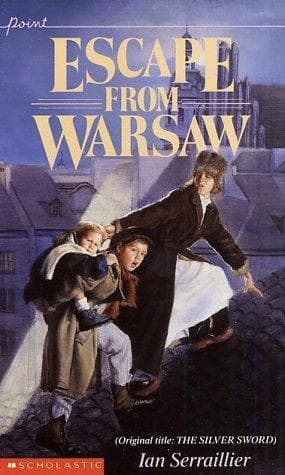
Book details and cover from Google Books.
Ready to read The Silver Sword?
Get your copy on Amazon, or listen to it on Audible. We earn a commission if you buy through these links.