
We earn a commission if you buy through these links. Learn more
Once
Guide by the Books of the Day editors · Updated · How we write our guides
A short, funny, heartbreaking Holocaust novel for young readers, told through a Jewish boy's letters to God, that handles terrible history without losing its warmth.
What Creators Say About Once
2 creators reviewed Once on YouTube between 2015 and 2017, with 23.3K views between them. Their opinions are their own; we picked these reviews, we didn't write them.
What It's About
Once is a novel for young readers set in occupied Poland during the Second World War. It follows Felix, a Jewish boy about ten years old, who has been separated from his parents and sent into hiding under a false identity. He has been taught that survival depends on hiding who he is, and much of the book's tension comes from how much a child can be asked to carry while still being a child.
What sets the book apart is its voice. Felix is funny, stubborn, and very literal about the world, and much of the story arrives through his letters to God, which gives Gleitzman room for both humour and grief. The narration lets the danger surface in small, blunt pieces, so the reader often understands more than Felix does. The result is a fast, emotionally direct read that rarely feels heavy-handed.
Reading it is less like studying history and more like sitting beside a determined kid who is trying hard to make sense of things. It is the first book in a trilogy, so readers who finish it may want to continue. It is written for readers in the upper primary and early teen years, though many adults find it affecting too.
Read this if you…
- want a powerful introduction to Holocaust history for a young reader or a family to read together
- like emotionally direct stories narrated by a funny, observant child
- are looking for a short novel that can be read in a sitting or two
Skip it if you…
- want a detailed historical account of the occupation and its politics
- find sad stories with child protagonists too painful, even when the tone is gentle
Key Ideas
- 1
Childhood seen through a limited view
The Holocaust is present throughout, but Felix only sees fragments of it. The gaps in his understanding let the reader grasp what is happening, which is often more unsettling than a direct description would be.
- 2
Letters to God as a coping device
Felix writes to God to report, complain, and wonder. The device gives him a place to put fear and questions, and it lets the author shift between comedy and sorrow without losing the child's logic.
- 3
Humour as a form of survival
Gleitzman keeps the tone light in places where the situation is grim. The jokes do not undercut the danger; they show how a child keeps going when the adults around him cannot always offer comfort.
- 4
Hiding and the cost of a false identity
Felix has to act out a life that is not his own. The book explores what it means to lose your name, your faith, and your family's way of living, and how that pressure shapes a young person's sense of self.
- 5
Hope held alongside loss
The book does not offer easy certainty. Felix's hope is real and sometimes naive, and the story asks what it means to keep believing when the evidence points the other way.
Limitations
The child narrator means the book stays close to Felix's partial view, so it offers little context about the wider war, the mechanics of persecution, or the perspectives of adults. Some critics feel the humour and warmth soften the historical reality, and the emotional turns can feel carefully managed. Readers who want a more unflinching account may find it too gentle. As a children's book it also simplifies some moral questions, and the sequels vary in strength.
Questions Readers Ask
- Is Once suitable for children?
- Yes, it is written for young readers and is often taught in schools. Its themes are serious, including persecution, separation, and death, but the narration is direct without being graphic. Parents may want to read it alongside a child, since the story raises questions that are worth talking through.
- Do I need to read the rest of the trilogy?
- No, Once works as a complete reading experience on its own. The later books continue Felix's story and deepen it, so readers who connect with him may want to continue. Starting with the first book is the best way to follow the characters.
- How does Once compare to The Diary of a Young Girl?
- Both are first-person accounts of Jewish children during the Holocaust, but Once is a novel rather than a diary, and its tone is much lighter. Anne Frank's book offers a real and more detailed record of a specific life. Gleitzman's novel is more playful and is better suited to readers who want a gentler entry point.
- Published
- 2005
- ISBN
- 9780143301950
- Difficulty
- beginner
- Category
- Children's Books
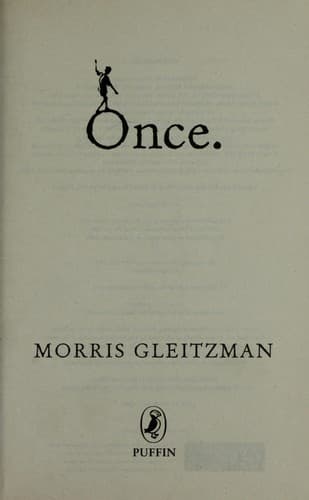
Book details and cover from Google Books.
Ready to read Once?
Get your copy on Amazon, or listen to it on Audible. We earn a commission if you buy through these links.