
We earn a commission if you buy through these links. Learn more
When Hitler stole Pink Rabbit
by Judith Kerr
Guide by the Books of the Day editors · Updated · How we write our guides
A child's-eye view of fleeing Nazi Germany that trades melodrama for a small, specific loss: the toy you had to leave behind.
What Creators Say About When Hitler stole Pink Rabbit
2 creators reviewed When Hitler stole Pink Rabbit on YouTube in 2020, with 1.2K views between them. Their opinions are their own; we picked these reviews, we didn't write them.
What It's About
When Hitler Stole Pink Rabbit is a children's novel by Judith Kerr, first published in 1971, about a nine-year-old girl named Anna and her family leaving Berlin in 1933 as the Nazis take power. Kerr drew on her own childhood, and the book reads less like a history lesson than like a memory. Anna notices things that adults are trying to hide, and her sense of what is happening arrives in pieces.
The story's emotional center is a stuffed pink rabbit that Anna has to leave behind when the family flees. It becomes a quiet emblem of everything else they lose. The book then follows the family through Switzerland, Paris and eventually London, where money is tight, the language is new, and the comfortable life they knew has gone for good. Kerr keeps the prose plain and the sentences short, which makes the moments of fear and uncertainty land harder.
Reading it is a brisk, gentle experience, usually finished in a single sitting. It does not dwell on violence or the Holocaust directly, and it avoids easy villains. Adults often return to it as much as children do, because it treats displacement as ordinary, unglamorous hardship rather than a single dramatic event.
Read this if you…
- want a gentle introduction to the rise of the Nazis for readers around eight to twelve
- are looking for a story about family and displacement rather than battles or atrocities
- want a book that children and adults can read and talk about together
Skip it if you…
- want a detailed historical account of the 1930s or the Second World War
- need a fast-paced plot with high-stakes action or a strong narrative hook
Key Ideas
- 1
Loss shown through small, concrete objects
The pink rabbit is the reader's way into a much larger catastrophe. Kerr lets you feel the scale of what the family gives up through familiar things like a toy, a bed or a routine, so the abstract idea of exile becomes something you can hold.
- 2
A child noticing what adults will not say
Anna picks up on tension, whispered conversations and sudden changes in the household before anyone explains them. The book trusts young readers to sense danger without being told everything, which is why it works for both children and adults.
- 3
Emigration as a long, grinding process
Refugee life is not a single escape but months of waiting, tight money, unfamiliar schools and a language you cannot yet speak. Kerr presents this drudgery honestly, without making it either heroic or hopeless.
- 4
Plain prose with a memoir's honesty
The writing is simple and unshowy. Because it draws on the author's own childhood, the details feel observed rather than researched, and the tone stays matter-of-fact even at painful moments.
Limitations
The book is short and deliberately narrow. It shows the flight from a child's limited vantage point, so readers looking for political context, the wider persecution of Jews, or what happened to people who stayed will find little here. Some readers find the story episodic, since it moves through several places without much dramatic tension. Its gentleness suits young readers, but it can feel restrained to those who expect a more explicit picture of the period.
Questions Readers Ask
- What age is it suitable for?
- It is written for children, typically around eight to twelve, and reads easily at that level. The emotional content is serious but not graphic, which is why it is often used in schools. Parents may want to talk through the historical context afterward, since younger readers may not fully grasp why the family is leaving.
- How does it compare with The Diary of Anne Frank?
- Anne Frank's diary records hiding in one place under threat of deportation and ends in tragedy. Kerr's book covers a different experience: a family that escapes and survives, though not untouched. Readers who want the Holocaust itself should start with Anne Frank. This is a better choice for understanding what flight and exile meant day to day.
- Is it still relevant today?
- Yes. Its subject, families forced to flee persecution and rebuild in a new language, remains current, and the child's-eye view makes it an easy way into conversations about refugees. Some historical detail feels dated, but the emotional core has not aged.
- Published
- 1971
- ISBN
- 9780440490173
- Difficulty
- beginner
- Category
- Children's Books
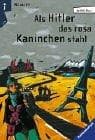
Book details and cover from Google Books.
Ready to read When Hitler stole Pink Rabbit?
Get your copy on Amazon, or listen to it on Audible. We earn a commission if you buy through these links.