
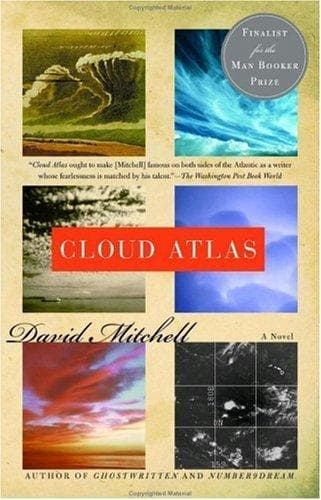
Cloud Atlas
David Mitchell
Six nested narratives in wildly different styles and eras link into one larger pattern, echoing the way Hyperion's pilgrims' tales slowly reveal a shared design.
Reader-supported: when you buy through links on our site, we may earn an affiliate commission. Learn more
We earn a commission if you buy through these links. Learn more
Find Similar Booksby Dan Simmons
Hyperion pairs a sweeping far-future setting with seven interlocking pilgrim tales, each written in a different voice, making it one of science fiction's most ambitious mysteries.
Hyperion is a science fiction novel built like a cathedral of stories. Seven pilgrims travel toward the Valley of the Time Tombs on the planet Hyperion, where a bladed, metallic creature called the Shrike is said to grant what those who reach it most need. Each pilgrim tells the story of how they came to be on this journey, and the core of the book is those seven tales, told in turn. The frame recalls Chaucer's Canterbury Tales, but these travelers are carrying secrets and desperate hopes into a galaxy already tearing itself apart in war.
What makes the book distinctive is how each tale is told. Simmons shifts style and genre from one pilgrim to the next: a priest's account, a soldier's, a scholar's, a poet's, a detective's, and others. Some sections read like hard-edged adventure, others like literary reflection or quiet mystery. The result gives you the texture of several novels inside one. The far future is vividly drawn, with interstellar politics, an oppressive human state, and advanced machine intelligences working in the background.
Expect a slow build and a lot of withheld information. The book asks you to trust that the pieces will connect, and the payoff arrives in stages rather than all at once. It is less a plot-driven thriller than a meditation on love, faith, memory, and what humanity owes its past and future, delivered in lush prose with real emotional stakes. It is the first half of a larger story, so it ends on a deliberately open note.
Rather than one narrator, the book divides its story among seven pilgrims, each recounting a personal history that bears on the journey. Each tale is embedded in the travel itself rather than separated from it. Connections among the stories accumulate slowly, and they reward patience and rereading.
Simmons changes voice, tone, and genre for each pilgrim, so one book holds a war story, a mystery, a religious crisis, and a literary portrait. This variety is the point: the stories expose different ways people search for meaning in a collapsing universe. Readers who want one consistent voice may find the shifts jarring, while readers who enjoy craft will see a demonstration of range.
The Shrike is the book's central enigma, a feared and worshipped entity whose nature remains largely unresolved in this volume. Different characters project onto it their guilt, their hopes, and their theories of power. It works less as a monster to be solved than as a mirror, showing what each pilgrim is willing to believe about justice, judgment, and the cost of asking for help.
Simmons treats time as both physical and emotional. The Time Tombs move backward through time, and the characters' memories are similarly shaped by loss and return. Human society is layered with political control, advanced technology, and old institutions, and the book asks what survives of a civilization when its memory and structures begin to fail.
The biggest criticism is that the book ends unresolved, so it is best read alongside its sequel, Fall of Hyperion. Some readers find the individual tales uneven, with a few voices far more compelling than others, and the extended backstory can slow momentum. The prose is dense and sometimes florid. Some of its cultural and political assumptions feel of their era, and the book does not explain every element of its universe, which is deliberate but frustrating for some readers.
Reviews from readers on YouTube. Their opinions are their own.
Book details and cover from Google Books.
Ready to read Hyperion?
Get your copy on Amazon, or listen to it on Audible. We earn a commission if you buy through these links.
David Mitchell
Six nested narratives in wildly different styles and eras link into one larger pattern, echoing the way Hyperion's pilgrims' tales slowly reveal a shared design.
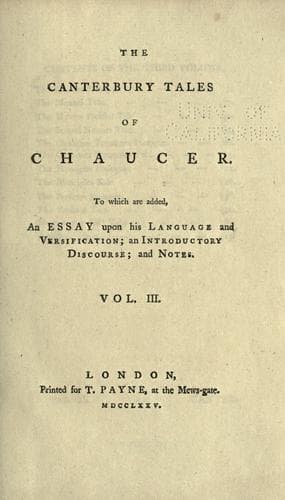
Geoffrey Chaucer, John E. Cunningham
The direct model for Hyperion's frame: a band of pilgrims swapping stories on the road. Reading it shows how cleverly Simmons reworked the structure for the far future.
Max Brooks
Told through dozens of first-person testimonies, it builds a global catastrophe from individual voices, much like Hyperion assembles its galactic crisis through personal confessions.
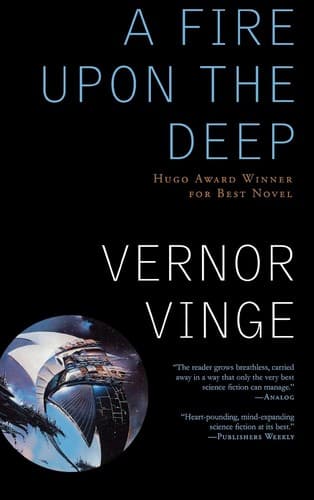
Vernor Vinge
Galaxy-spanning stakes, strange post-human intelligences and truly alien minds give it the same sense of vast, awe-inducing scale that Hyperion's Hegemony and TechnoCore deliver.