Reader-supported: when you buy through links on our site, we may earn an affiliate commission. Learn more

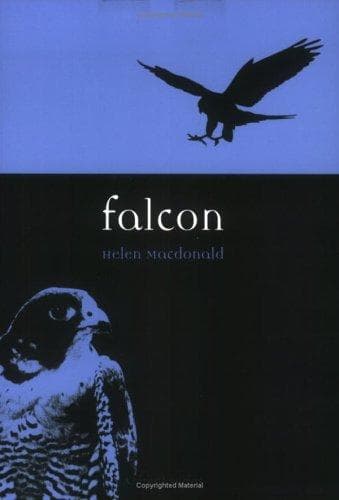
Cover of H Is for Hawk
Buy on AmazonBuy on Bookshop.orgListen on Audible

We earn a commission if you buy through these links. Learn more

Find Similar Books

H Is for Hawk

by Helen Macdonald

On screen: H Is for Hawk (film, July 23, 2026)

Guide by the Books of the Day editors · Updated · How we write our guides

A grieving writer trains a wild goshawk and, in the process, rereads T.H. White's account of his own failed attempt, producing a memoir about loss, obsession, and the wildness we cannot tame.

What Creators Say About H Is for Hawk

2 creators reviewed H Is for Hawk on YouTube between 2015 and 2016, with 72K views between them. Their opinions are their own; we picked these reviews, we didn't write them.

H is for Hawk: How a hawk helped Helen Macdonald recover from griefABC Arts on YouTube51K views · 2015
Helen MacDonald, "H is For Hawk"Politics and Prose on YouTube21K views · 2016

What It's About

H Is for Hawk is Helen Macdonald's memoir of the year after her father died suddenly. Grief sends her to the one project that has always steadied her: raising a goshawk, a fierce and demanding hunting bird. She names the bird Mabel and sets out to train her from scratch, in a state of mind she describes candidly as unmoored and close to self-destruction.

What makes the book unusual is its structure. Macdonald braids her own training diary with a second story, T.H. White's The Goshawk, his famously miserable attempt in the 1930s to tame a hawk through cruelty and sleeplessness. She reads White's account closely, both as a falconer who recognises his mistakes and as a reader who sees his personal anguish under the prose. The result moves between close observation of bird behaviour, literary criticism, natural history, and a frank account of mourning.

Reading it is less like following a plot than like sitting with a sharp, precise mind that keeps circling back to the same wound from new angles. The writing is lyrical but rarely decorative, and the nature passages are exact. Expect long stretches of quiet, some abrupt shifts in tone, and a book that rewards slow attention more than speed.

Read this if you…

  • are drawn to memoirs that combine personal loss with close observation of nature
  • want to understand why some people turn grief into an intense, demanding project
  • enjoy literary criticism and are curious about T.H. White and his book The Goshawk

Skip it if you…

  • want a practical falconry manual or step-by-step training guide
  • need a fast-moving narrative with a clear sense of progress

Key Ideas

  1. 1

    Grief as a force that drives behaviour

    Macdonald does not present grief as a mood she passes through. She shows it pushing her toward an extreme project, one that isolates her, restructures her days, and gives her grief a physical task. The book is interested in how people use obsession to avoid feeling, and in the strange relief that exhausting work can provide.

  2. 2

    Taming versus understanding wild animals

    The central tension is whether a predator can be known without being broken. Macdonald contrasts White's coercive methods with her own slower, more patient approach, and asks what kind of relationship is possible with an animal that is not built to need us. The answers are never simple, and she resists sentimental conclusions.

  3. 3

    Two lives set side by side

    Reading White's life and book alongside her own lets Macdonald examine how a writer's temperament shapes what he sees in nature. The comparison works as criticism of White, but also as a way of looking at her own grief from an outside position. The technique is one of the book's most distinctive features.

  4. 4

    Nature writing that refuses easy comfort

    The book belongs to the nature-writing tradition but resists its usual consolations. Landscape and bird behaviour are described with precision, yet the natural world does not heal the narrator. Macdonald treats the hunting instinct, the countryside, and human appetite for wildness with unromantic honesty.

Limitations

Some readers find the book's digressions into White's life, falconry history, and literary analysis slow or hard to follow without knowing The Goshawk. The emotional register is intense and sustained, which can feel heavy over a full book. Readers uneasy about keeping a wild raptor for personal reasons may find the narrator's choices hard to sympathise with. The book is also a personal account, so its portrait of falconry is one woman's experience rather than a survey of the practice.

Questions Readers Ask

Do I need to read T.H. White's The Goshawk first?
No. Macdonald summarises the essentials of White's story as she goes, so you can follow the book without him. Reading The Goshawk beforehand does add depth, since much of the pleasure lies in seeing how she reads his account against her own. If you enjoy the comparison, reading it afterwards also works well.
Is H Is for Hawk a good first book about falconry?
It is more a memoir about grief than an introduction to falconry. You will learn a great deal about how goshawks behave and how training works, but the book is not organised as instruction. For a practical guide, look for a dedicated falconry handbook and treat this as the personal companion to it.
Published
2006
ISBN
9783548376721
Difficulty
intermediate
Category
Biographies

Book details and cover from Google Books.

Ready to read H Is for Hawk?

Get your copy on Amazon, or listen to it on Audible. We earn a commission if you buy through these links.

Books Like H Is for Hawk

View all →
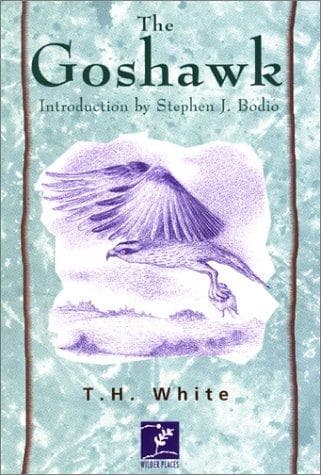
Cover of The Goshawk (A Viking compass book, C291)

The Goshawk (A Viking compass book, C291)

T. H. White

White's account of his own struggle to train a goshawk is the book Macdonald returns to throughout H Is for Hawk. Reading it alongside her memoir shows how much she shares with him, and how differently they approach the bird.

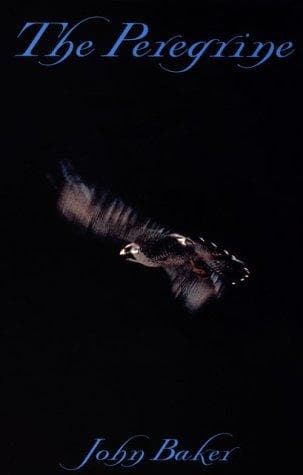
Cover of The peregrine

The peregrine

Baker, J. A.

Baker follows peregrine falcons over one winter with obsessive, almost breathless attention. Like Macdonald, he writes about a hunter's intensity and a landscape seen through a bird's eyes, in prose as vivid as hers.

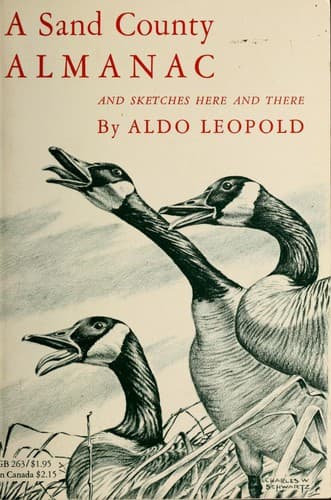
Cover of A Sand County Almanac

A Sand County Almanac

Aldo Leopold

Leopold's essays move through the seasons of one place with the same patient, exact observation that Macdonald brings to her hawk. His sense of the wild as something to be understood on its own terms will feel familiar.

Cover of Grief Is the Thing with Feathers

Grief Is the Thing with Feathers

Max Porter

This short, strange novel is about a father and two boys grieving a mother, with a crow arriving in their house. It shares H Is for Hawk's bird-centred way of approaching bereavement without ever becoming a neat lesson.

Explore More