
We earn a commission if you buy through these links. Learn more
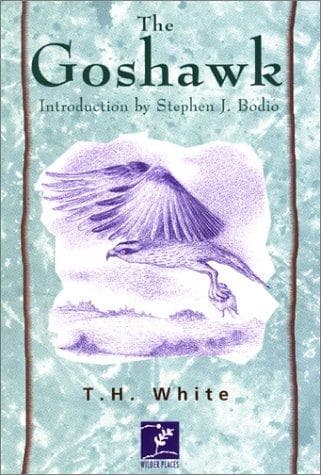
The Goshawk (A Viking compass book, C291)
by T. H. White
An honest, painful memoir of trying to tame a wild goshawk, and a candid look at the author's own temper, loneliness and need for control.
What It's About
The Goshawk is T. H. White's account of his attempt, in the 1930s, to train a goshawk by the old methods of falconry. He chose the hardest route: no shortcuts, no modern tools, just the traditional manuals he could find and his own stubborn belief that a wild bird could be brought to trust a person. Much of the book is a record of the bird's refusals, sulks and sudden flights, written with a patience that often gives way to anger.
What makes it more than a hobbyist's diary is that White keeps turning the lens on himself. The hawk becomes a mirror for his temper, his loneliness and his wish to dominate something that cannot be dominated, and he is unusually frank about the cruelty the training seemed to demand. The prose is dense, funny in places and sometimes uncomfortable, with long digressions into history and reading that readers may either savour or skim.
Reading it feels less like following a how-to and more like sitting with a restless, self-critical companion who knows he is being unreasonable and cannot stop. It rewards slow reading and a tolerance for unresolved feeling. Expect to finish it with a clearer sense of the bird, and perhaps a more uneasy sense of the man.
Read this if you…
- are drawn to nature writing that looks inward as much as outward
- want a memoir of obsession and self-scrutiny rather than a practical manual
- enjoy dense, digressive prose with dry humour and do not mind a slow pace
Skip it if you…
- want a practical guide to training a hawk today, since the methods are dated and the book is not a manual
- find the author's temper and cruelty hard to sit with, or need a brisk, tightly plotted narrative
Key Ideas
- 1
Taming as a test of the trainer
White frames the training less as a skill to master than as a contest that reveals what the trainer is like under pressure. The bird's indifference and sudden defiance keep forcing him to confront his own impatience, and the book's real subject becomes the gap between what he wants to be and how he actually behaves.
- 2
Old falconry methods against modern sensibilities
He relies on the traditional manning and training techniques, which demand long stretches of constant handling and deprivation. Their logic is harsh by modern standards, and White weighs their results against his own sense of decency, so the reader is asked to judge both the method and the man who uses it.
- 3
The goshawk as a genuinely wild other
The bird is portrayed as an animal whose wildness cannot be removed, only negotiated. White's close observation of its moods, hunger and flight gives the book its most vivid passages and its sense that the goshawk is a real creature rather than a symbol for the author's feelings.
- 4
Candour about cruelty and self-deception
The memoir does not flatter its author. He admits to harshness and to rationalising it, and that frankness is what makes the book feel surprisingly modern to readers who arrive expecting conventional nature writing or a practical guide.
Limitations
The methods described are dated, and many would be considered unacceptable by modern falconers and animal welfare standards, so the book should not be used as instruction. White's personality can make the book wearing; some readers find the digressions into his own life and reading slow, and the emotional honesty is uneven across the text. It is also a single, unusual experiment rather than a survey of falconry, and it says little about the wider history of the sport beyond what White encounters himself.
Questions Readers Ask
- Is The Goshawk a good book for someone new to falconry?
- Not as a practical guide. White's methods are old and harsh, and he is often a poor example to follow. It can still work as an introduction to what the sport demands emotionally and physically, and to the texture of a bird's behaviour, but readers who want to train a hawk should look first to modern, welfare-focused manuals.
- How does it compare to other nature memoirs?
- It is more confessional than most. Many nature writers keep themselves out of the frame, while White puts his temper and unhappiness at the centre. The result feels closer to a diary of a difficult personality than to a study of animal life, which is either its main appeal or its main frustration depending on the reader.
- Published
- 1951
- ISBN
- 9780330304108
- Difficulty
- intermediate
- Category
- Biographies
Book details and cover from Google Books.
Ready to read The Goshawk (A Viking compass book, C291)?
Get your copy on Amazon, or listen to it on Audible. We earn a commission if you buy through these links.