
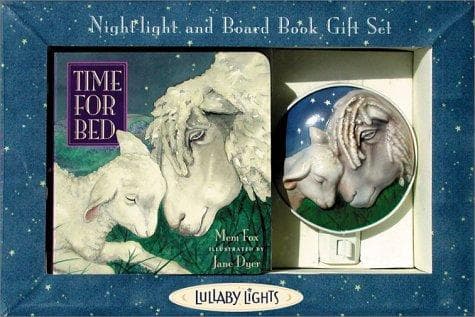
Time for Bed
Mem Fox, Jane Dyer
Like Goodnight Moon, this book moves through the drowsy steps of settling down for the night in soft, repeating lines. Jane Dyer's pastel illustrations carry the same hushed, sleepy mood.
Reader-supported: when you buy through links on our site, we may earn an affiliate commission. Learn more
We earn a commission if you buy through these links. Learn more
Find Similar BooksThe quietest, most rhythmic bedtime book ever made: a slow goodnight to every object in a darkening room that has helped generations of small children fall asleep.
A small rabbit lies in bed in a big green bedroom and, before sleep, says goodnight to everything around him: the moon outside the window, the pictures on the wall, the toys, the clocks, the kittens, and more, one item at a time. There is no plot to speak of. The book's whole purpose is to slow down, name familiar things, and let the day wind to a close.
Margaret Wise Brown's text works like a lullaby, with soft repetition and gentle rhyme that invite a parent to read lower and slower as the pages turn. Clement Hurd's illustrations do much of the quiet work: bright color spreads alternate with small black-and-white vignettes, and the room grows steadily dimmer as the clocks advance. Attentive children love tracking the tiny details, especially a little mouse that turns up somewhere on each color spread.
This 60th anniversary board book version puts the 1947 classic on thick, chewable, wipeable pages sized for babies and toddlers. Reading it takes only a few minutes, but most families end up reading it hundreds of times, and the predictability is exactly the point. For a young child, knowing what comes next is comforting, and the ritual of pointing to each object becomes part of the bedtime routine itself.
The book turns going to sleep into a sequence of small, predictable steps. By saying goodnight to each object, the bunny lets go of the day piece by piece. Children who hear it nightly absorb that rhythm, and many parents find it signals that sleep is coming far more effectively than any instruction to lie down.
Brown wrote with the ear in mind, not the eye. The short lines, repetition, and soft rhymes encourage a hushed reading voice, and the text gets quieter in feel as it goes. Even very young babies who cannot follow the words respond to the cadence, which is why the book works long before a child understands it.
Clement Hurd's art quietly mirrors the passage of time. The room darkens across the book, the moon climbs in the window, and the clocks move forward. These changes reward repeated readings: older toddlers start noticing them, and the visual winding down reinforces the sense that the world is settling into night.
Much of the appeal for toddlers is simple recognition: socks, mittens, a bowl, a brush, a lamp. Pointing and naming builds vocabulary and gives children an active role. The hidden mouse on each color spread adds a small seek-and-find game that keeps restless listeners engaged without disrupting the calm.
There is no story, so children past about age four often outgrow it, and some adults find the slow, list-like text dull or even a bit eerie, with its quiet old lady and empty final pages. The mid-century art feels dated to some modern eyes. Board book formats compress the original picture-book spreads, so small details are harder to see than in the larger hardcover. Notably, it was not universally praised at release; the New York Public Library famously declined to stock it for years.
Book details and cover from Google Books.
Ready to read Goodnight Moon Board Book 60th Anniversary Edition?
Get your copy on Amazon, or listen to it on Audible. We earn a commission if you buy through these links.
Mem Fox, Jane Dyer
Like Goodnight Moon, this book moves through the drowsy steps of settling down for the night in soft, repeating lines. Jane Dyer's pastel illustrations carry the same hushed, sleepy mood.
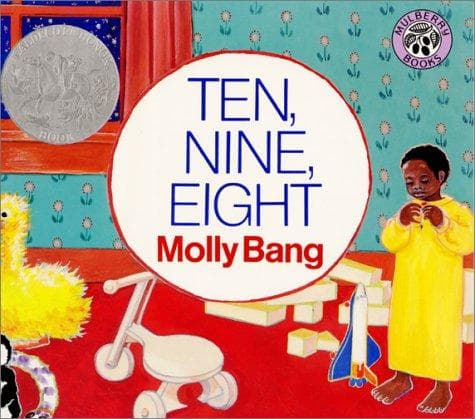
Molly Bang, Clarita Kohen
A countdown structure gives this book the same steady, lulling cadence as Goodnight Moon. A toddler's bedroom slowly darkens as the household winds down, ending in quiet reassurance.
Sylvia Long
Built on a traditional lullaby, this book offers the same soothing sing-song rhythm and tender focus on a child drifting off. Sylvia Long's gentle, detailed artwork suits readers who love Goodnight Moon's calm.
Martin Waddell
Three owl babies wait anxiously in the dark for their mother, a tender story about nighttime worry and comfort. Its soft, quiet tone and cozy repeated phrasing echo the reassuring atmosphere of Goodnight Moon.