
We earn a commission if you buy through these links. Learn more
Ten, nine, eight
Guide by the Books of the Day editors · Updated · How we write our guides
A gentle countdown picture book that turns a nightly routine into a calm, repeatable ritual for toddlers and the adults who read to them.
What It's About
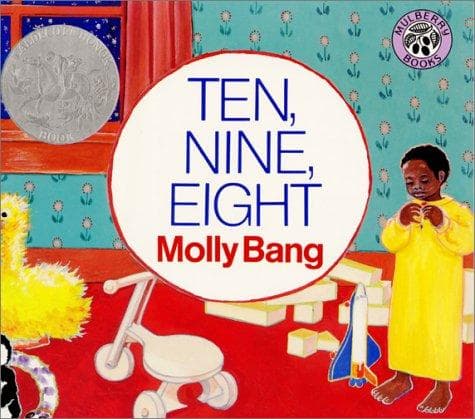
Ten, Nine, Eight is a picture book for the youngest readers, built around a countdown. Its numbers run backward from ten, and each spread pairs a number with a small moment of getting ready for bed in a home where a child and a grown-up move through the evening together. The text is short, so the book works less as a plot than as a sequence of quiet images a child can follow and anticipate.
Molly Bang's illustrations carry much of the meaning. The scenes are uncluttered, so a small reader can name objects, point at what is familiar, and predict what comes next. The reading experience is slow and predictable on purpose. Adults who know the rhythm can let their voices soften as the numbers fall, and children often start counting along before long.
Expect a bedtime book in the truest sense. It does not try to teach a lesson or build suspense; it aims to make the move from play to sleep feel unhurried. Older readers will find little to dig into, but as a read-aloud for toddlers and preschoolers it is simple, focused, and easy to return to night after night.
Read this if you…
- are reading with a toddler or preschooler who resists bedtime
- want a short, predictable book you can read aloud without much preparation
- value soft, uncluttered illustrations that invite a child to talk about what they see
Skip it if you…
- are looking for a story with a plot, conflict, or a satisfying twist
- want a book for older children or for reading alone
Key Ideas
- 1
A countdown as a sleep signal
The backward count gives a child a clear sense of sequence and an ending. Because each number leads to the next, the routine feels predictable rather than abrupt, which is the main reason the book is used at bedtime. The structure does the work that a stern instruction would otherwise have to do.
- 2
Pictures that invite naming and pointing
Much of the book's appeal lies in what happens between the words. Young children are encouraged to identify objects in the room, notice small actions, and connect what they see with what they already know about evenings at home. This turns a passive read into a shared, interactive one.
- 3
Familiar domestic routine as comfort
The book shows ordinary household details rather than a dramatic adventure. For a child who is anxious about separation or resistant to bed, seeing a steady, loving routine rendered calmly can be reassuring. The comfort comes from repetition and recognition, not from any plot twist.
- 4
Quiet pacing as a deliberate choice
Nothing in the book is meant to excite. Its restraint is the point: a slow, low-energy rhythm helps lower a child's activity level. Readers who expect a lively story may find it too still, but that stillness is what makes it useful at the end of the day.
Limitations
The book is deliberately slight. There is little narrative to follow and no real arc, so it offers almost nothing for parents or children who want character development or a lesson beyond the comfort of routine. Some readers may find the pacing too slow or the scenes too similar from page to page. Its appeal depends on repetition, which some families will love and others will tire of quickly. It is also very much a product of its era in its domestic setting, though the routine it describes remains recognizable.
Questions Readers Ask
- Who is Ten, Nine, Eight best for?
- It suits toddlers and preschoolers, especially children who need help settling for the night. Parents, grandparents, and caregivers who read at bedtime will find it easy to use. Older children who read independently are unlikely to find enough in it to hold their attention for long.
- Is it worth reading to a child who already knows their numbers?
- Yes, though for a different reason. A child who knows counting can use the book to practice backward sequences and to predict what comes next. The book is less about learning numbers than about using a familiar count as a calm, ordered ending to the day.
- Published
- 1982
- ISBN
- 9780590652339
- Difficulty
- beginner
- Category
- Children's Books
Book details and cover from Google Books.
Ready to read Ten, nine, eight?
Get your copy on Amazon, or listen to it on Audible. We earn a commission if you buy through these links.