
We earn a commission if you buy through these links. Learn more
Owl Babies
Guide by the Books of the Day editors · Updated · How we write our guides
A tender, short picture book about three small owls waiting alone for their mother, and a gentle way to talk with a young child about fear of being left.
What Creators Say About Owl Babies
2 creators reviewed Owl Babies on YouTube between 2014 and 2021, with 685.1K views between them. Their opinions are their own; we picked these reviews, we didn't write them.
What It's About
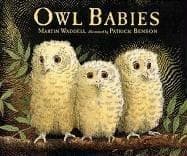
Owl Babies is a short picture book for very young children, usually read aloud to preschoolers and early readers around ages three to five. Three small owls, sitting in a hollow tree, wake one night to find their mother has flown off. The story follows their waiting and the way each owl responds differently: one frets openly, one tries to reassure the others, and the youngest is the one who most wants her to come back.
The text is spare and rhythmic, built on repetition, which makes it easy to read aloud and invites children to chant along. Patrick Benson's illustrations do much of the emotional work, with a dark, moonlit wood in soft browns and blues and the owls' faces carrying feelings the words only hint at. Adults reading it will notice how little is said outright.
The experience is brief and calm rather than tense. There is no real danger, and the book does not try to teach owl biology. It is about patience, about worry and what helps with it, and about a family being apart and then together again. It takes only a few minutes to read, so it works best as a bedtime book that children ask for again and again.
Read this if you…
- are reading with a young child who gets anxious when a parent leaves the room or goes out
- want a short picture book that opens a gentle conversation about feeling scared and being reassured
- enjoy quiet, atmospheric illustrations more than a story with a plot
Skip it if you…
- want a story with action, surprises, or real stakes
- are looking for accurate natural history about owls or a book that teaches facts about wildlife
Key Ideas
- 1
Three owls, three ways of coping
The siblings handle the same situation differently. One is anxious and says so, one looks for comfort by reassuring others, and the youngest simply wants her mother. Children often recognise themselves in one of these responses, which gives parents an easy opening for talking about how different people feel scared in different ways.
- 2
Waiting as the whole story
There is no plot in the usual sense. The drama is entirely the wait, the minutes that feel long when a parent is out of sight. The book treats that stretch of uncertainty seriously without making it frightening, so the reader experiences patience as something that can be gotten through together.
- 3
Repetition built for reading aloud
The repeated phrasing creates a steady, almost lullaby-like rhythm. Children quickly learn the refrains and join in, which turns a worried moment into something predictable and safe. The sound of the text is as important as its meaning, so it is best read out loud rather than skimmed silently.
- 4
Illustrations that carry unspoken feeling
Benson's night-time pictures show the owls' small, huddled bodies against a large, shadowy landscape. The contrast between their size and the dark wood says more about vulnerability than the sentences do. Looking closely at faces and posture is part of the experience, and it rewards a second or third reading.
Limitations
Some readers find the comfort too neat, and the worry is handled so gently that it may not feel like enough for a child with serious separation anxiety. The book is a brief sketch rather than a deep exploration of feelings, and it works best as a starting point for conversation. Its owls are characters rather than accurate animals, so it should not be used for learning about birds. The style is classic and simple, which some modern readers may find slight, though its core message has held up well.
Questions Readers Ask
- What age is Owl Babies best for?
- It is aimed mainly at preschool children, roughly three to five, though toddlers often enjoy its rhythm and older children may appreciate talking about its feelings. Because it is so short, adults can read it in a few minutes, which makes it practical for bedtime or a quiet moment during a busy day.
- Is Owl Babies still worth reading today?
- Yes. The situation it describes, a young child waiting for a parent to return, is as familiar now as it ever was, and the book handles it with warmth and restraint. Its simple text and illustrations still work well with children who are beginning to talk about their own worries.
- Will it help a child who is starting nursery or school?
- It can help open a conversation about being apart from a parent, which is often the hardest part of starting somewhere new. It is not a substitute for real reassurance or routine, but many parents find it useful as a shared way of naming the feeling of waiting for someone to come back.
- Published
- 1975
- ISBN
- 9780744563139
- Difficulty
- beginner
- Category
- Fiction
Book details and cover from Google Books.
Ready to read Owl Babies?
Get your copy on Amazon, or listen to it on Audible. We earn a commission if you buy through these links.