

Gilead
Marilynne Robinson
Like Baldwin's novel, Gilead is a lyrical, interior account of a religious man reflecting on faith, family and what he has passed on to his son. Its devotional tone and attention to ordinary grace will feel familiar.
Reader-supported: when you buy through links on our site, we may earn an affiliate commission. Learn more
We earn a commission if you buy through these links. Learn more
Find Similar BooksGuide by the Books of the Day editors · Updated · How we write our guides
A short, intense novel about a Harlem boy's fourteenth birthday, a storefront Pentecostal church, and the family secrets that surface around one day of prayer. Lyrical, unsparing, and still startling.
2 creators reviewed Go Tell It on the Mountain on YouTube between 2018 and 2021, with 21.2K views between them. Their opinions are their own; we picked these reviews, we didn't write them.
Go Tell It on the Mountain follows John Grimes, a fourteen-year-old in 1930s Harlem, across a single Saturday in March, his birthday, as he works through his feelings about his stepfather Gabriel, the church Gabriel preaches in, and his own sense of being different. The novel is not a simple day-in-the-life. The present-day action at the church and at home keeps giving way to long passages that move back in time to the lives of the adults around John, especially Gabriel and John's mother Elizabeth, so the reader comes to see how each of them arrived at the present.
The style is the main event. Baldwin writes in rhythms borrowed from the King James Bible and from the sermons and spirituals of the storefront church, and his sentences often swell into long, incantatory runs that can feel like prayer or confession. Some readers find the pace slow and the repetitions heavy. Others find the language unusually physical, moving between the sensual and the sacred with little warning.
Reading it is an emotional experience rather than a puzzle to solve. It asks you to stay with characters whose self-deceptions are as vivid as their longings, and it builds toward a climactic scene of religious crisis that is less about doctrine than about what a person does with shame. Expect to read slowly, and you may want to come back to it.
The central tension is not simply whether John will be religious but whether he can become himself while living under a man who claims to speak for God. Gabriel is both a respected preacher and a deeply wounded man, and John must decide how much of that inheritance he will accept. The novel treats this as a question of self-invention that is painful rather than triumphant.
The church gives its members community, music, and a language for suffering, yet it also offers a rigid system of judgment that can crush the people who most need it. Baldwin renders the storefront congregation with obvious love and without sentimentality, showing both what it holds together and what it costs.
Sexuality is presented as the source of much of the characters' guilt and also as the source of their most vital feeling. The book refuses to separate the sacred from the sensual, and that refusal is one of the reasons it was so unusual when it appeared in 1953.
The flashbacks reveal how choices made in youth shape the adults, and how guilt and secrecy pass from one generation to the next. Because the reader sees the backstories before the characters fully confront them, the present-day scenes carry more weight than they might on their own.
The prose draws its cadence from the King James Bible and from Black church oratory and spirituals, giving the narration a liturgical texture. This is the book's most distinctive quality and the one most likely to decide whether a reader feels carried along or held at a distance.
Critics often note that the style can be overwrought, with repetitive syntax and symbolism that sometimes feels heavy-handed. The middle sections, which go back in time, can be dense, and the pacing is uneven for readers used to modern commercial fiction. The novel portrays one family and one storefront church in 1930s Harlem, so it does not represent Black religious life as a whole. Its handling of women and sexuality also reflects the assumptions of its period.
Book details and cover from Google Books.
Ready to read Go Tell It on the Mountain?
Get your copy on Amazon, or listen to it on Audible. We earn a commission if you buy through these links.
Marilynne Robinson
Like Baldwin's novel, Gilead is a lyrical, interior account of a religious man reflecting on faith, family and what he has passed on to his son. Its devotional tone and attention to ordinary grace will feel familiar.
Alice Walker
Walker's epistolary novel follows a young Black woman whose spiritual and moral struggles are shaped by a harsh church-steeped family. Its frank treatment of religion, abuse and self-invention echoes Baldwin's concerns.
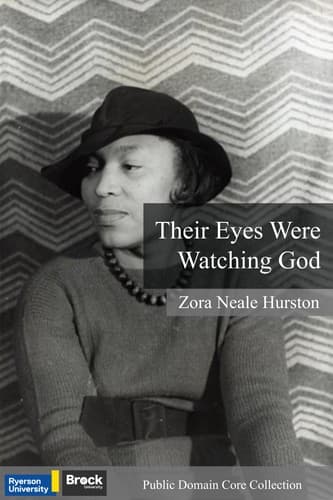
Zora Neale Hurston
Hurston's novel traces a Black woman's search for selfhood through rich, musical prose and vivid community voices. Readers drawn to Baldwin's lyricism and his portrait of a person claiming their own identity will find much to admire.
Ta-Nehisi Coates
Written as a letter to a son, this book shares Baldwin's blend of love and fury about growing up Black in America. Its intimate address and moral urgency will appeal to readers of Go Tell It on the Mountain.