
We earn a commission if you buy through these links. Learn more
Gilead
Guide by the Books of the Day editors · Updated · How we write our guides
A dying Iowa minister writes a long letter to his young son, producing a tender, searching novel about faith, memory, and forgiveness.
What Creators Say About Gilead
2 creators reviewed Gilead on YouTube between 2018 and 2019, with 9.7K views between them. Their opinions are their own; we picked these reviews, we didn't write them.
What It's About
Gilead is narrated by John Ames, an elderly Congregationalist minister in the small Iowa town of Gilead in 1956. He knows his heart is failing, and he is writing to his seven-year-old son, born late in his life, so the boy will have some sense of the father he will barely remember. The novel is that letter, and it has little plot in the usual sense.
Its pleasure lies in the approach. Ames circles back to the same memories from different angles: his own father and grandfather, both preachers with sharply contrasting temperaments, his long friendship with a Presbyterian minister named Boughton, and the return to town of Boughton's wayward son. The sentences are long and unhurried, and the voice belongs to a man thinking aloud, sometimes repeating himself, sometimes pausing to examine a small kindness or a old grievance.
Reading it feels like sitting quietly with someone who has decided to say what matters before time runs out. Little happens on the surface, so the book rewards patience and attention to language. Readers who want momentum may find it slow, but those who settle into its rhythm often find its ordinary scenes unexpectedly moving.
Read this if you…
- want a quiet, reflective novel where attention to language matters more than plot
- are interested in questions of faith, doubt, and forgiveness, even if you are not religious
- enjoy novels told in a single, intimate voice that circles back to memory
Skip it if you…
- need a story with a clear plot, steady pace, or dramatic stakes
- find long passages of theological reflection tiring rather than rewarding
Key Ideas
- 1
Grace found in ordinary days
Robinson treats grace as something noticed in small, daily moments rather than in dramatic conversions. Ames looks for it in a child's laughter, a neighbor's courtesy, or a quiet walk, and the book asks readers to see those moments as serious spiritual events.
- 2
Fathers, sons, and inherited belief
Much of the novel asks what a parent passes on, whether faith, temperament, or the moral debts of an earlier generation. Ames reflects on his own father and grandfather, including a grandfather whose militant convictions sit uneasily beside the gentler faith the family later practiced.
- 3
Forgiveness without neat resolution
The book is less interested in tidy reconciliation than in the difficult work of forgiving people who have not earned it. Its characters carry old wounds and unresolved fault, and the novel lets those tensions stay open rather than resolving them for the reader.
- 4
Writing for someone who will not remember
Ames's letter is an act of love shaped by mortality. Because his son is too young to remember him, the writing has to carry his character, his doubts, and his hopes. That premise gives the novel its urgency and its intimate, confessional tone.
Limitations
Many readers find the book slow, since its long sentences and repeated returns to memory can feel static. The theology is central and sincere, which may distance readers who do not share Ames's Christian frame. Ames is an older white man in a small town in the 1950s, and his view of race, gender, and the wider world is limited, which the novel sometimes engages but does not fully interrogate. Some readers feel the women in the story, especially Ames's wife, are less fully drawn than the men.
Questions Readers Ask
- Do I need to read Home before Gilead?
- No. Gilead stands on its own, and it is the first of a loosely connected set of novels. Home, published in 2008, covers some of the same events from another family's perspective and deepens them. Many readers read Gilead first and then Home, but the order is a matter of preference, not necessity.
- Is Gilead only for religious readers?
- Not necessarily. Faith is the novel's subject and its frame, so it is deeply Christian in its thinking. Still, its concerns with doubt, love, and forgiveness are human ones, and many nonbelievers find it rewarding if they are willing to engage with Ames's sincere voice on its own terms.
- Published
- 2004
- ISBN
- 9781443465977
- Difficulty
- intermediate
- Category
- Fiction
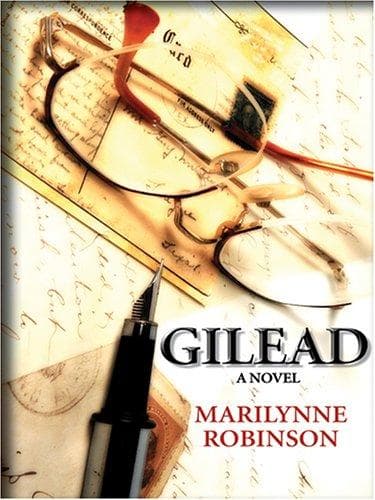
Book details and cover from Google Books.
Ready to read Gilead?
Get your copy on Amazon, or listen to it on Audible. We earn a commission if you buy through these links.