
The Joy Luck Club
Amy Tan
Like Lee's novel, it follows immigrant mothers and their American-raised daughters across generations, showing how love, pride and misunderstanding shape each family's choices.
Reader-supported: when you buy through links on our site, we may earn an affiliate commission. Learn more
We earn a commission if you buy through these links. Learn more
Find Similar Booksby Min Jin Lee
Guide by the Books of the Day editors · Updated · How we write our guides
A sharp, sympathetic debut about a Queens-raised Princeton graduate caught between her immigrant family's expectations and her hunger for Manhattan's glamour, with money problems never far away.
2 creators reviewed Free Food for Millionaires on YouTube between 2025 and 2026, with 1.1K views between them. Their opinions are their own; we picked these reviews, we didn't write them.
Free Food for Millionaires is Min Jin Lee's first novel, published years before Pachinko made her a household name. It follows Casey Han, a strong-willed daughter of Korean immigrants who grew up in Queens, graduated from Princeton with an economics degree, and now finds herself without a job, without much money, and in a relationship her parents would not accept. Her ambitions push her toward the wealthy circles of Manhattan, a world she can see clearly but cannot easily afford.
The book is a wide, patient novel rather than a tight thriller. Lee moves between Casey's world and the lives of her parents and the Korean-American community around them, so the story becomes as much about family obligation and the costs of assimilation as about one woman's career and love life. The narration stays close to Casey, and the prose is clear and conversational, which makes the book easy to move through even when its subject is uncomfortable.
Reading it feels like watching someone make choices you can understand and sometimes wish she would not make. Lee is interested in the gap between how people appear and how they live, and she writes about money with unusual honesty: who pays, who pretends, and what pride costs. The result is an engrossing, emotionally generous book that asks more questions than it answers.
Casey's drive is not simply personal. It is tangled up with what her parents sacrificed, what they expect in return, and what they can and cannot understand about the world she wants. Lee treats this pressure as a real force that shapes decisions, not as a backdrop to a coming-of-age story.
The title points to one of the book's central images: wealthy people scrambling for free perks while others refuse help they badly need. Lee uses everyday money matters to show how class identity is performed, hidden, and defended, especially within a community that values appearing self-sufficient.
The novel explores what it means to move toward a world that was not built for you. Casey learns that access can require giving up parts of her family, her culture, and her sense of where she belongs, and the book does not pretend those losses are small.
Lee writes her characters with a notable lack of cruelty. Even when Casey and her relatives behave badly or foolishly, the narration tries to explain the fears and hopes behind their actions. Readers who want clear heroes and villains may find this frustrating, but it is central to the book's emotional texture.
Some readers find the novel loose and overlong, with scenes that circle the same worries about money and status without always deepening them. Casey can also be hard to warm to, since her pride and defensiveness sometimes make her difficult to root for. Because it is an early book, the prose and structure are less polished than in Lee's later novels, and the portrait of the Korean-American community, while sincere, is seen through a specific class and generation rather than offering a broad survey.
Book details and cover from Google Books.
Ready to read Free Food for Millionaires?
Get your copy on Amazon, or listen to it on Audible. We earn a commission if you buy through these links.
Amy Tan
Like Lee's novel, it follows immigrant mothers and their American-raised daughters across generations, showing how love, pride and misunderstanding shape each family's choices.
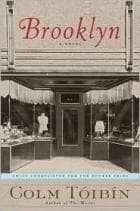
Colm Tóibín
A young Irish woman's move to New York, her homesickness and her difficult choices between two worlds echo Casey's struggle to build a life in a city that demands a lot.
F. Scott Fitzgerald
Its outsider narrator, glittering wealth and sharp view of who gets invited in will appeal to readers drawn to Casey's longing for the Manhattan elite.
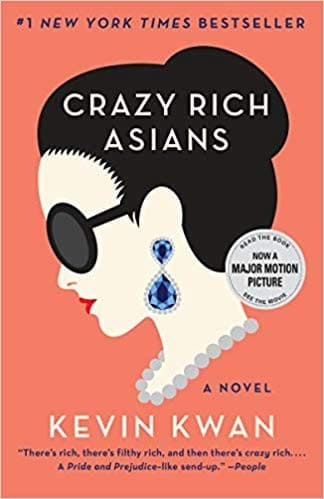
Kevin Kwan
A witty, socially sharp novel about Asian characters navigating old money, family expectations and status, offering the same mix of satire and warmth that Lee brings to Casey's world.