
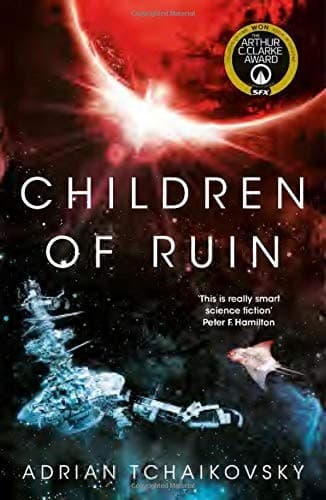
Children of Ruin
Adrian Tchaikovsky
The direct sequel continues the spider-and-human storyline, but it is a different volume in the series, so it is listed only as a reminder that more follows the same world.
Reader-supported: when you buy through links on our site, we may earn an affiliate commission. Learn more
We earn a commission if you buy through these links. Learn more
Find Similar BooksGuide by the Books of the Day editors · Updated · How we write our guides
A sprawling, emotionally serious science fiction novel that follows an evolving spider civilization and stranded human survivors, asking what intelligence and civilization really require.
2 creators reviewed Children of Time on YouTube between 2021 and 2025, with 111.9K views between them. Their opinions are their own; we picked these reviews, we didn't write them.
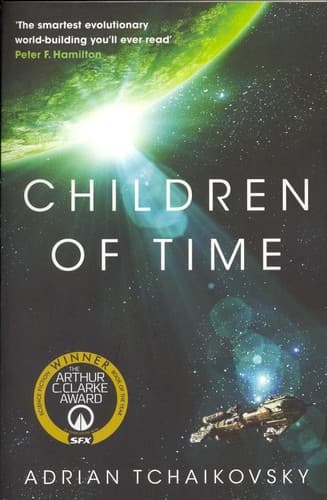
Children of Time is a science fiction novel that follows two lineages across a very long span of time. On one side is a scientist's terraforming project on a distant world, meant to prepare a new home for a dying humanity. On the other is a spider species that, through an accident of that project, begins a climb toward intelligence no one planned for. The chapters alternate between these threads, so the reader watches a young spider society build itself from scratch while the human survivors of a failed journey struggle to find their place among them.
The approach is part hard science, part anthropology. Tchaikovsky is most interested in how minds work when they are shaped by different senses, bodies and needs. The spider sections in particular feel like a thought experiment about cultures that cannot share a common language of faces or speech. The human sections are more conventional, driven by survival, mistrust and the hard choices of a crowded ship.
Reading it is absorbing and often tense, with a pace that leans toward adventure and a large sweep of history that gives the book real depth. It rewards patience with the strangeness of its nonhuman viewpoints and invites you to consider what a civilization truly needs in order to endure.
The novel treats intelligence not as a human birthright but as something that can arise from a chance intervention in a different species. That premise lets Tchaikovsky ask how much of our sense of superiority depends on being the first to get there, and what it would feel like to be the second.
The spider sections explore how thinking changes when the body is built around smell, vibration and touch rather than sight and speech. Their culture is made of signals and inherited knowledge that do not translate neatly into human terms, which makes their perspective feel genuinely alien rather than a costume for human concerns.
Much of the book's interest lies in how knowledge, custom and technology accumulate over many lifetimes. Tchaikovsky shows how a society becomes a civilization through passed-down memory and experimentation, and how fragile that process can be when resources or trust run short.
The human storyline puts pressure on the idea of rescue and ownership. Confined to a ship with dwindling options, the survivors must decide what they owe to other beings and to each other, and the answers they reach are not always comfortable.
Some readers find the human characters less vivid than the spiders, and their storyline can feel more familiar and less inventive. The science is pragmatic rather than rigorous; Tchaikovsky prioritizes plausibility and narrative logic over exact detail, which may frustrate hard science fiction purists. The pacing shifts between timelines and perspectives, so some readers may find the alternating structure disorienting at first. The book also asks a lot of patience, since its most rewarding ideas unfold gradually rather than through big set pieces.
Book details and cover from Google Books.
Ready to read Children of Time?
Get your copy on Amazon, or listen to it on Audible. We earn a commission if you buy through these links.
Adrian Tchaikovsky
The direct sequel continues the spider-and-human storyline, but it is a different volume in the series, so it is listed only as a reminder that more follows the same world.
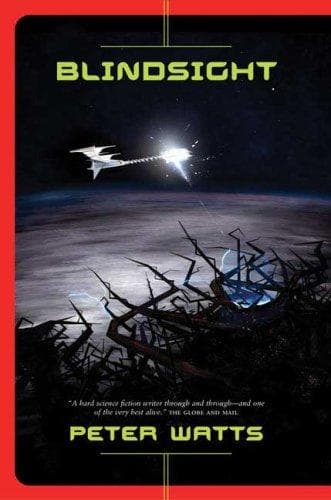
Peter Watts, Peter Watts
Like Children of Time, it asks what intelligence means when it is not human, using a first-contact crew and a biologically rigorous approach to alien minds.
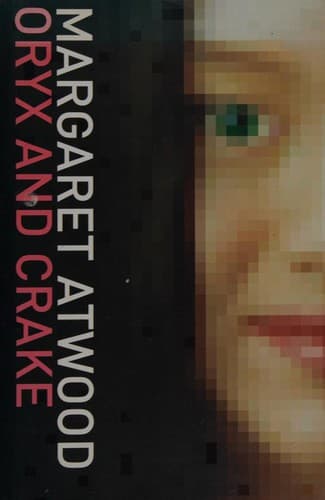
Margaret Atwood
Its interest in engineered life and humanity's ecological mistakes echoes the book's hard-edged look at what people do to the worlds and species they reshape.
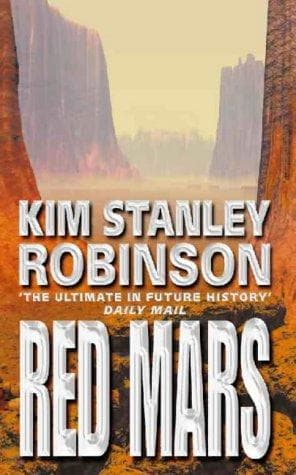
Kim Stanley Robinson
A long, detailed account of humans settling and remaking another planet, with the same patient attention to engineering, politics and the cost of colonisation.