
We earn a commission if you buy through these links. Learn more
Stoner
Guide by the Books of the Day editors · Updated · How we write our guides
A quiet, devastating novel about an ordinary academic whose life is shaped by stubbornness, love, and the slow erosion of ambition, written with unusual precision.
What Creators Say About Stoner
2 creators reviewed Stoner on YouTube between 2019 and 2024, with 61.9K views between them. Their opinions are their own; we picked these reviews, we didn't write them.
What It's About
Stoner follows William Stoner, raised on a Missouri farm, who enrolls at the state university to study agriculture and finds literature instead. The book traces his decades as an English teacher at the same institution. It is built from close attention to ordinary routines: classes, departmental politics, a strained marriage, and a daughter he struggles to reach. Little happens in the way thriller readers expect, but a great deal happens inside a single careful life.
John Williams writes in a plain, controlled prose style, with long stretches of quiet observation punctuated by sharp scenes of conflict. The narrator keeps a measured distance from Stoner, which makes his inner life feel both close and slightly out of reach. The result is less a story of dramatic events than a steady accumulation of small choices, and the reader gradually sees how each one narrows what Stoner can become.
Reading it is an absorbing, melancholy experience. It is short enough to finish in a few sittings, but it lingers. Many readers find it moves them more than they expected, and some are struck by how much it says about integrity and the cost of staying true to what matters.
Read this if you…
- want a patient, character-driven novel about an ordinary life rather than a plot-heavy story
- are drawn to books about work, ambition, and the quiet costs of staying principled
- appreciate precise, restrained prose that rewards slow, attentive reading
Skip it if you…
- need fast pacing, suspense, or a clear arc of high stakes
- find stories of disappointment and emotional restraint hard to sit with
Key Ideas
- 1
Integrity as a quiet, costly stubbornness
Stoner's refusal to bend is rarely heroic or loud. It shows up as declining easy compromises, keeping his opinions to himself when it matters, and sticking with work he cares about even when it brings him no reward. The book asks whether that kind of steadiness is a virtue or a failure to adapt, and it leaves the answer deliberately open.
- 2
Academic life as a private battlefield
The university is not a refuge of ideas in this novel. Office rivalries, petty grudges, and the quiet power of senior colleagues shape Stoner's career as much as his scholarship. Williams shows how institutions can grind down a person through small humiliations rather than through any single decisive blow.
- 3
Love that fails without a clear betrayal
Stoner's marriage does not collapse because of one dramatic act. It erodes through misunderstanding, resentment, and two people who cannot reach each other. The novel treats this slow failure with unusual honesty, and many readers find it more painful for lacking a villain.
- 4
Literature as a way of seeing
For Stoner, reading and teaching literature is not an escape from life but a means of understanding it. The novel does not lecture about books; it shows how a lifelong attachment to language can give meaning to a life that otherwise looks modest from the outside.
Limitations
Stoner is slow, and its restraint can feel static to readers who want more event or interiority. Some critics note that its women characters, especially Stoner's wife, are seen mostly through his eyes and can feel thinly drawn. The book is also unrelentingly bleak, with few moments of relief. It was largely overlooked when first published in 1965 and was revived only decades later, so its reputation now sometimes outruns the experience of reading it.
Questions Readers Ask
- Is Stoner a good book for someone who doesn't usually read literary fiction?
- Yes, as long as you enjoy character-focused stories. The sentences are clear and the story is easy to follow. The challenge is emotional rather than linguistic: the book moves slowly and offers few dramatic payoffs, so it works best for readers who are comfortable with quiet, reflective narratives.
- How does Stoner compare to Richard Yates's Revolutionary Road?
- Both novels portray ordinary people trapped by their choices and the gap between their ambitions and their lives. Revolutionary Road is sharper and more openly dramatic, with biting dialogue and a more visible sense of conflict. Stoner is quieter and more inward, and readers who want that same emotional honesty in a gentler, more meditative register often prefer it.
- Published
- 1965
- ISBN
- 9788202436209
- Difficulty
- beginner
- Category
- Fiction
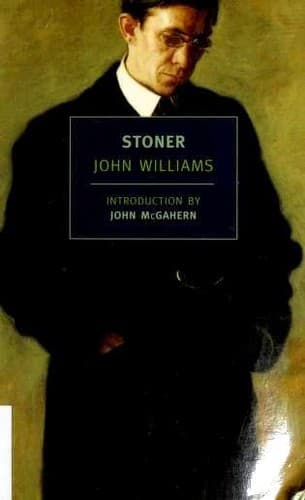
Book details and cover from Google Books.
Ready to read Stoner?
Get your copy on Amazon, or listen to it on Audible. We earn a commission if you buy through these links.