
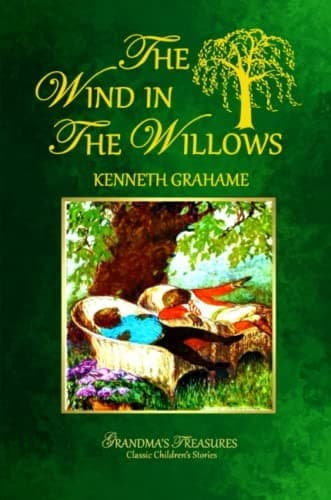
The Wind in the Willows
Kenneth Grahame
Like Mackesy's mole and fox, Grahame's riverbank animals form a loyal, gently humorous friendship. Mole's homesickness and Rat's steady companionship echo the quiet loyalty at the heart of the source book.
Reader-supported: when you buy through links on our site, we may earn an affiliate commission. Learn more
We earn a commission if you buy through these links. Learn more
Find Similar BooksGuide by the Books of the Day editors · Updated · How we write our guides
A gentle, sparse illustrated book about kindness and fear, built from small moments between a boy and three animals, worth an hour of anyone's time.
2 creators reviewed Boy, the Mole, the Fox and the Horse on YouTube in 2021, with 97.5K views between them. Their opinions are their own; we picked these reviews, we didn't write them.
The Boy, the Mole, the Fox and the Horse is a small illustrated book in which a boy, a mole, a fox and a horse meet, talk, and look after one another. Mackesy's drawings are loose ink and watercolour sketches, and the text is spare: most pages carry a short line of dialogue or a single thought, sometimes just a few words. Its shape is closer to a fable or a book of gentle sayings than to a novel, and there is no conventional plot to follow.
What makes the reading experience distinctive is the pacing. You can finish it in under an hour, but it rewards slow looking, because the pictures often say as much as the words and the characters' small gestures carry the emotion. The animals are quietly honest about fear, loneliness, and wanting to be loved, and the tone stays warm without tipping into sentimentality most of the time.
Reading it feels less like being told a story and more like sitting with a companion who keeps offering you a reminder. Some readers find it a balm to pick up on hard days; others find it thin for the price of a hardback. Either response is reasonable, and the book works best when you read it as a gift to yourself or to someone else rather than as a work to analyse.
The book treats kindness less as a feeling than as a set of ordinary actions: staying nearby, asking what someone needs, and noticing when a friend has gone quiet. The characters show care in small, repeatable ways, which makes the idea feel usable rather than lofty.
The characters admit to fear, confusion, and a need for company without embarrassment. Rather than framing openness as weakness, the book suggests that being honest about what hurts is what allows real closeness to form between very different creatures.
The group is an unlikely mix of species and temperaments, and their differences never disappear. The book's quiet argument is that companionship does not require sameness, only a willingness to keep showing up for one another.
Darkness and difficulty appear throughout, but the book keeps returning to the idea that comfort and light remain available. It avoids easy cheerfulness, and that restraint is part of why its hopeful moments land with more weight than they might otherwise.
The drawings carry real meaning, through posture, expression, and empty space. The sparse text leaves room for the reader to fill in the gaps, so the book becomes more personal the more slowly it is read.
Critics and some readers find the sayings repetitive or sentimental. The wisdom is broad rather than deep, and the book does not explore its themes in detail or offer a framework for applying them. Its fable-like form means there is little narrative tension, so readers used to novels may feel short-changed. Because it leans on widely shared feelings, it can seem generic on a second reading, and its appeal depends partly on taste for its drawing style and soft tone.
Book details and cover from Google Books.
Ready to read Boy, the Mole, the Fox and the Horse?
Get your copy on Amazon, or listen to it on Audible. We earn a commission if you buy through these links.
Kenneth Grahame
Like Mackesy's mole and fox, Grahame's riverbank animals form a loyal, gently humorous friendship. Mole's homesickness and Rat's steady companionship echo the quiet loyalty at the heart of the source book.
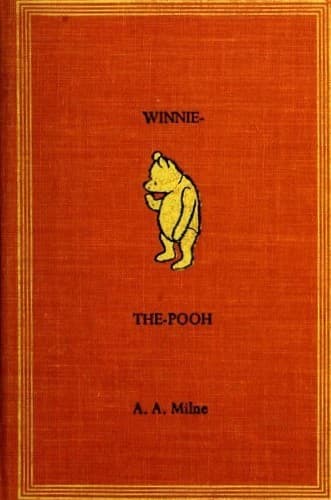
A. A. Milne
Pooh and his friends share the unhurried, affectionate tone that makes The Boy, the Mole, the Fox and the Horse so comforting. Each short chapter celebrates small kindnesses between unlikely companions.
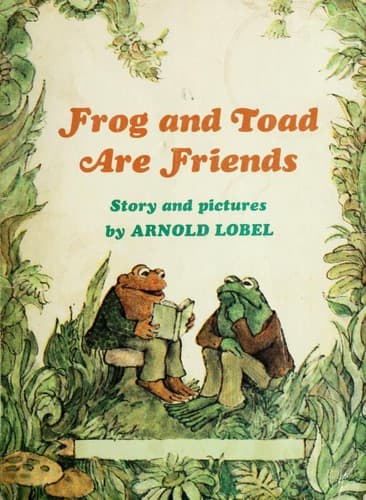
Arnold Lobel
Lobel's short, simple stories show friendship as patience, honesty and care, much as Mackesy does. Its spare sentences and warm drawings suit readers who enjoyed the source book's gentle minimalism.
Antoine de Saint-Exupéry
This fable also uses a simple, childlike voice to ask big questions about love, loss and what truly matters. Like the source book, it rewards slow reading and returning to it years later.