
We earn a commission if you buy through these links. Learn more
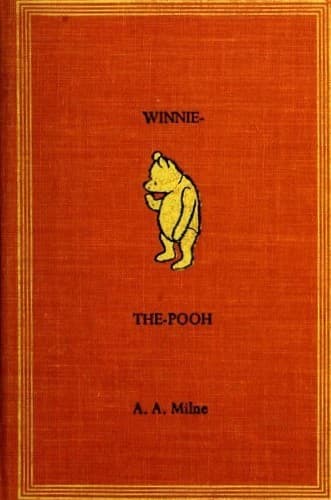
Winnie-the-Pooh
by A. A. Milne
A gentle, very funny set of short stories about a bear who loves honey and his friends in the Hundred Acre Wood, with wit that lands for adults as well as children.
What It's About
Winnie-the-Pooh is a set of short, self-contained stories about a bear with a fondness for honey and a very small amount of brain, and the friends he keeps company with in the Hundred Acre Wood: Piglet, Eeyore, Owl, Rabbit, and the boy Christopher Robin. Most chapters are small episodes, such as a search, a visit that goes wrong, or a plan that makes perfect sense to its author and to no one else. E. H. Shepard's pen-and-ink drawings are part of the experience.
Milne's narrator talks directly to the reader, half serious and half teasing, and much of the humor comes from the gap between how the characters see themselves and what they actually do. Pooh reasons his way through trouble with cheerful confidence, Eeyore faces every day with stoic gloom, and Owl hides a thin layer of pomposity under big words. The sentences are short and rhythmic, built to be read aloud, so the book has a spoken quality that a silent reader can still hear.
Reading it is less like following a plot than sitting in a warm room with someone who knows exactly how small worries feel. There is no grand arc to chase, and the stories can be read one at a time over an evening. Adults often find the wit sharper than they expected, and children tend to enjoy it on its own terms without needing it explained.
Read this if you…
- want a warm, funny book that works for both children and adults
- enjoy dry, affectionate narrators who gently mock their own characters
- are looking for a classic to read aloud at bedtime
Skip it if you…
- need a story with a strong plot and rising stakes
- find gentle, whimsical humor tiresome or overly sweet
Key Ideas
- 1
Friendship as the book's real engine
The stories run on loyalty more than on events. The characters notice each other's moods, cover for each other's blunders, and show up when someone is sad or lost. Even when a plan collapses, the emotional point is usually that the group stuck together, which gives the book its consistent warmth without any need for dramatic stakes.
- 2
Comedy born from self-importance
Each character has a fixed view of themselves that the narrator quietly undercuts. Pooh thinks he is clever, Owl believes he is wise, and Rabbit assumes he is in charge. Much of the fun is watching these confident assumptions meet ordinary reality, and it is often the adult reader who catches the joke first.
- 3
Childhood seen through a wry adult eye
The book takes a child's world seriously while gently smiling at it. Milne writes with affection for the games, rules, and worries of early life, but he also looks at them from a little distance. That double view is why the book can satisfy a child reading it at bedtime and a grown-up rereading it decades later.
- 4
Episodic structure built for reading aloud
Because each story stands alone, the book works in short sittings and can be picked up at any point. The repetitive phrasing, the careful timing of jokes, and the clear dialogue make it a natural read-aloud text. Readers looking for a single continuous plot will find the form loose, but readers who enjoy short, well-shaped pieces will find it easy to return to.
Limitations
The book has very little plot, so readers who expect momentum or a clear through-line may feel it drifts. Some modern readers find the tone twee, and the nursery world of a privileged boy with his toys can seem remote from many children's lives today. The depiction of Kanga and Roo and some of the characters' attitudes reflect the period in which it was written. Many people also know the cheerful Disney versions, which differ in tone from Milne's drier, more melancholy original.
Questions Readers Ask
- Is Winnie-the-Pooh only for children?
- No. It is written for young readers, but many adults enjoy it, especially for the dry narrator and the characters' self-importance. Reading it aloud to a child often becomes its own pleasure, and adults tend to notice jokes that go past younger listeners.
- How is the book different from the Disney films?
- The book is more understated and more wry than the films. Milne's narrator is a presence in his own right, and Eeyore's gloom and Pooh's simplicity have a sharper edge on the page. The films are brighter and more song-driven, and they add characters and a more continuous story than the original stories have.
- Should I read it in order?
- Not necessarily. The stories are largely self-contained, so you can start anywhere and read them in any order. Many readers prefer to go through a few at a time, which suits the book's short, episodic shape.
- Published
- 1925
- ISBN
- 9780525242673
- Difficulty
- beginner
- Category
- Fiction
Book details and cover from Google Books.
Ready to read Winnie-the-Pooh?
Get your copy on Amazon, or listen to it on Audible. We earn a commission if you buy through these links.