
We earn a commission if you buy through these links. Learn more
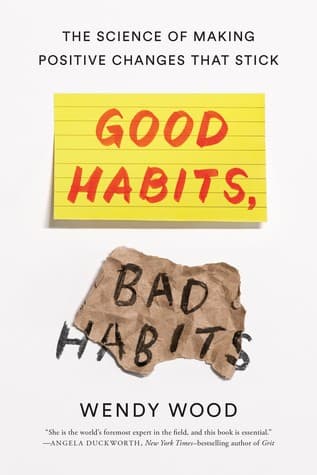
Good Habits, Bad Habits
by Wendy Wood
Guide by the Books of the Day editors · Updated · How we write our guides
Wood's research-backed case that most daily behavior runs on context rather than willpower, with practical ways to make good habits easier and bad ones harder.
What Creators Say About Good Habits, Bad Habits
2 creators reviewed Good Habits, Bad Habits on YouTube between 2022 and 2023, with 4K views between them. Their opinions are their own; we picked these reviews, we didn't write them.
What It's About
Good Habits, Bad Habits is a popular-science book by Wendy Wood, a psychology researcher who has spent decades studying how everyday behavior is formed and repeated. Its central move is to separate habits from goals and intentions: a habit is a response that fires automatically when a familiar situation appears, so it can persist even after you no longer want it.
Wood spends much of the book explaining why simply repeating an action is not enough to create a habit, and why changing your mind is rarely enough to break one. She draws on research from her own work and a range of everyday examples, from eating and exercise to phone use and household routines. The tone is practical and calm rather than hype-driven, and she often asks readers to notice the cues in their own days.
Reading it feels less like being pushed to change and more like being handed a set of diagnostic questions and tools. You get a clearer picture of why certain patterns survive, along with a method for redesigning your surroundings so the right action becomes the default. It rewards readers who are willing to test ideas on one habit over a few weeks rather than making sweeping resolutions.
Read this if you…
- want a research-grounded explanation of why willpower alone keeps failing
- are trying to change a daily routine like eating, exercise, or phone use
- are going through a move, new job, or other life change and want to reset your routines
Skip it if you…
- want a quick, motivational read with a fast action plan
- are looking for treatment-focused guidance on addiction or compulsive disorders
Key Ideas
- 1
Habits are triggered by context, not intention
Much of what you do each day is cued by the place you are in, the time, the objects around you, or the people nearby. Wood argues that these cues fire routines automatically, which is why a good intention can evaporate the moment you walk into a familiar setting. Understanding the cue is the first step to changing the response.
- 2
Friction is the most practical lever
Because habits run on autopilot, small obstacles can matter a great deal. Wood suggests adding friction to unwanted behavior, such as moving a tempting item out of sight, and removing friction from wanted behavior, such as keeping running shoes by the door. The idea is less about discipline and more about designing the path of least resistance.
- 3
Life changes open a window for new routines
Moving, changing jobs, or other disruptions break the link between old cues and old actions. Wood presents these transitions as a rare opportunity to build new habits, because the usual triggers are temporarily gone. She encourages readers to deliberately set up a new routine during such moments instead of waiting for willpower to do the work.
- 4
Goals and habits operate on separate tracks
Wood distinguishes between the goals you consciously pursue and the habits that carry out the daily actions. A person can be fully committed to a goal and still be undermined by a habit that runs independently. Seeing these as two systems helps explain why knowing what you want is often not enough to change what you do.
Limitations
Some readers find the book repetitive, since the core ideas about context, friction, and repetition recur across chapters with different examples. The advice is mostly general and aimed at everyday habits, so it does not offer clinical strategies for addiction, anxiety-driven compulsions, or other conditions that need professional care. It also reflects research up to its publication, and it is more persuasive as a framework than as a fully tested program. Readers looking for detailed step-by-step plans may need to build their own.
Questions Readers Ask
- Who is Good Habits, Bad Habits best suited for?
- It suits general readers who want to understand why routines persist and how to change them without relying only on motivation. It is accessible without being simplistic, and it works well for people trying to change one or two specific behaviors. Readers who want clinical guidance or a rapid, inspirational plan will probably find it less useful.
- How does it compare to Atomic Habits?
- Atomic Habits is more narrative and offers a memorable system of small changes, while Wood's book is more research-focused and explains the psychology underneath. If you want practical tactics with a story-driven structure, Atomic Habits may suit you better. If you want to understand why habits work the way they do, Wood's book is the stronger choice.
- Is the book still relevant?
- Yes, because its core ideas about cues, context, and repetition are about how human behavior works rather than about current trends. Some examples and technology references may feel dated, particularly around digital habits, but the framework still applies to modern routines.
- Published
- 2019
- ISBN
- 9781250159076
- Difficulty
- beginner
- Category
- Psychology
Book details and cover from Google Books.
Ready to read Good Habits, Bad Habits?
Get your copy on Amazon, or listen to it on Audible. We earn a commission if you buy through these links.