
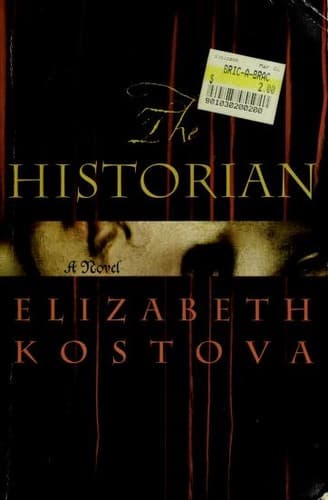
The Historian
Elizabeth Kostova
Like Harkness's book, it follows a scholar chasing old manuscripts and buried history across Europe, with research, libraries and a slowly unfolding mystery at its heart.
Reader-supported: when you buy through links on our site, we may earn an affiliate commission. Learn more
We earn a commission if you buy through these links. Learn more
Find Similar BooksGuide by the Books of the Day editors · Updated · How we write our guides
A slow-burning fantasy romance that treats witches, vampires and daemons as an old, political society, and makes Oxford's libraries feel like part of the magic.
2 creators reviewed A Discovery of Witches on YouTube between 2018 and 2022, with 11.2K views between them. Their opinions are their own; we picked these reviews, we didn't write them.
A Discovery of Witches is the first book in Deborah Harkness's All Souls trilogy, and it blends an academic mystery, a romance and a supernatural world into one leisurely novel. Its heroine, Diana Bishop, is a historian of science who studies early alchemy and has deliberately kept her magical gifts at a distance. When she calls up an old manuscript from the Bodleian Library, she draws the attention of witches, vampires and daemons who want the book badly, and she is pulled into a world she had tried to leave.
The approach is part detective story, part campus novel and part romance. Much of the pleasure comes from Diana's research habits, the texture of Oxford, and long passages about ordinary life, including meals, clothes, houses and the small rituals of the characters. The pace is unhurried. Tension builds through conversation, suspicion and gradual revelation rather than through action set pieces.
Reading it feels like settling into a cozy, dense, sometimes indulgent book for a long stretch of time. The supernatural rules arrive through observation and dialogue rather than exposition dumps, so readers who enjoy working things out as they go will be rewarded. Readers who want a brisk plot or a tightly built magic system may find it slower than they expected. It also ends on an open thread, so treat it as the opening volume of a longer story.
Diana has chosen to live as a scholar rather than a witch, and the novel uses that choice to explore identity, fear and the cost of denying what you are. Her resistance shapes her relationships and her decisions, so the magic is tied to who she believes herself to be rather than being a simple power fantasy.
The manuscript at the centre of the plot makes the act of research feel tense and personal. Readers who enjoy archives, provenance and the slow reading of old texts will find the historian's habits central to the story, not decoration on top of it.
Witches, vampires and daemons share a world governed by old rules, distrust and quiet bargaining. The book presents them as societies with their own politics and histories, which gives the fantasy a sense of weight and consequence.
The central relationship develops through watchfulness, careful conversation and gradual intimacy rather than sudden passion. Many readers find this slow-burn approach more absorbing than the usual genre formula, though others may find it deliberate to the point of frustration.
Harkness spends time on food, clothing, houses and everyday routines, and this grounds the supernatural in a recognisable life. The effect is immersive for readers who like texture, though it is a deliberate choice that not everyone will welcome.
Critics often point to the pacing, saying the middle of the book lingers on meals, clothing and repeated descriptions of the central characters. The romance has also drawn criticism for its power dynamics and for how quickly some readers feel its intensity tips into possessiveness. The world's rules, especially around the different supernatural groups, are introduced gradually and can feel loosely defined at first. The book also leaves major questions open, so readers who dislike series commitments should know that the story continues in later volumes.
Book details and cover from Google Books.
Ready to read A Discovery of Witches?
Get your copy on Amazon, or listen to it on Audible. We earn a commission if you buy through these links.
Elizabeth Kostova
Like Harkness's book, it follows a scholar chasing old manuscripts and buried history across Europe, with research, libraries and a slowly unfolding mystery at its heart.
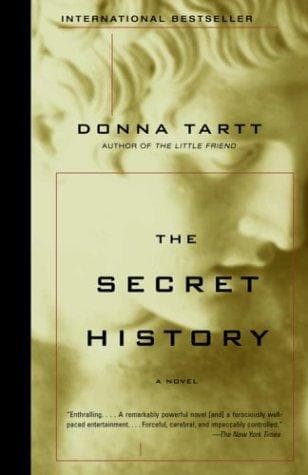
Donna Tartt
A tight circle of classics students, a sense of old-university atmosphere and a dark secret let readers who loved the Oxford setting and learned characters settle in.
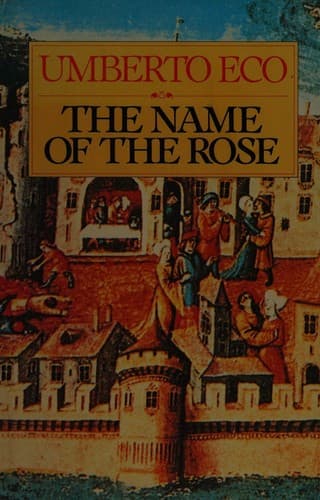
Umberto Eco
A medieval monastery mystery built on manuscripts and scholarship mirrors the way A Discovery of Witches treats books as dangerous, living objects.
Erin Morgenstern
Its lush, slowly developing magical world and a romance between rival enchanters echo the atmospheric, romance-led magic at the centre of Harkness's novel.