
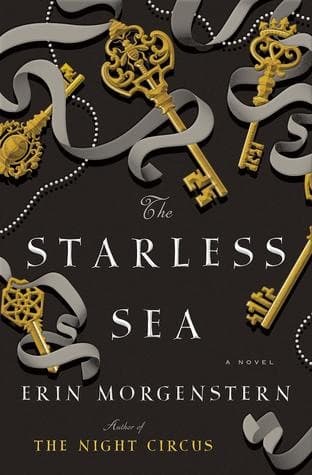
The Starless Sea
Erin Morgenstern
Written by the same author, it shares the dreamlike logic, hidden rooms and love of stories within stories that define The Night Circus. Readers wanting more of her particular magic will find it familiar yet new.
Reader-supported: when you buy through links on our site, we may earn an affiliate commission. Learn more
We earn a commission if you buy through these links. Learn more
Find Similar BooksA dreamlike, slow-burning novel in which a circus that opens only at night becomes the stage for a long, secret magical contest and a romance that grows inside it. Best for readers who value mood over plot.
The Night Circus is Erin Morgenstern's 2011 novel about Le Cirque des Rêves, a traveling circus of black-and-white tents that opens at nightfall and closes at dawn. Its wonders are real enough within the story, and they draw in visitors who return again and again. Beneath the spectacle, two young people, Celia and Marco, have been raised for a contest whose rules and stakes they only partly understand, and their rivalry slowly turns into something far more tender.
Morgenstern builds the book from short, shifting sections that jump across years and move between the viewpoints of performers, staff, patrons, and people who quietly keep the show running. You don't so much follow a single plot as wander through an exhibit, pausing at each tent. The prose is lush and sensory, dense with color, texture, and the sounds of the grounds, and it often lingers longer than a faster novel would.
Reading it feels like being immersed in a mood. The romance is patient and the magic is more atmosphere than mechanism, so the book rewards readers who enjoy being enchanted by setting and character. Readers who want tight momentum, clear cause and effect, or a fully explained magic system may find it drifts.
Le Cirque des Rêves is less a backdrop than a character in its own right. Its tents, its strict hours, and its unpredictable arrival give the story its shape, and much of the book's emotional weight comes from how the place feels to the people who visit or work there.
Celia and Marco have been prepared for a competition since childhood by mentors who keep the stakes hidden from them. The premise raises questions about who controls a young person's life, and how loyalty and free will fare when others have decided the game in advance.
The novel is assembled from brief fragments that jump between decades and perspectives. Readers must piece together the timeline and connections themselves, which creates a satisfying sense of discovery but can also feel scattered if you prefer a steady forward line.
The love story between the two rivals is slow, careful, and built through small moments rather than grand declarations. It gives the spectacle a human anchor and keeps the book from being only a catalogue of wonders.
The illusions are described with a craftsperson's care, focusing on how they feel and look rather than how they work. This keeps the sense of wonder intact, though readers who want the mechanics of the magic will find very little of it here.
Many readers find the book more pleasing to look at than to follow. Its scattered structure and repeated descriptions of the circus can feel slow, and some characters remain more vivid as atmosphere than as people. Critics have also noted that the plot's central stakes are often present more in mood than in dramatic action, so the payoff may feel smaller than the buildup. The book is a strong example of style-first fantasy, but it is not a page-turner, and it does not offer much in the way of gritty realism or sharp social commentary.
Book details and cover from Google Books.
Ready to read The Night Circus?
Get your copy on Amazon, or listen to it on Audible. We earn a commission if you buy through these links.
Erin Morgenstern
Written by the same author, it shares the dreamlike logic, hidden rooms and love of stories within stories that define The Night Circus. Readers wanting more of her particular magic will find it familiar yet new.
Susanna Clarke
Clarke's other route to the same kind of wonder: a hushed, nineteenth-century England where magic returns with elegance and melancholy. It appeals to readers who loved the old-world glamour of the circus.
Christopher Priest
Like Celia and Marco, two stage magicians are locked in a long, bitter rivalry that shapes their lives. Its layered narration and sense of illusion echo the competitive heart of The Night Circus.
Brandon Sanderson
A clear magic system and a contest of skill and cunning drive the story forward. Readers who enjoyed the rules-based rivalry in The Night Circus will appreciate its inventive, tightly plotted power struggles.