
We earn a commission if you buy through these links. Learn more
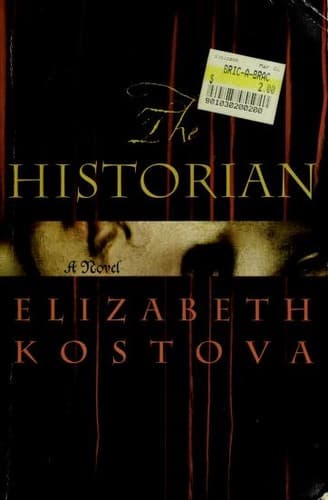
The Historian
Guide by the Books of the Day editors · Updated · How we write our guides
A slow, atmospheric mystery that turns the Dracula legend into a multigenerational search through European libraries, rewarding patient readers who love history and dread.
What Creators Say About The Historian
2 creators reviewed The Historian on YouTube between 2016 and 2021, with 12.2K views between them. Their opinions are their own; we picked these reviews, we didn't write them.
What It's About
The Historian is a long, slow-building novel that works like a detective story crossed with a gothic chronicle. A teenager discovers an old book in her father's study, with blank pages and a strange, unsettling note, and begins to ask what her father and his mentor were researching decades earlier. Her curiosity pulls the novel backward into a series of letters, diary entries, and first-person accounts that span several generations and a map of Eastern and Southern Europe.
The book's appeal lies less in plot twists than in its texture. Kostova writes with a scholar's fondness for archives, manuscripts, and the physical act of research, so much of the pleasure comes from following people through dusty reading rooms, provincial towns, and half-forgotten monasteries. The narrative shifts between voices, and each one has its own tone, which gives the book a layered, almost documentary feel. The dread builds gradually rather than arriving in set-piece scares.
Reading it feels like sitting with a patient storyteller who is in no hurry. Readers who enjoy historical detail, slow dread, and the sense of unearthing a past that refuses to stay buried will find it absorbing. Those who want brisk pacing or a tightly plotted thriller may find the pace testing, though the payoff for sustained attention is considerable.
Read this if you…
- love slow-burning gothic atmosphere and do not need constant action
- enjoy novels that feel like detective work through libraries and old documents
- want a fresh, long-form take on the Dracula legend rooted in European history
Skip it if you…
- want a fast, tightly plotted thriller with frequent cliffhangers
- find long travel passages and document-heavy storytelling tiresome
Key Ideas
- 1
Research as a form of pursuit
The novel treats scholarship as something close to a quest. Libraries, archives, and old manuscripts are not background furniture but the actual engine of the plot. Readers who have spent time in research will recognize the frustrations of dead ends, the thrill of a lucky find, and the way one document leads to another. The book makes the slow labor of historical inquiry feel dramatic without pretending it is easy.
- 2
Inheritance of secrets across generations
Each character is haunted by something a parent or mentor left unfinished. The narrative repeatedly asks what children owe to the work and silences of the previous generation. This gives the story an emotional core beyond the monster hunt: the question of whether you should keep digging into a past your family would rather leave alone.
- 3
Dread built through atmosphere, not shocks
Kostova prefers creeping unease to jump scares. Much of the horror comes from landscapes, weather, and the sense that people are hiding things from one another. The menace accumulates slowly, so the book rewards readers who are comfortable letting tension simmer for long stretches.
- 4
Multiple voices and the reliability of documents
Letters, journals, and recollections shift the story between narrators with different knowledge and different biases. The book constantly reminds readers that a record is someone's version of events. This structure makes the act of reading feel like piecing together evidence, which suits a novel so concerned with how history gets written and preserved.
Limitations
The most common complaint is length and pacing. The book is long, and its middle sections can feel repetitive as characters travel, consult sources, and retell what they have learned. Some readers find the main characters more useful as vehicles for the research than as fully rounded people. The Dracula material will be familiar to many, so the reveals depend partly on how much you enjoy a literary reinterpretation of an established myth. Its historical settings are evoked with confidence, but readers wanting precise historical accuracy should consult dedicated sources.
Questions Readers Ask
- Is The Historian a horror novel?
- It has horror elements and a Gothic atmosphere, but it is closer to a literary mystery or historical novel with a supernatural thread. The scares are restrained and mostly psychological. If you want frequent frights, you may find it too measured, but readers who enjoy eerie, slowly deepening dread will likely find it satisfying.
- How does it compare to Bram Stoker's Dracula?
- Stoker's novel is told through diaries and letters too, but it moves at a faster clip and centers on a small group of heroes. Kostova's book is more scholarly and expansive, focusing on research, history, and multiple generations. Readers who loved Stoker's epistolary structure often enjoy the way she extends it, though the pacing is noticeably slower.
- Published
- 2005
- ISBN
- 9781594830372
- Difficulty
- intermediate
- Category
- Historical Fiction
Book details and cover from Google Books.
Ready to read The Historian?
Get your copy on Amazon, or listen to it on Audible. We earn a commission if you buy through these links.