Reader-supported: when you buy through links on our site, we may earn an affiliate commission. Learn more

Cover of A Brief History of Everyone Who Ever Lived
Buy on AmazonBuy on Bookshop.orgListen on Audible

We earn a commission if you buy through these links. Learn more

Find Similar Books

A Brief History of Everyone Who Ever Lived

by Adam Rutherford

Science
★☆☆☆☆1.0 (1)

Guide by the Books of the Day editors · Updated · How we write our guides

A witty, well-informed tour of what our DNA reveals about where we came from, using ancient genomes and famous people to show how history is written into every human body.

What Creators Say About A Brief History of Everyone Who Ever Lived

2 creators reviewed A Brief History of Everyone Who Ever Lived on YouTube between 2016 and 2021, with 17.2K views between them. Their opinions are their own; we picked these reviews, we didn't write them.

Adam Rutherford on A Brief History of Everyone who Ever LivedOrion Publishing Group on YouTube14.8K views · 2016
A Brief History of Everyone Who Ever Lived | Adam Rutherford | Book Summarybestbookbits on YouTube2.4K views · 2021

What It's About

A Brief History of Everyone Who Ever Lived is a popular science book about human genetics, written by a geneticist who is also a broadcaster and a sharp, funny debunker of bad science. Rutherford's premise is that the genome in every person is a kind of archive: it carries traces of migrations, population bottlenecks, disease, and the mixing of groups that happened long before anyone wrote things down. Much of the book works backwards from that idea, using ancient DNA and the methods used to study it to reconstruct who our ancestors were and where they moved.

The approach is conversational and digressive. Rutherford moves quickly between hard science and the stories that surround it, from historical figures whose remains have been tested to questions about redheads, skin colour, and the Neanderthals who left a small mark on many non-African genomes. He is consistently alert to the way genetic findings get overstated or politicised, and he spends real time explaining what a genetic result can and cannot show. The tone is cheeky, with plenty of sexual and gleeful asides, but the underlying science is serious.

Reading it feels like being guided round a museum by someone who knows exactly which exhibits are misleading. You come away with a clearer sense of how genetic evidence is gathered, what ancestry actually means, and why your family tree is probably more tangled than you imagined. It is less a single argument than a set of linked essays that build a picture of shared human history.


Read this if you…

  • are curious where your ancestry comes from and want the science behind the headlines
  • like history grounded in physical remains and real people rather than dates and battles
  • want a clear-eyed take on race, genetics, and pseudoscience

Skip it if you…

  • want a dense textbook or a step-by-step explanation of sequencing methods
  • find jokey, sex-laden asides distracting in a serious science book

Key Ideas

  1. 1

    Every genome is a historical record

    Rutherford's central move is to treat DNA as evidence of the past. Mutations accumulate and get reshuffled across generations, so patterns in living people reveal how populations split, mixed, and shrank. Reading these patterns is a bit like forensic work, and the book shows how researchers use it to answer questions no written record could settle.

  2. 2

    We are all more closely related than we think

    Genealogical ancestry and genetic ancestry are not the same thing. Because family lines branch and recombine, people with deep roots in the same region share many more ancestors than their family trees suggest. Rutherford uses this to show how tracing lineage through DNA leads to surprising kinship across populations and centuries.

  3. 3

    Race is a poor fit for genetic variation

    Most human genetic variation sits within groups rather than between them, and the boundaries people draw around race are cultural and historical rather than sharp biological lines. The book takes apart the ways genetics has been misused to justify racial hierarchies, while acknowledging that populations differ in measurable allele frequencies. Its argument is careful and forceful.

  4. 4

    Genes are not destiny

    Epigenetics describes how environment can affect how genes are switched on and off, sometimes across generations. Rutherford is skeptical of the hype around the field, which is young and often oversold in the press. He separates what is reasonably established from what remains speculation, which is one of the book's most useful habits.

Limitations

Much of the material dates from 2016, and ancient DNA research has expanded dramatically since then, with larger datasets revising some earlier stories about migration and population replacement. Treat specific claims as a snapshot rather than the current consensus. The breezy, digressive style also means some sections read as a string of anecdotes rather than a developed argument, so readers wanting depth on any one topic will need further reading. Readers who prefer a measured voice may find the humour uneven.

Questions Readers Ask

Is it too technical for a general reader?
No. Rutherford explains concepts like mutation, inheritance, and population genetics in plain language and uses everyday examples. Readers with no science background can follow it, though the discussion of statistics and DNA analysis asks for some patience. The chapters are short and mostly self-contained, so you can slow down where needed.
How does it compare to David Reich's Who We Are and How We Got Here?
Rutherford's book is lighter and more playful than Reich's 2018 book, which goes much deeper into ancient DNA research and is written by a scientist directly involved in it. Choose Rutherford for an accessible overview with a strong voice, and Reich for technical depth and a more detailed account of the research itself.
Is it still worth reading?
Yes, for the big picture and the clear thinking about race and genetics, which holds up well. Specific findings about ancient migrations have been revised by later studies, so check newer sources before relying on particular dates or conclusions. Think of it as a sharp introduction rather than the last word on the subject.
Published
2016
ISBN
9780297609391
Difficulty
intermediate
Category
Science

Book details and cover from Google Books.

Ready to read A Brief History of Everyone Who Ever Lived?

Get your copy on Amazon, or listen to it on Audible. We earn a commission if you buy through these links.

Books Like A Brief History of Everyone Who Ever Lived

View all →
Cover of Sapiens

Sapiens

Yuval Noah Harari

Like Rutherford, Harari uses science to tell the long story of Homo sapiens, from early migrations to modern societies. Its broad sweep and accessible style will suit readers who enjoyed the big-picture view of how humans came to be.

Cover of Guns, Germs, and Steel

Guns, Germs, and Steel

Jared Diamond

Diamond asks why human societies developed so unevenly, drawing on geography, biology and history. Readers who liked how A Brief History links genes to migration and power will find the same cause-and-effect curiosity here.

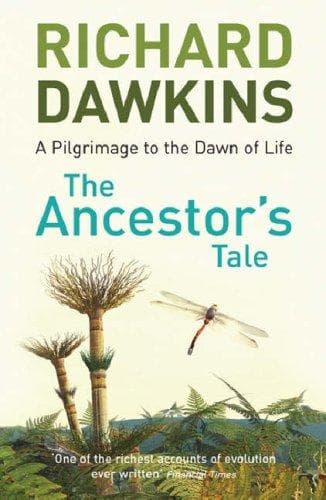
Cover of The Ancestor's Tale

The Ancestor's Tale

Richard Dawkins

Dawkins traces human ancestry backwards through the tree of life, one meeting point at a time. It matches Rutherford's sense that every person carries a long chain of ancestry, told with vivid, storytelling energy.

Cover of The Gene

The Gene

Siddhartha Mukherjee

Mukherjee follows the idea of the gene from Mendel to modern genetic engineering, mixing science with personal and social history. Readers who enjoyed Rutherford's blend of lab science and human stories will find it equally engaging.

Explore More