
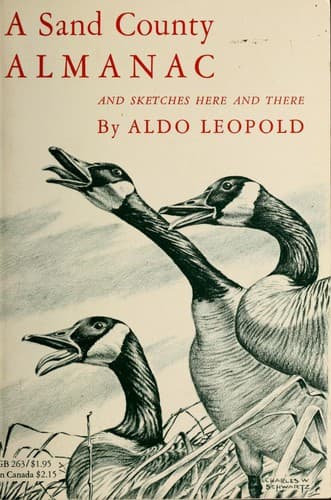
A Sand County Almanac
Aldo Leopold
Like Walden, it follows a single landscape through the seasons with patient, precise observation, turning a farm's fields and marshes into a lesson about how people belong to the natural world.
Reader-supported: when you buy through links on our site, we may earn an affiliate commission. Learn more
We earn a commission if you buy through these links. Learn more
Find Similar BooksGuide by the Books of the Day editors · Updated · How we write our guides
Thoreau's account of living simply by a Massachusetts pond remains a sharp, quotable challenge to how we spend our time, if you can meet its slow pace.
2 creators reviewed Walden on YouTube between 2013 and 2020, with 285.9K views between them. Their opinions are their own; we picked these reviews, we didn't write them.
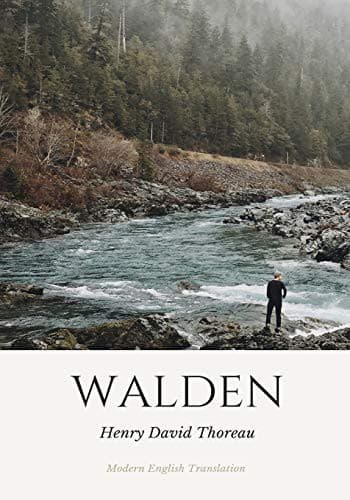
Walden is Henry David Thoreau's account of the roughly two years he spent living in a small house he built beside Walden Pond, near Concord, Massachusetts, in the 1840s. Published in 1854, it is usually shelved as nature writing or philosophy. The Biographies category on this page is a loose fit: it is a memoir in the sense that Thoreau writes about his own life, but he is not telling a life story in order. He moves through the seasons of a single year and uses his daily routines as a lens for much bigger questions.
The style is the first thing readers notice. Thoreau mixes exact measurement, such as his careful accounting of what he spent on building and food, with long passages describing ponds, birds, and the animals who share the woods, and then turns suddenly into sharp moral argument. The sentences are often aphoristic and quotable, but the structure is loose. He circles back to the same themes from different angles rather than building toward a neat conclusion.
Reading it feels less like following a plot and more like sitting with a restless, opinionated companion who is pleased with his own experiment and not shy about criticizing his neighbors' habits. It rewards slow reading and rereading. It works best taken a chapter at a time, with a pencil in hand and a willingness to disagree.
Thoreau argues that many of the things people count as necessities are really habits or social expectations. By cutting back his wants, he gains time and attention for what he actually cares about. The book is less a recipe for living in the woods than a test of which comforts are worth their cost.
He treats money as stored-up life energy, so every purchase is a question of how many hours of work it required. This accounting makes the trade-offs between income and freedom concrete. Readers who have felt trapped by a job will recognize the logic even if they disagree with his conclusions.
The nature passages are not decoration. Thoreau watches ponds, animals, and the changing seasons with patience, and he presents careful looking as a way of living fully rather than an escape from life. Expect long stretches where very little happens, because that slowness is part of the point.
Thoreau praises solitude, but he is not a hermit. He describes visitors, trips to town, and the village life he chose to step away from. This tension between withdrawal and community gives the book much of its emotional texture and keeps it from being a simple manifesto.
Critics often point out that Thoreau's solitude was less complete than the book suggests. He walked into town, had meals at his family's home, and built on land owned by his friend Ralph Waldo Emerson, which made the experiment easier than it first appears. His tone can be self-satisfied and preachy, and his judgments of neighbors and workers can feel unfair. The nature sections, while admired, can slow the pace considerably. Some readers find the economic arguments dated, since the world of wage labor and consumer goods has changed a great deal since the 1840s.
Book details and cover from Google Books.
Ready to read Walden?
Get your copy on Amazon, or listen to it on Audible. We earn a commission if you buy through these links.
Aldo Leopold
Like Walden, it follows a single landscape through the seasons with patient, precise observation, turning a farm's fields and marshes into a lesson about how people belong to the natural world.
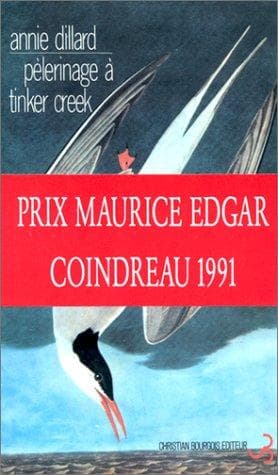
Annie Dillard
Dillard's year beside a Virginia creek mirrors Thoreau's pond, with the same lyrical attention to small creatures and the same habit of finding philosophy in everyday natural details.

Baker, J. A.
Baker spends winters tracking a single falcon across the Essex marshes, offering the intense, close-range attention to one place that makes Walden's pond feel so alive.

Ernest Callenbach
Its utopian vision of a deliberately low-consumption society echoes Walden's argument that people can build a good life with less, though it is told as a novel rather than a memoir.