
We earn a commission if you buy through these links. Learn more
Pilgrim at Tinker Creek
Guide by the Books of the Day editors · Updated · How we write our guides
Annie Dillard's Pulitzer-winning account of a year spent watching one creek is a rare blend of close natural observation and hard questions about suffering and faith, rewarding slow, attentive readers.
What Creators Say About Pilgrim at Tinker Creek
2 creators reviewed Pilgrim at Tinker Creek on YouTube between 2017 and 2022, with 8.9K views between them. Their opinions are their own; we picked these reviews, we didn't write them.
What It's About
Pilgrim at Tinker Creek, published in 1974, records a year in which Dillard walked, watched, and wrote about the creek and surrounding land in Virginia's Roanoke Valley. It is not a straight narrative. The chapters circle through the seasons and return to the same ground again and again, gathering observations about insects, fish, trees, and light, along with reflections on what she sees.
The real draw is the prose. Her sentences are dense, ornate, and often startling, and she moves without warning from a single water bug to large questions about God, death, and why creation contains so much violence. The book reads more like a meditation or a spiritual notebook than a field guide, and her own moods and failures of attention are part of the record.
Reading it is an intense, sometimes unsettling experience. Many readers come away looking at a backyard, a pond, or a walk differently. Others find the swings between wonder and cruelty exhausting. Expect to read slowly and to re-read passages, because the book rewards attention in the same way its subject does.
Read this if you…
- want lyrical nature writing that pushes into philosophy and theology
- are interested in learning to pay closer attention to ordinary surroundings
- can tolerate dense, intense prose and enjoy writing that takes risks
Skip it if you…
- want practical identification guides or a clear science narrative of the ecosystem
- prefer calm, consoling nature writing without any dwelling on violence or suffering
Key Ideas
- 1
Seeing as a deliberate practice
Dillard treats looking as a skill that can be trained and failed at. She distinguishes between glancing at the world and truly seeing it, and much of the book is her attempt to move from one to the other. It is a book about attention as much as about nature.
- 2
Beauty and cruelty in the same ecosystem
She describes predation, parasitism, and waste without softening them. Rather than resolving the tension between a beautiful natural world and its brutality, she keeps both in view and asks what kind of creation could contain both. The discomfort is deliberate.
- 3
Faith explored through the material world
Theological questions run through the book, but they arise from biology and observation, not doctrine. Dillard is less interested in offering answers than in showing how the physical world keeps raising questions about meaning, divinity, and the purpose of so much life.
- 4
Abundance and excess in living things
A recurring theme is the overwhelming number of organisms and the sense that life is both lavish and wasteful. This generosity of creation sits beside the violence, and Dillard returns to it with a mix of wonder and bewilderment.
- 5
The observer as part of the story
Her own temperament, moods, and sometimes self-absorption shape what she notices. She writes openly about her limits as a witness, which makes the book feel personal and honest rather than detached and encyclopedic.
Limitations
The prose is dense and often overwrought, and some readers find Dillard's mood swings and self-regard tiring over a whole book. The science is largely observational and some of it reflects knowledge from the early 1970s, so specific claims may be outdated. It is also a single place seen through one writer's eyes, and it does not try to be a comprehensive account of the region or its ecology.
Questions Readers Ask
- Is Pilgrim at Tinker Creek still worth reading today?
- Yes, mainly for its prose and its way of looking. Some of the natural history has been superseded by later research, but the book's attention to noticing, its unsentimental view of nature, and its spiritual questions remain fresh. Most readers value it as literature rather than as a source of current science.
- How does it compare to Thoreau's Walden?
- Both are books about a year of close observation in a specific place, and both mix nature with philosophy. Walden is calmer and more openly moral, while Dillard is more intense, more willing to dwell on cruelty, and more preoccupied with faith. If you enjoyed Walden's patience, you may find Dillard's style sharper and less settled.
- Published
- 1974
- ISBN
- 9780330247153
- Difficulty
- intermediate
- Category
- Science
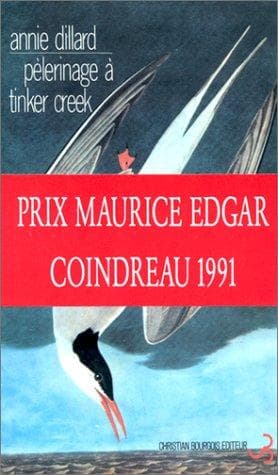
Book details and cover from Google Books.
Ready to read Pilgrim at Tinker Creek?
Get your copy on Amazon, or listen to it on Audible. We earn a commission if you buy through these links.