
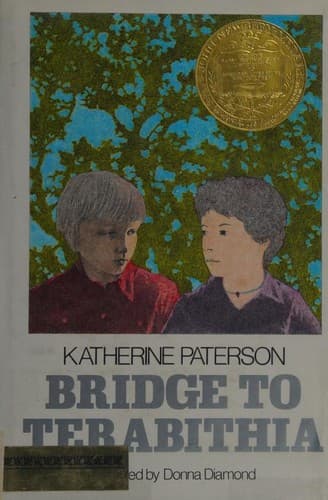
Bridge to Terabithia
Katherine Paterson
Like Suzy's story, it follows a child who loses a close friend and must work out how to keep living. Its honest handling of sudden loss will feel familiar to fans of the source book.
Reader-supported: when you buy through links on our site, we may earn an affiliate commission. Learn more
We earn a commission if you buy through these links. Learn more
Find Similar Booksby Ali Benjamin
A quiet middle-grade novel that handles a child's grief with honesty, using a jellyfish investigation to show how a young narrator tries to make sense of a sudden loss.
The Thing About Jellyfish is a middle-grade novel narrated by Suzy, a twelve-year-old whose best friend, Franny, drowns in a lake. Suzy cannot accept that a death like this could be random, so she builds a theory that a rare jellyfish sting caused it. Grief pushes her into silence and into her own head, and the story follows her attempt to gather evidence and prove what she believes.
The book's approach blends its story with scientific material about jellyfish, the ocean, and the wider universe. These passages are short and feel like pages from Suzy's own notebook. Benjamin writes in a plain, close voice that makes a twelve-year-old's reasoning feel believable rather than cute. The pacing moves between the investigation and the slow, awkward work of returning to ordinary life with the people around her.
Reading it is a reflective, emotional experience. It is less a mystery to solve than a close look at someone processing loss. The scientific detours are part of the point, showing how Suzy tries to make sense of randomness by studying what she can understand. Adult readers and teens will likely notice more than younger readers, and the book rewards slow reading.
Suzy refuses to accept that Franny's death was chance. Her theory gives her a target for her pain and a reason to keep moving. The book examines how the need for an explanation can both help and trap someone after a loss, and it does not treat her certainty as simply right or simply wrong.
After the drowning, Suzy stops speaking and withdraws into her imagination. The book treats this silence as both protection and isolation. Readers see what she hears and notices when she is missed, which makes her inner life more vivid than a typical narrator's voice would be.
The jellyfish facts and cosmic wonder in the book are not decoration. Suzy uses knowledge about the natural world to steady herself, finding that the vastness of the universe can make a single loss feel both smaller and more bearable. The science is presented as a way of coping, not a lesson for its own sake.
Alongside the far-off search, the novel keeps returning to relationships close to home. The slower, less dramatic connections with people in Suzy's everyday life matter as much as the investigation. The book suggests that hope often comes from ordinary attention rather than from solving the question that started everything.
Some readers find the scientific passages uneven, and a few feel the pacing slows during the reflective stretches. Because the mystery is less important than the emotional arc, anyone expecting a whodunit will likely be disappointed. Suzy's self-absorption and withdrawal can frustrate some readers, and the fragmented structure may feel scattered to those who prefer a conventional narrative. Its emotional approach is sincere, but it can lean on its premise more than some critics would like.
Book details and cover from Google Books.
Ready to read The Thing About Jellyfish (National Book Award Finalist)?
Get your copy on Amazon, or listen to it on Audible. We earn a commission if you buy through these links.
Katherine Paterson
Like Suzy's story, it follows a child who loses a close friend and must work out how to keep living. Its honest handling of sudden loss will feel familiar to fans of the source book.
Holly Goldberg Sloan
A brilliant, unusual girl faces a sudden loss and rebuilds her life among unexpected people. Its mix of grief, quirky characters and hopeful community echoes the emotional arc of The Thing About Jellyfish.
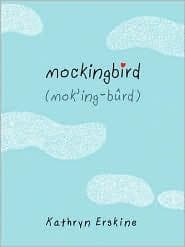
Kathryn Erskine
A young narrator with a different way of seeing the world must make sense of a devastating death. Its direct, perceptive voice and focus on grief match what readers loved about Suzy's search for answers.
Kate DiCamillo
A lonely girl finds connection in an unexpected friendship after a summer of change. Its gentle tone and small-town warmth suit readers who loved the quiet emotional honesty of The Thing About Jellyfish.