
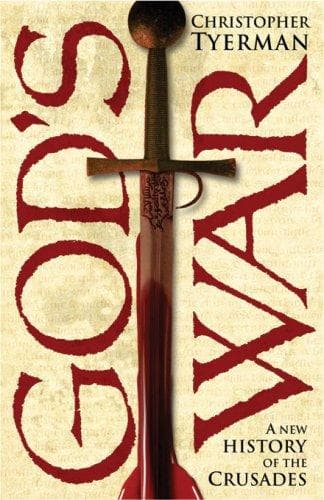
God's war
Christopher Tyerman
A sweeping account of the crusades across two centuries, giving the wider context behind the Templars' founding and the wars in the Holy Land that shaped their purpose.
Reader-supported: when you buy through links on our site, we may earn an affiliate commission. Learn more
We earn a commission if you buy through these links. Learn more
Find Similar Booksby Dan Jones
Guide by the Books of the Day editors · Updated · How we write our guides
A fast, well-sourced narrative of the Templars' rise from a small Jerusalem brotherhood to a medieval banking power and their brutal fall in 1307.
2 creators reviewed The Templars on YouTube in 2017, with 31.9K views between them. Their opinions are their own; we picked these reviews, we didn't write them.
The Templars is a narrative history of the Knights Templar, the military religious order that grew out of a small group of knights in Jerusalem in the early twelfth century and became one of the most powerful institutions of the medieval world. Jones follows the order across roughly two centuries, from its fighting in the Holy Land and its uneasy relationship with the papacy, to its growth into a cross-border financial operation, and finally to the sudden arrests ordered by the French crown in 1307. The book is built around the story rather than theory, so the reader moves through campaigns, politics and personalities in order.
Jones writes in a brisk, vivid style that sits closer to popular narrative history than to dense specialist monographs. He leans on surviving chronicles, papal documents and trial records, and he is generally clear about where the evidence is thin or where a source has an agenda. Scenes are sketched with momentum, and the big figures, from crusading kings to the last grand master, are given enough texture to hold attention.
The experience is more of a guided tour than a close investigation. You come away with a clear sense of how the order rose, why it mattered and how its end was engineered, plus a sharper sense of why the myths around it persist. Readers who want footnote-level argument over the trial or a detailed economic analysis of its finances will need to go further afield.
The Templars combined monastic vows with the life of fighting men, which made them unusual and controversial even to their contemporaries. Jones shows how the order's religious identity, papal backing and military role reinforced one another, and how the tension between prayer and violence shaped their reputation for better and worse.
The order's property and banking network let pilgrims and rulers move funds between Europe and the Levant, and it made the Templars creditors to kings. Jones treats this as a source of real influence and also of resentment, which is central to understanding why a cash-strapped monarch would later turn against them.
The book follows the order through its wars with Saladin and later Mamluk rulers, ending with the losses on the mainland and the retreat to Cyprus. The story is less about single battles than about a gradual strategic decline that steadily undermined the order's original purpose.
The 1307 arrests and the trial form the climax, and Jones pays close attention to how accusations of heresy and misconduct were assembled and how confessions were extracted under torture. He raises the question of whether the order was guilty or a victim of a repressive state and lets the evidence shape the answer.
A recurring theme is the gap between the mythology that grew up around the Templars and what documents actually show. Jones uses the sources to separate the order's real history from later speculation, which makes the book useful for anyone who has encountered the conspiracy-tinged versions of the story.
As a popular narrative, the book condenses a complicated period, and some debates get only brief treatment. Much of the evidence for the Templars' downfall comes from testimony gathered under torture. Jones is careful about this, but readers who want that material critically examined in depth will need a specialist study. Some reviewers felt the narrative leans toward drama, and the economic side, including how the banking operation worked day to day, gets less detail than it could. The book is also several years old, so newer academic work on the order is not reflected.
Book details and cover from Google Books.
Ready to read The Templars?
Get your copy on Amazon, or listen to it on Audible. We earn a commission if you buy through these links.
Christopher Tyerman
A sweeping account of the crusades across two centuries, giving the wider context behind the Templars' founding and the wars in the Holy Land that shaped their purpose.
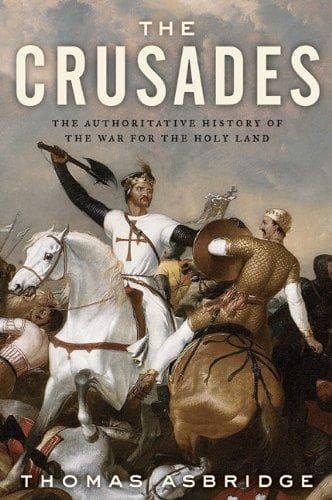
Thomas Asbridge
A clear, well-paced survey of the crusading movement that places the Templars among the Latin states, Saladin and the bloody campaigns that defined the era.