
A Thousand Splendid Suns
Khaled Hosseini
Like Zunaira and Musarrat, two Afghan women endure marriage and Taliban rule in Kabul. It is a longer, more sweeping story with the same compassion for lives narrowed by fear.
Reader-supported: when you buy through links on our site, we may earn an affiliate commission. Learn more
We earn a commission if you buy through these links. Learn more
Find Similar BooksGuide by the Books of the Day editors · Updated · How we write our guides
A spare, unsettling portrait of Taliban-era Kabul that shows how ordinary people are drawn into cruelty, and how faith and ideology can pull apart inside one man.
2 creators reviewed The Swallows of Kabul on YouTube between 2020 and 2025, with 1.7K views between them. Their opinions are their own; we picked these reviews, we didn't write them.
The Swallows of Kabul follows two couples living in the Afghan capital under Taliban rule. Mohsen comes from a family of merchants that the regime has ruined, and his wife Zunaira, once a teacher, can no longer leave home without a male escort or a face covering. Atiq is a prison guard who believes in the Taliban's cause and is privately wrestling with it, and his wife Musarrat is gravely ill and losing hope. Their lives touch through a single public act of violence that changes everything that follows.
Khadra writes in a heightened, lyrical style and lets the city shape the mood. The dust, the heat, the bazaars and the grim ritual of public punishment feel close enough to touch. He shifts among the four characters rather than following one plot, so the book reads like a set of linked portraits that gradually converge. Some readers will find the prose emotionally direct and vivid; others will find its pacing and coincidences deliberately fable-like.
The experience is intense rather than comfortable. The book is short enough to finish in a couple of sittings, but it asks you to stay with cruelty and with people making grim choices. Read it as a moral portrait of a society under strain rather than as a history lesson, and it will stay with you longer than most.
Mohsen's moment in the crowd shows how collective fury can override private conscience in a few seconds. The novel is less interested in villains than in how a single surrender of judgment can reshape a life. It asks what people do when fear and group pressure make cruelty feel like the only available action.
Atiq's struggle shows the gap between religion as a lived, personal devotion and religion as a political program that demands total obedience. Khadra gives the believer an inner life and real doubts without excusing the system he serves. Readers who want to understand how a sincere person can take part in something monstrous will find this thread the most valuable.
Zunaira's loss of her profession, her freedom of movement and her public identity is shown through daily humiliations rather than speeches. The book focuses on how constant restriction erodes a person's sense of self. Its portrait of a former teacher reduced to hiding in her own home is among its most affecting passages.
Four lives are bound together by chance and consequence, and the novel uses this interlocking design to give its moral argument weight. The structure is deliberate and somewhat schematic, which is part of its appeal for some readers and a source of frustration for others. Think of it as a modern fable set in a real city.
Critics have pointed to melodrama and to characters who sometimes feel more like symbols than people. The interlocking plot relies on coincidence that some readers find contrived. Khadra is Algerian rather than Afghan, and a few readers question how an outsider handles the culture from within. The book offers little broad historical context, so readers new to the period will need to look elsewhere for background. The English translation is smooth, though some find its prose more florid than the original's.
Book details and cover from Google Books.
Ready to read The Swallows of Kabul?
Get your copy on Amazon, or listen to it on Audible. We earn a commission if you buy through these links.
Khaled Hosseini
Like Zunaira and Musarrat, two Afghan women endure marriage and Taliban rule in Kabul. It is a longer, more sweeping story with the same compassion for lives narrowed by fear.
Khaled Hosseini
Another novel of Kabul across war and Taliban control, centred on guilt and one act of cowardice, echoing the moral weight of Mohsen's moment in the crowd.
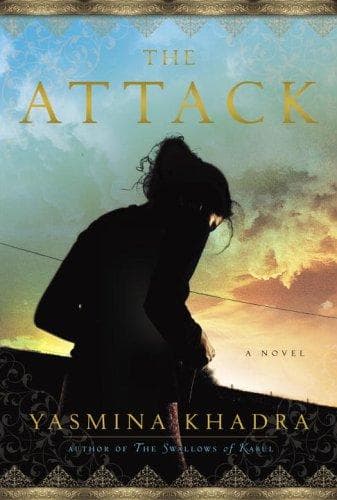
Yasmina Khadra
Khadra's novel about an Arab Israeli surgeon whose wife is accused of a suicide bombing. It probes how ordinary people become drawn into violence, with the same taut, humane intensity.
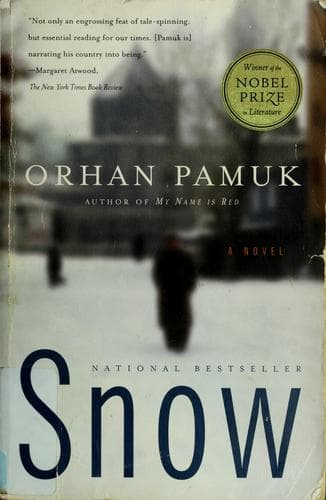
Orhan Pamuk
Set in a snowbound Turkish town torn between Islamists and secularists, it explores belief and political violence from many sides, much as Khadra lets Atiq's convictions be understood.