Reader-supported: when you buy through links on our site, we may earn an affiliate commission. Learn more

Cover of The Silent Patient
Buy on AmazonBuy on Bookshop.orgListen on Audible

We earn a commission if you buy through these links. Learn more

Find Similar Books

The Silent Patient

by Alex Michaelides

Fiction
★★★★☆4.0 (10)

A painter's silence after a shooting becomes a gripping puzzle for her therapist, and the book's clever structure and late turn make it a fast, memorable read.

What It's About

The Silent Patient is a psychological thriller built around one unexplained act. Alicia Berenson, a celebrated painter, shoots her husband in their London home and never speaks again. Theo Faber, a psychotherapist who has long wanted to work with her, takes a post at the secure unit where she is held, determined to get her to explain herself. The story is told mainly through Theo's first-person account, with Alicia's own diary entries running alongside, so the reader gets two partial views of the same events.

Michaelides writes in short, brisk chapters that keep the pace high. The prose is clean and plain rather than lyrical, and the plotting does most of the work. Theo narrates with a clear sense of his own opinions, and his professional sections on therapy, interpretation, and the difficulty of reaching a mute patient give the book a more thoughtful layer than much genre fiction offers.

Reading it feels like being pulled forward by questions rather than by dread. Expect a quick, page-turning read with a finale designed to reframe what came before. It rewards close attention to small details, and it is most satisfying as a puzzle to solve rather than as a study of character.


Read this if you…

  • enjoy a tightly plotted thriller you can finish in a weekend
  • like psychological puzzles where the narrator's reliability is part of the game
  • are curious how therapy works on the page, including its frustrations and blind spots

Skip it if you…

  • want richly drawn characters or literary prose in the vein of a novel of ideas
  • dislike twist endings that depend on the narrator holding back information from you

Key Ideas

  1. 1

    Silence as the central puzzle

    Alicia's refusal to speak drives the whole book. The novel keeps asking what her silence means: guilt, trauma, protest, or a deliberate choice. Theo treats it as a clinical problem to solve, which turns therapy into a kind of detective work and keeps every scene focused on a single question.

  2. 2

    Therapy as a method of detection

    Theo's sessions are less about healing than about extracting information. The book examines how a therapist's assumptions and personal history shape what he hears and what he chooses to see. Readers who find psychotherapy interesting will enjoy the professional texture, even when the clinical details are simplified for the plot.

  3. 3

    Art and myth as clues

    Alicia's paintings and a classical Greek myth about a wife who gives her life for her husband become a lens for reading her character. The references are woven into the mystery rather than simply decorating it, so the reader is encouraged to treat each image as a possible piece of evidence.

  4. 4

    Two narrators, competing accounts

    Theo's narration and Alicia's diary pull in different directions, and the reader must decide whom to trust. This structure is the book's most important technique. It creates tension between what each narrator knows, admits, or hides, and it sets up the late reversal that reframes earlier chapters.

  5. 5

    Genre craft built for momentum

    Short chapters, regular cliffhangers, and a clear forward drive make the book easy to finish in a sitting or two. The writing favors plot mechanics over atmosphere, so the pleasure comes from pacing and misdirection rather than from lush description or deep interiority.

Limitations

Many readers found the characters thin and the psychology more convenient than convincing. Some critics argue that the reveal leans on information the narrator conveniently withholds, and that Theo's sessions can feel repetitive once the pattern is clear. The prose is serviceable but unshowy. The book also presents psychiatric institutions and therapy in a simplified way that some readers find dated. As a debut, it shows its seams in places.

Questions Readers Ask

Who is this book best suited for?
It suits readers who want a fast, twisty thriller with a clear hook and short chapters, and who do not mind plot-driven storytelling over deep character work. If you enjoy puzzles where you are encouraged to second-guess the narrator, you will likely find it entertaining. Readers who need subtle prose may find it too brisk.
How does it compare to Gone Girl?
Both are twisty psychological thrillers with unreliable narration and a dark view of marriage. Gone Girl is longer, sharper in its satire, and sustains a more unsettling tone. The Silent Patient is shorter and quicker, with more emphasis on therapy and on the puzzle of one silent woman.
Is it still worth reading after the hype?
The book's reputation and its big reveal mean that some readers will guess the twist early. Its value lies mainly in pacing and execution. Once you know how it ends, rereading offers less, so it works best as a one-time, fast read rather than a book to study.

What Creators Say About The Silent Patient

Reviews from readers on YouTube. Their opinions are their own.

THE SILENT PATIENT BOOK REVIEWGirl About Library on YouTube
The silent patient ( book summary, plot holes and review )zartab bano on YouTube
Published
2019
ISBN
9781250301710
Difficulty
beginner
Category
Fiction

Book details and cover from Google Books.

Ready to read The Silent Patient?

Get your copy on Amazon, or listen to it on Audible. We earn a commission if you buy through these links.

Books Like The Silent Patient

View all →
Cover of Gone Girl

Gone Girl

Gillian Flynn

Like The Silent Patient, it opens with a marriage that looks perfect from outside and a disappearance that becomes a public obsession. Flynn's shifting narrators keep the reader doubting every account, right up to the final reversal.

Cover of The Girl on the Train

The Girl on the Train

Paula Hawkins

A witness with a fragile memory tries to piece together a crime from fragments, much as Theo does with Alicia's silence. Its London setting, unreliable perspective and steady dread will suit readers who enjoyed the first book's atmosphere.

Cover of Rebecca

Rebecca

Daphne du Maurier

A quiet narrator, a grand house and a dead wife whose shadow shapes everything give this classic the same brooding suspense. Its slow reveal of what really happened appeals to fans of The Silent Patient's Hitchcockian mood.

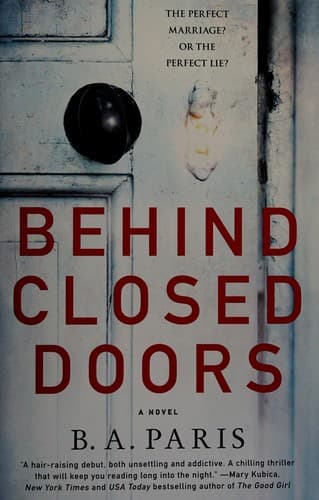
Cover of Behind Closed Doors

Behind Closed Doors

B.A. Paris

A seemingly ideal domestic life hides something terrible, and the reader slowly learns to distrust the calm surface. Its tight focus on one household and its controlled, escalating tension will feel familiar to readers of The Silent Patient.

Explore More