
We earn a commission if you buy through these links. Learn more
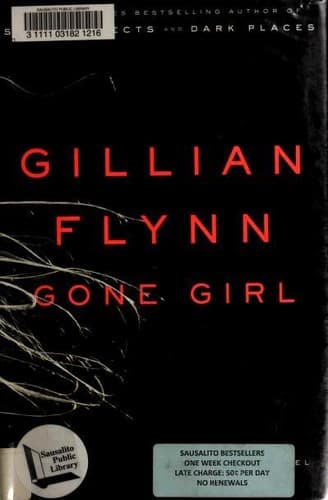
Gone Girl
On screen: Gone Girl (film, 2014)
Guide by the Books of the Day editors · Updated · How we write our guides
A missing-wife mystery that works as a sharp, twisty page-turner and a bleak, funny study of a marriage that has stopped being honest with itself.
What Creators Say About Gone Girl
2 creators reviewed Gone Girl on YouTube between 2015 and 2025, with 729.4K views between them. Their opinions are their own; we picked these reviews, we didn't write them.
What It's About
Nick and Amy Dunne live in a small Missouri town, and on the morning of their fifth wedding anniversary Amy vanishes. The living room shows signs of a struggle, and the police and the media quickly turn their attention to Nick. The book alternates between his present-day account of the investigation and Amy's diary entries, which reach back to how the two of them met and fell in love.
The structure is the engine of the book. Each voice pulls you toward a different conclusion, and Flynn builds the chapters so that each one ends by making you doubt what you just decided. The prose is brisk, sardonic, and precise, with short sections that encourage you to keep going. The reading experience is fast and a little uncomfortable, because you keep revising your opinion of everyone involved.
The novel is less about the puzzle of what happened than about performance: the public face a couple shows the world, the private roles they play for each other, and our appetite for a story that confirms what we already suspect. It is a thriller first, but it is also a dark satire of modern marriage and the way a town, and the internet, will pick a villain.
Read this if you…
- want a fast, plot-driven thriller you can finish in a few sittings
- enjoy dark, satirical fiction about modern marriage and media
- like puzzles where the clues keep shifting under your feet
Skip it if you…
- need likable characters or a clean, reassuring resolution
- are sensitive to graphic violence, sexual content, or cynical narrators
Key Ideas
- 1
Marriage as an ongoing performance
The book treats a marriage as something two people stage for each other and for outsiders. Both spouses adjust their behavior to match expectations, and the gap between the public version and the private one drives much of the tension. Flynn asks how much of a relationship is real and how much is a costume that both people have agreed to wear.
- 2
Two narrators who cannot both be trusted
Nick and Amy each offer a version of events that is shaped by self-interest, resentment, and the need to be seen a certain way. The alternating voices are persuasive in turn, so the reader has to work out what each one leaves out. The method turns reading into an act of judgment rather than simple observation.
- 3
The court of public opinion
Once Amy's disappearance becomes a news story, the case is argued on television, online, and in the town square long before any evidence is settled. Flynn shows how quickly a private tragedy becomes a public spectacle and how little that process cares for the truth. The media plot is some of the sharpest and most cynical writing in the book.
- 4
Structure as a tool for misdirection
Short chapters, deliberate cliffhangers, and the shift between present-day investigation and past diary entries all shape what you notice and when. The book rewards close attention to dates, details, and what a narrator chooses to mention. Flynn uses form to make the reader complicit in the same assumptions the characters make.
- 5
Gender roles and cultural expectations
Amy and Nick are measured against scripts about what a good wife and a good husband should be, and both fall short of them in different ways. The novel uses these expectations as both a source of comedy and a source of menace. It explores how much pressure a couple faces to look like the right kind of couple.
Limitations
Most of the characters are unpleasant, and some readers find that the cynicism wears thin over a full novel. The satire of media and suburban life can feel broad at times, and the back half relies on plot developments that some readers find less credible than the opening. The technology and pop-culture references are dated, though the central themes still land. The book is also explicit about violence and sex, which may put off some readers.
Questions Readers Ask
- Is Gone Girl worth reading if I have already seen the film?
- Yes. The 2014 David Fincher film follows the novel's main shape closely, but the book gives you more of each narrator's inner voice and more texture in the diary entries. Flynn also wrote the screenplay, so the film keeps much of her dialogue. Readers who enjoyed the movie often find the book sharper and more cynical.
- How does Gone Girl compare to The Girl on the Train?
- Both are thrillers built on unreliable narrators and a missing or troubled woman. Gone Girl is faster, darker, and more openly satirical about marriage and the media. The Girl on the Train is more of a slow-burn psychological mystery. If you liked the twisting perspectives, Gone Girl is the more intense of the two.
- Does Gone Girl still feel relevant?
- The phone and social media details feel dated, but the book's concerns hold up well. Its portrait of public outrage, performance online, and the stories people tell about couples has not gone away. Many readers find it more relevant now than when it first came out, because the spectacle it describes has only grown.
- Published
- 2011
- ISBN
- 9789510407820
- Difficulty
- beginner
- Category
- Mystery & Thriller
Book details and cover from Google Books.
Ready to read Gone Girl?
Get your copy on Amazon, or listen to it on Audible. We earn a commission if you buy through these links.