

Wolf Hall
Hilary Mantel
Like Follett's novel, it spreads a turbulent historical period across a large cast of ambitious, scheming figures, with the political machinery of Tudor England carrying the story forward.
Reader-supported: when you buy through links on our site, we may earn an affiliate commission. Learn more
We earn a commission if you buy through these links. Learn more
Find Similar Booksby Ken Follett
Guide by the Books of the Day editors · Updated · How we write our guides
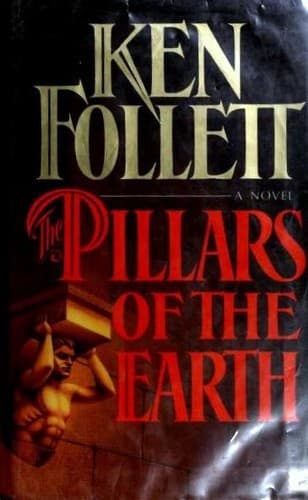
A sprawling, page-turning historical epic about a cathedral, the people who fight over it, and the medieval England that shaped them.
2 creators reviewed The Pillars of the Earth on YouTube in 2024, with 111.7K views between them. Their opinions are their own; we picked these reviews, we didn't write them.
The Pillars of the Earth is set in the fictional English town of Kingsbridge in the twelfth century, during the years of civil war known as the Anarchy, when rival claimants fought over the crown and local lords took advantage of the chaos. The novel follows a loose cluster of characters over several decades: a stonemason, a prior with large ambitions, a noblewoman trying to hold onto her inheritance, and a family of local rivals. Their lives tangle around one enormous project, the building of a cathedral. Although the publisher's category here is Mystery & Thriller, this is really historical fiction with thriller pacing. There is intrigue and menace, but few puzzles to solve.
Follett is a plot-first storyteller. Chapters tend to end on hooks, the point of view shifts often, and the narrative cuts between the building site, the church hierarchy, and the petty and violent politics of the nobility. He takes evident pleasure in the practical details of medieval construction, from quarrying and scaffolding to the difficulty of raising a stone roof, and those passages give the book a grounded texture.
Reading it feels like settling in for a long, immersive saga. The prose is plain and brisk rather than lyrical, the villains are broad, and the story runs on for many hundreds of pages. You get a strong sense of how fragile life was for ordinary people, and of how one long construction project can outlast the individuals who begin it.
The central engine of the book is the cathedral itself. It is a project no single person will finish, which means the characters work toward something larger than their own lives. The book is as interested in the slow, collective labour of building as in any individual's ambition, and it makes that labour feel physical and costly.
The novel shows that religious institutions were not separate from worldly power. Churchmen compete for status, money, and control in ways that look a lot like the nobility they supposedly stood above. Follett uses this to examine how faith and self-interest mix, without reducing clergy to simple villains or saints.
The Anarchy is the backdrop that makes everything unstable. Wars between powerful claimants are fought over distant principles, but their cost lands on townspeople, builders, and farmers. The book makes that trickle-down effect concrete, showing how a lord's quarrel can wipe out a family's livelihood overnight.
One of the story's main threads follows a woman trying to keep control of property and make her own decisions in a society built to deny her that right. Her struggle is handled with some melodrama, but it gives the book a clear sense of the legal and social barriers women faced in the period.
Follett's storytelling is deliberately propulsive. He alternates between storylines, ends sections on tension, and sets up a sharply drawn antagonist against more sympathetic protagonists. The effect is compulsive reading, even when the characterisation is broader than literary fiction would allow.
Critics often point to workmanlike prose, stereotyped villains, and a reliance on convenient coincidences to drive the plot forward. Some readers find the sex and violence gratuitous, and others find the modern attitudes of some characters at odds with the period. The book is historical fiction, not history, so its political and architectural details are shaped by the needs of the story. It also covers a great deal of ground, so the pacing can feel uneven across its length.
Book details and cover from Google Books.
Ready to read The Pillars of the Earth?
Get your copy on Amazon, or listen to it on Audible. We earn a commission if you buy through these links.
Hilary Mantel
Like Follett's novel, it spreads a turbulent historical period across a large cast of ambitious, scheming figures, with the political machinery of Tudor England carrying the story forward.
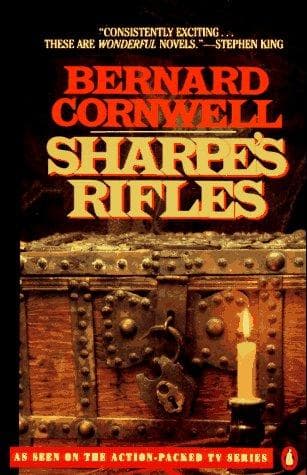
Bernard Cornwell, Frederick Davidson
Cornwell matches Follett's appetite for period texture and a hero rising through hardship, with a lively wartime plot that keeps the action moving across its chapters.