
Fire and Blood
George R. R. Martin
Not Tudor, but it shares Wolf Hall's appetite for dynastic politics, shifting alliances and ruthless calculation among powerful families. Like Mantel's court, the power struggles drive everything.
Reader-supported: when you buy through links on our site, we may earn an affiliate commission. Learn more
We earn a commission if you buy through these links. Learn more
Find Similar BooksGuide by the Books of the Day editors · Updated · How we write our guides
Booker-winning Wolf Hall follows Thomas Cromwell through Henry VIII's court. Who will enjoy its dense present-tense style, and who should skip it?
2 creators reviewed Wolf Hall on YouTube between 2020 and 2021, with 119K views between them. Their opinions are their own; we picked these reviews, we didn't write them.
Wolf Hall is Hilary Mantel's novel about Thomas Cromwell, the son of a blacksmith who rose to become one of Henry VIII's most powerful ministers. It covers the years when the king sought to end his marriage to Catherine of Aragon and break with Rome. The story is told from a viewpoint that older accounts rarely offer, since Cromwell is usually cast as a villain. The book won the Booker Prize in 2009 and is the first part of a trilogy.
Mantel writes in the present tense and close third person, so we stay inside Cromwell's head as he weighs favors, grudges, and risks in real time. Dialogue often arrives without quotation marks or dialogue tags, and characters are identified through context rather than introduced formally. The prose is dense and clipped, with frequent shifts in time, and it asks readers to keep track of a large cast of courtiers, relatives, and rivals.
Reading it feels less like following a conventional plot and more like sitting in a room where decisions are being made. Tension comes from politics, alliances, and the shifting balance of power rather than suspense about outcomes, since many readers already know roughly where the history went. The experience is immersive and sometimes slow to start, but it rewards patience with a vivid sense of Tudor court life.
Rather than treating politics as pageantry, the novel shows how influence is built through small favors, information, and patient maneuvering. Cromwell is constantly calculating who owes whom, and the reader sees the machinery of a royal court working from the working end. This makes the book feel more like a study of how power actually operates than a pageant of famous events.
Mantel presents Cromwell as a pragmatic, capable man with a hard past and a strong sense of loyalty, not a caricature. His choices are understood through his background as an outsider with no noble birth to fall back on. The book asks readers to see the reformer and fixer as someone whose ambition was shaped by his life, which makes his moral position more complicated.
The present tense, the unmarked dialogue, and the habit of calling characters by shifting names all shape how you experience the story. The prose keeps you slightly off balance, mirroring a court where nobody says exactly what they mean. Some readers find this exhilarating, while others find it tiring, so the style is central to whether the book works for you.
The break with Rome is shown less as a matter of doctrine than as a struggle over money, land, succession, and who controls the state. Theological arguments appear, but they are mostly seen through the people who use them to gain advantage. This gives the historical upheaval a grounded, practical quality that many readers find illuminating.
Many readers find the present tense, the untagged dialogue, and the large cast disorienting, especially in the first hundred pages. The novel is also deliberately partial: it is the first of three books, so Cromwell's full arc is not completed here, and readers wanting closure will need the sequels. Its sympathetic portrait of Cromwell is a deliberate revision of older views, and some historians have questioned how far it departs from the surviving record. Those points are fair to weigh before committing.
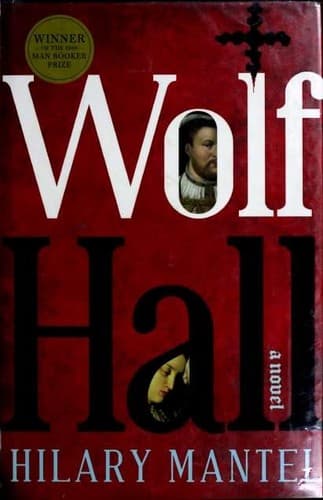
Book details and cover from Google Books.
Ready to read Wolf Hall?
Get your copy on Amazon, or listen to it on Audible. We earn a commission if you buy through these links.
George R. R. Martin
Not Tudor, but it shares Wolf Hall's appetite for dynastic politics, shifting alliances and ruthless calculation among powerful families. Like Mantel's court, the power struggles drive everything.
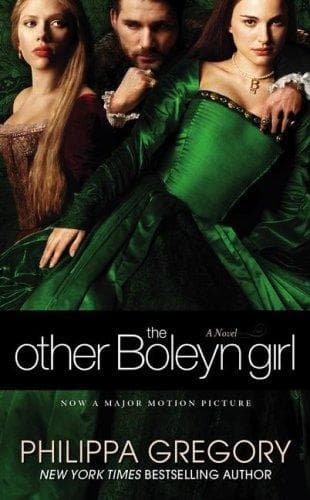
Philippa Gregory
Set in the same Henry VIII court, it follows the Boleyn family's rise and fall from the inside. Readers who enjoyed the court politics of Wolf Hall will find the same ambition and danger, told more intimately.
Ursula K. Le Guin
Not a match in setting, but its study of a flawed, ambitious protagonist learning the costs of power speaks to what draws readers to Cromwell's inner life.
Rudyard Kipling
A classic in which a resourceful protagonist moves between worlds and factions, reading people carefully. Readers drawn to Cromwell's watchful intelligence often find the same pleasure here.