
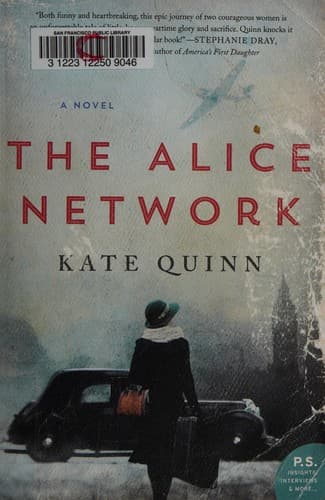
The Alice network
Kate Quinn
Like Isabelle's escape-line work in The Nightingale, this novel follows a female spy network in occupied France, paired with a postwar search that ties two women's stories together across generations.
Reader-supported: when you buy through links on our site, we may earn an affiliate commission. Learn more
We earn a commission if you buy through these links. Learn more
Find Similar BooksA sweeping, emotional World War II novel that shows how two very different sisters survive occupied France, best suited to readers who want to be moved and carried along.
The Nightingale follows two sisters through German-occupied France during the Second World War. Vianne Mauriac is a wife and mother in a provincial village, left to keep her household and her daughter safe after her husband is sent to the front. Her younger sister Isabelle is impulsive, restless, and drawn to resistance work that demands far more courage than Vianne believes she has. The novel alternates between their points of view, so you watch two very different responses to the same occupation unfold side by side.
Hannah writes in a readable, emotionally direct style with short chapters and frequent cliffhangers, closer to a page-turning family saga than a literary war novel. Its strength is in showing ordinary domestic life under occupation: rationing, informers, the choice between collaboration and silence, and the constant fear about who will be taken next. The historical texture is more impressionistic than exhaustive, so you get emotion and stakes rather than a political analysis of Vichy France.
Reading it is an absorbing, sometimes harrowing experience. Expect tears, strong feelings toward both sisters, and a book that asks you to root openly for characters in their worst moments. It works best when you want to be moved, not challenged on the mechanics of wartime history.
The book argues that bravery is often quiet and domestic: hiding someone, feeding a family, refusing to look away. Vianne's struddle to act at all is as central as Isabelle's dramatic risks, and the novel treats both as genuine forms of resistance rather than ranking one above the other.
Hannah uses the sisters' contrasting temperaments to test what occupation demands of different people. One is cautious and tied to home, the other reckless and idealistic. Their relationship, strained by old resentments, becomes a lens on how the same threat can push people toward very different choices.
Much war fiction centers on soldiers and battles. Here the focus is on women managing households, protecting children, and navigating a world where men are absent or powerless. The book makes the case that women's daily decisions under occupation were consequential, even when they went unrecorded.
Nobody in the novel emerges untouched. Characters make choices to protect loved ones that carry guilt and cost others. The book leans into this ambiguity, asking what a person owes to family, to strangers, and to their own conscience when every option is damaging.
Critics often point to the novel's melodramatic tone, its reliance on coincidence and heightened emotion, and prose that favors clarity over craft. Some readers find Vianne's arc slower and more passive than Isabelle's, and others question how far the history has been simplified for dramatic effect. The book also centers two French Catholic women and gives limited space to the wider range of wartime experiences, including perspectives outside France. As a broad popular novel, it aims for feeling more than historical completeness, which some readers will find a constraint.
Reviews from readers on YouTube. Their opinions are their own.
Book details and cover from Google Books.
Ready to read The Nightingale?
Get your copy on Amazon, or listen to it on Audible. We earn a commission if you buy through these links.
Kate Quinn
Like Isabelle's escape-line work in The Nightingale, this novel follows a female spy network in occupied France, paired with a postwar search that ties two women's stories together across generations.
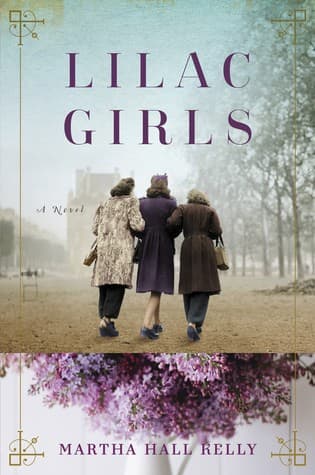
Martha Hall Kelly, María Puerto Barruetabeña Díez
Three women's lives intersect during the war, including a Polish prisoner at Ravensbrück. Fans of The Nightingale's alternating perspectives and focus on women's suffering and resilience will find it gripping.
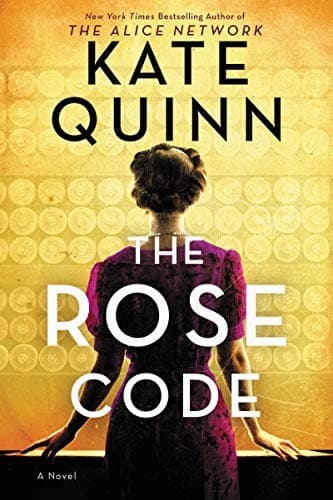
Kate Quinn
Three women codebreakers at Bletchley Park share secrets, friendship and betrayal. It offers the same mix of wartime stakes and complicated female relationships that drives the sisters in The Nightingale.
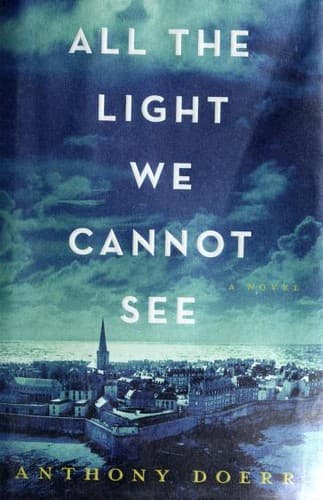
Anthony Doerr
Set partly in occupied Saint-Malo, this beautifully written novel traces a blind French girl and a German boy. Readers moved by The Nightingale's view of ordinary lives under occupation will love it.