
We earn a commission if you buy through these links. Learn more
Lilac Girls
by Martha Hall Kelly, María Puerto Barruetabeña Díez
Guide by the Books of the Day editors · Updated · How we write our guides
A well-researched historical novel that follows three women on two sides of the Atlantic during and after the Second World War, drawing on real people and events from Ravensbrück, the Nazi camp for women.
What It's About
Lilac Girls is a historical novel that alternates between three women whose lives become entangled during the Second World War. Caroline Ferriday is a New York socialite who volunteers for a French hospital and becomes absorbed in the fate of women sent to Ravensbrück. Kasia Kuzmerick is a young Polish woman whose family is caught up in the resistance and who is sent to the camp. Herta Oberheuser is a German doctor who works inside Ravensbrück and must decide how far she will go to keep her position.
Martha Hall Kelly moves between these viewpoints, which lets the book show the camp from the inside and the postwar world from the outside. Several characters are inspired by real people, and the novel is built around documented events, including medical experiments performed on prisoners. The fiction sits on top of that history, so readers should treat the book as a story rather than a record.
The experience is emotionally heavy and builds slowly, with the prose kept accessible for a broad readership. It rewards readers who want to see how ordinary people are drawn into systems of cruelty, and what it costs them to stay loyal to the people they have lost.
Read this if you…
- Enjoy historical fiction that uses real events and people as its foundation
- Want to understand how the Nazi camps affected women specifically
- Can handle a slow, emotionally heavy story that moves between timelines and viewpoints
Skip it if you…
- Want a fast-paced thriller with a tight plot and few digressions
- Prefer war fiction focused on combat or the battlefield rather than the home front and the camps
Key Ideas
- 1
Three perspectives on one wartime system
Rather than telling the story from a single vantage point, the book places a prisoner, a bystander, and a perpetrator side by side. This structure makes the camp feel like a machine that depends on ordinary choices, and it lets you compare how each woman rationalizes what she sees and does.
- 2
Complicity and the cost of staying silent
A recurring concern is how people justify going along with cruelty to protect themselves or their families. The novel asks what it means to know something is wrong and still act as if it is not, and it does not let its characters off easily for doing so.
- 3
Women's networks as a form of resistance
Much of the story's hope comes from letters, favors, and quiet organizing between women on different continents. The book treats these ties as practical and sometimes dangerous acts, showing how small, persistent efforts can matter when official channels fail.
- 4
Memory, record-keeping, and the act of remembering
Because the story is set partly after the war, it asks who gets to tell these events and who is believed. Characters wrestle with what to preserve, what to hide, and how the living can honor those who did not survive.
Limitations
Critics often point to the prose, which is clear and direct but can slide into sentiment and melodrama, especially in the romantic subplots and in dialogue. Some readers feel the novel leans on coincidence to connect its characters. Giving a perpetrator a central viewpoint has also drawn debate, since it asks readers to understand a person whose work was monstrous. The book is also a broad overview rather than a deep study of the camp's daily realities or the full range of prisoners' experiences.
Questions Readers Ask
- Is Lilac Girls based on a true story?
- It is a novel, but it is grounded in real history. Ravensbrück, the medical experiments performed on prisoners, and the postwar efforts to help survivors all existed. Some characters are inspired by real people, while others are invented, so it is best read as fiction informed by documented events rather than as a factual account.
- Who is Lilac Girls for if I have already read other WWII novels?
- If you have read widely in WWII fiction, the book's value is mostly in its focus on women's experiences in the camps and its switch between American and European perspectives. It may feel familiar in structure, but readers who want more on the home front and the aftermath will find it a useful complement to more battle-focused titles.
- Published
- 2016
- ISBN
- 9781548547073
- Difficulty
- intermediate
- Category
- History
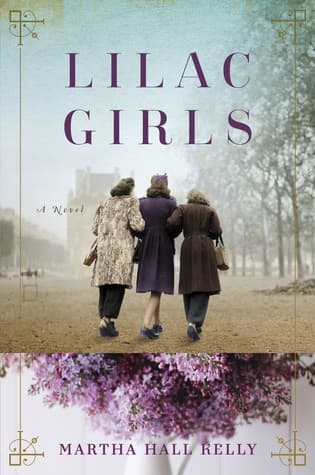
Book details and cover from Google Books.
Ready to read Lilac Girls?
Get your copy on Amazon, or listen to it on Audible. We earn a commission if you buy through these links.