
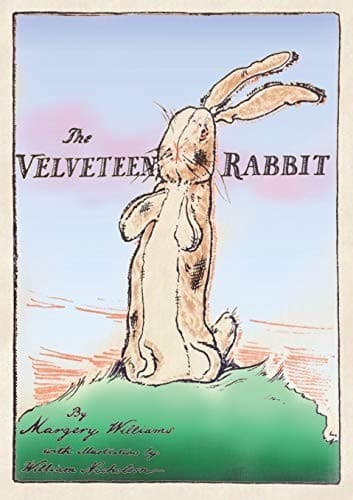
The Velveteen Rabbit
Margery Williams, Nicholson, William
The classic story of a toy rabbit becoming Real through love, it shares Edward's central idea that being loved, and loving back, is what truly transforms us.
Reader-supported: when you buy through links on our site, we may earn an affiliate commission. Learn more
We earn a commission if you buy through these links. Learn more
Find Similar BooksA vain china rabbit learns to love through loss in a short, beautifully illustrated fable that moves adults as much as the children they read it to.
Edward Tulane is a porcelain rabbit with a fine wardrobe, a devoted young owner named Abilene, and almost no capacity to care about anyone but himself. When an accident separates him from the comfortable house on Egypt Street, he begins a long passage through other people's hands: working people, wanderers, and children whose lives are much harder than his own. Each stop changes him a little, and what he is really travelling toward is the ability to love and to accept being loved.
DiCamillo writes in short chapters with plain, rhythmic sentences that carry the feel of an old fairy tale. The story is built around a grandmother's cautionary tale told early on, which echoes through everything that follows. Bagram Ibatoulline's full-color plates and small drawings give it the look of a classic keepsake edition. Because Edward cannot move or speak, he can only watch, listen, and feel, which makes his inner change unusually quiet and focused.
Reading it is a gentle but emotionally serious experience. The book does not shy away from poverty, abandonment, illness, and grief, and many parents report getting choked up reading it aloud. It works best as a read-aloud for children around seven to ten, or as an independent read for confident readers a little older, and it leaves plenty to talk about afterward: why Edward was cold at the start, what the people he meets teach him, and whether love is worth the risk of loss.
The central idea is that a closed heart is safe but empty. Edward begins unable to love, and the book suggests that opening up inevitably means being hurt when people are lost. DiCamillo presents this not as a reason to retreat but as the price of a meaningful life, and Edward's arc tests whether he will choose love again after it has cost him.
Edward starts out admired for his looks and clothes, which he mistakes for being cherished. As his finery is stripped away and he passes through humbler homes, he learns that being truly valued has nothing to do with appearance. The contrast gives young readers a clear, memorable way to think about self-centeredness and what real affection looks like.
The story moves through a series of distinct households and settings, each almost a small tale of its own. This episodic shape suits reading one or two chapters a night, and the grandmother's embedded story acts as a moral frame that the rest of the book answers. The repetition and formal voice give it a timeless, storybook quality.
Because Edward is passive, the people around him take center stage: their loneliness, poverty, and grief become visible to a child reader without heavy explanation. This lets the book handle difficult realities, including loss of a loved one, at a safe remove while still treating them honestly and with compassion.
Some readers find the book's sadness heavy for its intended age group; it includes the death of a child and scenes of cruelty, which can upset younger or sensitive listeners. Others feel the moral is stated a little too directly and that the episodic structure makes some characters feel like lessons rather than people. The resolution is tidier and more sentimental than some adults like. It also has a deliberately old-fashioned tone, so children used to contemporary, fast-paced fiction may need an adult to carry them through the quieter stretches.
Reviews from readers on YouTube. Their opinions are their own.
Book details and cover from Google Books.
Ready to read The Miraculous Journey of Edward Tulane?
Get your copy on Amazon, or listen to it on Audible. We earn a commission if you buy through these links.
Margery Williams, Nicholson, William
The classic story of a toy rabbit becoming Real through love, it shares Edward's central idea that being loved, and loving back, is what truly transforms us.
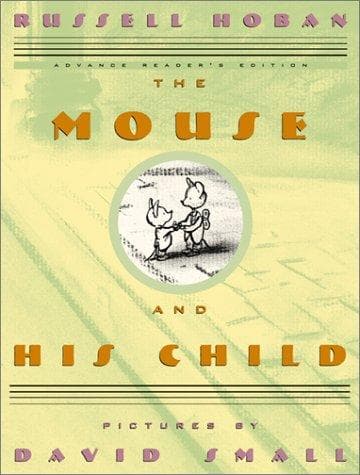
Russell Hoban, David Small
Two clockwork mice are broken, discarded and passed between owners, a journey that echoes Edward's travels and tackles loss and belonging with similar depth and tenderness.
Emily Jenkins
A stuffed buffalo, a stingray and a plastic ball wonder about the world and their girl, offering a lighter, funnier look at what toys feel when Edward's story feels too sad.
Peter Brown
A robot stranded on an island learns to care for others, much as Edward learns love through hardship; short chapters and illustrations make it a natural next read-aloud.