
We earn a commission if you buy through these links. Learn more
The mouse and his child
Guide by the Books of the Day editors · Updated · How we write our guides
A wind-up toy father and his son set out into a harsh, indifferent world, and Hoban uses their tiny scale to explore loss, loyalty, and what it means to keep going.
What It's About
The Mouse and His Child is a novel, first published in 1967, about a clockwork toy father and his son, both mice, who find themselves cast out of the familiar world they knew and must make their way through a larger and often hostile one. Their wind-up mechanisms mean they run down, and their journey carries a constant undertow of mortality that most children's books avoid. Russell Hoban writes in a measured, reflective voice, with long passages of observation and an interest in the small details of how the two of them manage, improvise, and argue with each other.
The reading experience is slower and more meditative than the plot summary suggests. Much of the book is about the emotional texture of the relationship between father and son, and about the way the outside world looks when you are very small and very fragile. Hoban is more interested in what his characters feel and conclude than in tidy action, so readers expecting a brisk adventure may find the pace unhurried. The language is plain but deliberate, and the book rewards close attention.
It is classed as a children's book, but it is often read by adults who return to it for its melancholy and its honesty about hardship. Younger readers can enjoy the animal characters and the sense of quest, while older readers will likely notice the philosophical weight and the questions about purpose and endurance that sit underneath.
Read this if you…
- Want a children's book that treats loss and endurance seriously rather than softening them
- Enjoy slow, reflective novels with a strong emotional core and philosophical undertones
- Are interested in classic animal fables that work on more than one level
Skip it if you…
- Want fast plot, clear villains, and a steady run of action set pieces
- Prefer bright, cheerful stories with tidy resolutions for young children
Key Ideas
- 1
A father and son bound by fragile machinery
The central relationship is shaped by the fact that both characters are mechanical and can run down. This gives their bond an urgency, because care, repair, and companionship become acts that matter precisely because they cannot last forever.
- 2
Being small in a large, indifferent world
Hoban renders ordinary human spaces as vast and sometimes dangerous terrain. The scale shift makes familiar objects and places feel strange, and it lets the author examine how powerless people and creatures can still make meaningful choices.
- 3
Loss, mortality, and the will to continue
The book keeps returning to the question of why one keeps going when the future is uncertain and the world offers little comfort. Its answers are quiet and provisional rather than triumphant, which gives it an unusually honest tone for a book of its kind.
- 4
Patient, reflective storytelling
The distinctive quality of the writing is its willingness to slow down and dwell on feeling and observation. Readers who like to sit with a story and think about it will find more here than in a fast-moving quest narrative.
Limitations
The pace is deliberately leisurely, and some readers find the episodic journey and reflective passages drag, especially if they come expecting a conventional adventure. The melancholy tone can feel heavy for very young children. Its 1967 origins show in some of its attitudes and style, and the book's ideas about gender roles and domestic life reflect its era. Editions and illustration credits differ across printings, so check the specific version you are buying.
Questions Readers Ask
- Is The Mouse and His Child suitable for children?
- It is published as a children's book and the characters and setting will appeal to young readers. However, its themes of loss, mortality, and hardship are serious, and the slow, reflective style suits older children and adults better. Parents may want to read it first to judge whether a particular child will be drawn in or unsettled by its darker moments.
- How does it compare to Charlotte's Web or The Wind in the Willows?
- Like those books it uses animal characters to explore human feelings, but it is considerably bleaker and more philosophical. Charlotte's Web is warmer and more direct, while The Wind in the Willows is more episodic and comfortable. Hoban's book suits readers who want an animal story with more emotional and existential weight.
- Published
- 1967
- ISBN
- 9780140308419
- Difficulty
- intermediate
- Category
- Children's Books
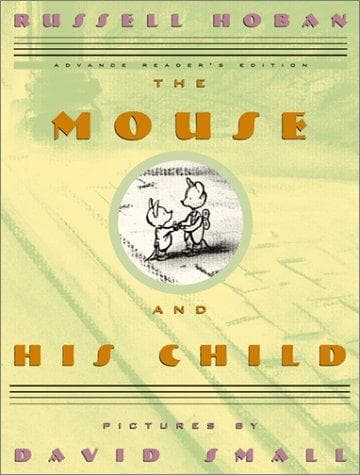
Book details and cover from Google Books.
Ready to read The mouse and his child?
Get your copy on Amazon, or listen to it on Audible. We earn a commission if you buy through these links.