
The Rule of Four
Ian Caldwell, Dustin Thomason
Princeton students decode a Renaissance text full of hidden messages, offering the same pleasure of cracking layered puzzles that Langdon faces, with a more academic, campus setting.
Reader-supported: when you buy through links on our site, we may earn an affiliate commission. Learn more
We earn a commission if you buy through these links. Learn more
Find Similar Booksby Dan Brown
Guide by the Books of the Day editors · Updated · How we write our guides
Dan Brown's Robert Langdon thriller turns Washington, D.C.'s monuments into a coded map, a fast ride for readers who want puzzles over polish.
2 creators reviewed The Lost Symbol on YouTube between 2016 and 2021, with 2.8M views between them. Their opinions are their own; we picked these reviews, we didn't write them.
The Lost Symbol is the third Robert Langdon novel, set almost entirely in Washington, D.C., over roughly a single night. That compressed timeline gives it a ticking-clock structure. Langdon, a Harvard symbologist, is pulled into a hunt that starts with a puzzle and widens into the city's government buildings, monuments, and the hidden corners of Freemasonry. Brown's method is familiar: a chase, a sequence of codes to crack, and short chapters that end on hooks.
What sets it apart from the earlier books is its interest in ideas about the mind. A large share of the story is given to a scientist's research into what human thought might be capable of, and to a debate over whether ancient traditions preserved knowledge that modern people have lost. The city's architecture becomes the main text for these questions, so readers spend a lot of time with maps, buildings, and symbolic meaning.
Reading it feels like being carried through a fast film. The prose is plain, the dialogue is functional, and the pace rarely drops for long. Expect stretches of lecture-style explanation between action beats, and characters who mostly exist to move the plot along. It works best as a page-turner you can finish in a few sittings.
The capital's layout, monuments, and buildings are treated as a text to be decoded. Brown anchors his clues in real architecture, so readers who know the city will recognize the places and enjoy watching geography turn into meaning. Even if you have never visited, the sense of a city hiding messages in plain sight is the book's most distinctive pleasure.
The novel explores the idea that ancient traditions kept wisdom away from the public. Freemasonry appears as a mix of real fraternal history and speculative lore, and the story leans toward the mystical side of that mix. It invites readers to wonder where history ends and invention begins, though it does not resolve that question for them.
Research into consciousness and the idea that thought might shape reality run through the plot. Brown presents these notions with more enthusiasm than evidence, so the book reads partly as a debate between a scientist's optimism and a skeptic's doubt. Those sections are where the novel is most likely to divide its readers.
The single-night timeline, rising stakes, and frequent cliffhanger endings keep momentum going. Short sections make it easy to read one more chapter, which helps the book carry its slower expository passages. The structure is the engine of the book, more than any single character or line of prose.
The most common criticisms are about the writing: dialogue that often serves as exposition, repetitive explanations, and characters who feel thin. Many readers find the middle slower than the opening and closing. The science and consciousness material has drawn criticism for presenting speculative claims as more settled than they are. The Masonic and historical material is loose, so it should be read as entertainment rather than as a reliable guide. The book also follows a formula Brown had already used, which some readers find predictable.
Book details and cover from Google Books.
Ready to read The Lost Symbol?
Get your copy on Amazon, or listen to it on Audible. We earn a commission if you buy through these links.
Ian Caldwell, Dustin Thomason
Princeton students decode a Renaissance text full of hidden messages, offering the same pleasure of cracking layered puzzles that Langdon faces, with a more academic, campus setting.
Steve Berry
Cotton Malone chases Knights Templar secrets across Europe, delivering the hidden-history treasure hunt and constant pursuit fans of Langdon's Masonic quest will recognise.
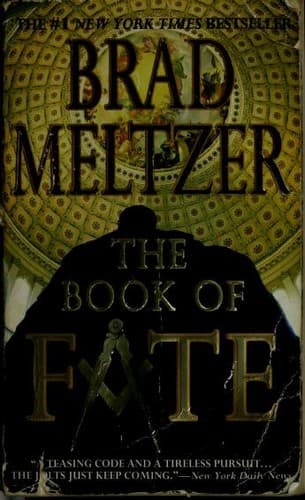
Brad Meltzer
Set around the White House, it threads Masonic symbols and a Thomas Jefferson code into a modern conspiracy, much like The Lost Symbol's Washington, D.C. puzzles.
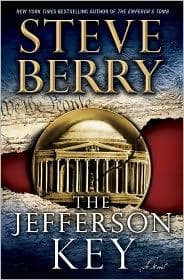
Steve Berry
A cipher tied to the Founding Fathers and presidential assassinations sends the hero through American landmarks, echoing the capital-city mysteries Langdon unravels.