
We earn a commission if you buy through these links. Learn more
The Book of Fate
by Brad Meltzer
A fast, twisty conspiracy thriller from Brad Meltzer that suits readers who want a page-turner built around history, secrets, and a race to uncover them.
What Creators Say About The Book of Fate
2 creators reviewed The Book of Fate on YouTube between 2007 and 2018, with 2.7K views between them. Their opinions are their own; we picked these reviews, we didn't write them.
What It's About
The Book of Fate is a Brad Meltzer thriller in the style he is best known for: a fast-moving conspiracy story that connects a present-day search to older episodes in American history. The plot centers on a mysterious object and the people who want it, and the story moves through short scenes that tend to end on hooks, so the book reads quickly. Because this page relies mainly on the general shape of Meltzer's work rather than a detailed reading of every scene, treat the specifics here as a sense of the experience rather than a full map of the plot.
Readers who know his other novels will recognize the formula: a capable but somewhat reluctant protagonist, a Washington-flavored setting, puzzles that link documents, symbols, and historical records, and a steady stream of reversals. The tone leans toward popular entertainment rather than literary ambition. Characterization is serviceable and dialogue is brisk, and the pleasure comes from momentum and the research-flavored details rather than from prose style or psychological depth.
The experience is best described as a page-turner you can finish in a few sittings on a flight or over a weekend. Expect the conventions of the genre: cliffhangers, quick cuts between scenes, and a plot that rewards you for not examining its logic too closely. If you want a slow-burn novel of ideas or a book that lingers after the last page, this will likely feel lighter than you hoped.
Read this if you…
- want a fast thriller you can finish in a weekend
- enjoy conspiracy plots that connect the present to American history
- like puzzle-driven stories where clues matter as much as characters
Skip it if you…
- want careful prose, nuanced characters, or a novel that lingers in your mind
- are bothered by implausible plot turns or coincidences that a thriller asks you to accept
Key Ideas
- 1
History as a hidden layer beneath the present
Meltzer's appeal is the idea that the familiar story of the past may be incomplete, with documents and artifacts holding information the official record left out. The novel leans into that suspicion and invites readers to enjoy the pleasure of seeing ordinary places and famous figures reframed as clues. Expect the history to function as scaffolding for the plot rather than as a rigorous account.
- 2
Puzzles that drive the plot forward
Much of the book runs on the chase: a series of clues, codes, or references that the characters must decode to move ahead. This gives the reading experience a game-like rhythm, where each answer opens a new question. Readers who enjoy solving problems alongside the protagonist will get the most out of this structure.
- 3
An everyday hero pulled into danger
The protagonist is not a trained spy or a seasoned investigator but someone thrust into a dangerous situation who has to adapt quickly. That gives the story an accessible point of view, since readers can learn the rules of the conspiracy at the same pace as the lead. Character depth is modest, so the focus stays on what happens next.
- 4
Short chapters engineered for momentum
The book's pacing is one of its strongest tools. Brief chapters and frequent shifts in perspective keep tension high and make it easy to read in long stretches. The trade-off is that quieter moments, reflection, and subtle character change receive less room than the action and revelation.
Limitations
Critics of Meltzer's thrillers often point to flat characterization, dialogue that serves the plot more than the people speaking, and a willingness to stretch historical and logical plausibility for the sake of a twist. The book is not a work of historical scholarship, so readers looking for accurate or balanced accounts of the events it touches should consult other sources. Its pacing and conventions are also very much of their genre, and some readers will find the formula predictable if they have read several of his novels already.
Questions Readers Ask
- Who is The Book of Fate best for?
- It suits readers who want a quick, plot-driven thriller and don't mind genre conventions. If you enjoy conspiracy stories that mix history with a race against time, you will likely have a good time. Readers who prefer literary fiction or slow, character-focused novels will probably find it too fast and too simple.
- How does it compare to Dan Brown's novels?
- Both are popular conspiracy thrillers that use history and puzzles to drive the plot, so fans of one often enjoy the other. Meltzer's books tend to be a bit more grounded in American settings and political themes, while Brown leans more heavily on art and religious symbolism. Expect similar pacing and a similar willingness to bend plausibility.
- Published
- 2006
- ISBN
- 9780759568426
- Difficulty
- beginner
- Category
- Fiction
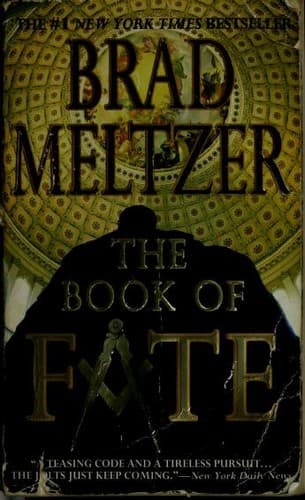
Book details and cover from Google Books.
Ready to read The Book of Fate?
Get your copy on Amazon, or listen to it on Audible. We earn a commission if you buy through these links.