
We earn a commission if you buy through these links. Learn more
Mudbound
Mudbound weaves a white farm family and a Black tenant family in 1940s Mississippi into one unflinching story of shared land and unequal lives.
What It's About
Mudbound follows two families who share a stretch of land in the Mississippi Delta around the Second World War. The McAllans are white landowners who have moved their household onto a farm they hardly understand, led by a father determined to make it pay. The Jacksons are Black tenant farmers working the same mud-heavy soil under terms that keep them permanently in debt. Hillary Jordan moves the story between several first-person voices, so the same events arrive from different positions in the social order.
The book's approach is patient and accumulative. Early chapters mostly build texture: the labor of farm life, the rain that turns roads to muck, the small rituals of one household and the watchfulness of another. Tension rises gradually, and the narration gives you access to thoughts the characters rarely say aloud. The effect is less a single plot twist than a slow tightening, where you see how each person's private view of the others is shaped by the rules of the place.
Reading it is an emotionally demanding experience. The prose is plain and direct, with few stylistic flourishes, and Jordan lets uncomfortable scenes sit without softening them. You will likely read faster as the stakes sharpen, then slow down to absorb what you have seen. It rewards attention to who is speaking and what they leave out.
Read this if you…
- want a historical novel that examines Jim Crow-era Mississippi through several viewpoints at once
- can handle sustained scenes of racial violence and cruelty and want those scenes to carry real moral weight
- enjoy slow-building family sagas where character and atmosphere matter more than plot twists
Skip it if you…
- need a fast plot with steady momentum from the first page
- prefer uplifting books with clear heroes and tidy resolutions
Key Ideas
- 1
Two families bound to one stretch of land
The central structure places white landowners and Black tenant farmers on the same ground, with very different power and very similar hardship. The land ties their fortunes together while law and custom keep them apart. Jordan uses this shared dependence to show how a place can connect people and still rank them, leaving the reader to weigh how much of the inequality is written in the soil itself and how much is enforced by people.
- 2
Competing voices reveal competing truths
Several characters narrate, including members of both families, so the same events are described from different vantage points. The gaps between accounts are where much of the book's argument lives. Readers learn to notice what each narrator understands, misreads, or refuses to see, and the arrangement makes it hard to accept any single version of events as the whole story.
- 3
Coming home changed after war
Some characters return from the Second World War carrying experiences that do not fit neatly back into the expectations of their home town. The novel examines what service means for someone whose country asked them to fight while the local order still denies them basic dignity. These threads add weight to the domestic story and widen its scope beyond one farm.
- 4
Mud as a image of entrapment
The weather and the soil are not just backdrop. Rain, flooding, and sticky ground make movement slow and costly, which mirrors the way debt, custom, and fear restrict each character's options. Paying attention to the physical setting helps explain why certain choices feel almost inevitable, and why escape is so hard to imagine.
Limitations
Some readers find the rotating narration uneven, with certain voices feeling more fully realized than others. The middle stretches can feel slow for those expecting a brisk plot. Critics also note that the novel's focus stays mostly within the two households, so the wider economics of Delta farming and the life of the Black community beyond the Jacksons receive less attention. The book is also very much a product of its time in its approach to racial violence, which some readers find affecting and others find heavy-handed.
Questions Readers Ask
- Is Mudbound a good choice for book clubs?
- Yes, it generates strong discussion because its shifting viewpoints invite readers to argue about who sees clearly and who does not. The subject matter is hard, so groups should expect emotionally intense conversation. Its manageable length and clear structure make it easy to follow even for members who do not read historical fiction often.
- How does Mudbound compare to To Kill a Mockingbird?
- Both novels examine racial injustice in the American South through a shared community, but Mudbound is less interested in a single moral center. It spreads its attention across adults on both sides of the color line and is considerably darker in tone. Readers who loved Harper Lee's sense of place may appreciate its atmosphere, while those seeking a child's-eye view will find it less comforting.
- Was Mudbound adapted into a film?
- Yes, it was adapted into a 2017 feature film directed by Dee Rees and released on Netflix. The film is generally considered faithful to the novel's main story and its multiple perspectives. Many readers find it useful to watch after finishing the book, since the visual setting adds a concrete sense of the Delta landscape.
- Published
- 2008
- ISBN
- 9781565126770
- Difficulty
- intermediate
- Category
- Fiction
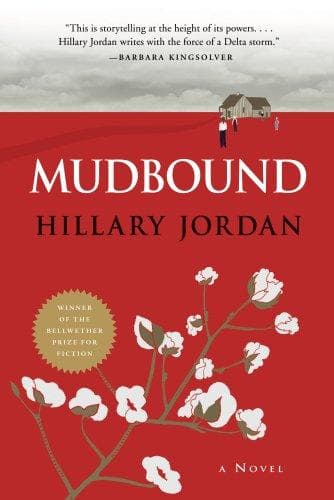
Book details and cover from Google Books.
Ready to read Mudbound?
Get your copy on Amazon, or listen to it on Audible. We earn a commission if you buy through these links.