
Life After Life
Kate Atkinson
Like Harry August, Ursula Todd is born, dies and begins again, and each rerun of her life shifts slightly. Atkinson handles the repeated history with the same warmth and wit that make Harry's story absorbing.
Reader-supported: when you buy through links on our site, we may earn an affiliate commission. Learn more
We earn a commission if you buy through these links. Learn more
Find Similar Booksby Claire North
A sharp, emotionally rich time-loop novel that uses one man's endless rebirths to ask what a single life can change.
2 creators reviewed The First Fifteen Lives of Harry August on YouTube between 2015 and 2018, with 6.1K views between them. Their opinions are their own; we picked these reviews, we didn't write them.
The First Fifteen Lives of Harry August is a novel about a man who is born, lives, dies, and starts again, always remembering everything from the lives before. Claire North builds the book less as a single adventure than as a puzzle assembled across many decades and many versions of one man's life. The structure keeps shifting: we move through eras, learn how Harry tries different paths, and gradually see that his circumstances are part of something larger than himself.
The tone is the book's great strength. North moves easily between wry humour, quiet melancholy, and the tension of a conspiracy story, so the book can feel like a spy novel one chapter and a meditation on memory the next. Harry is a likeable, dryly observant narrator who has learned, over many lives, that he can change very little about the big outcomes but can still choose how he meets them. That gives the reading experience a particular texture: you are constantly comparing one life with another, noticing what is the same and what has shifted.
Expect a long, layered novel rather than a fast read. Some readers find the early stretches slow while the rules and the world come into focus, and the book asks you to hold a lot of recurring details in mind. If you enjoy fiction that rewards attention, with its ideas arriving slowly and then all at once, the payoff is substantial.
Harry returns to childhood each time he dies, carrying the knowledge of every previous life. The book explores whether this is a curse, a kind of training, or simply the condition of being unable to escape oneself, and how repetition slowly wears down his sense of surprise and hope.
Harry is not the only one who recurs. The novel imagines a secret community of people in the same situation, who pass knowledge and messages through the generations. It examines how such a group might use its unusual advantages, and how quickly shared power can turn into shared temptation.
A recurring concern is how progress accumulates and whether tiny alterations to history can compound into something dangerous. The book raises questions about technology, acceleration, and responsibility without offering easy answers, and it encourages readers to think about what the future owes to the past.
Scenes jump across lives and timelines, so the reader assembles the picture in pieces, much as Harry does. This makes the novel more demanding than a straight narrative, but it also means that details planted early can pay off long after they appear.
Despite its heavy premise, the book is often funny and warm, with a dry narrative voice that keeps the emotional material from becoming bleak. Loss, friendship, and the ache of repeated farewells give the story its emotional center.
Some readers find the opening chapters slow and the middle hard to track, because the book jumps across lives and timelines. The tangle of organisations and rules can feel fussy, and some reviewers felt the emotional payoff was uneven. The novel is also invested in the history and mechanics of its world, so readers wanting a pure character study may feel the plot machinery takes up more room than they would like. It is a long book, and that length is part of both its appeal and its frustration.
Book details and cover from Google Books.
Ready to read The First Fifteen Lives of Harry August?
Get your copy on Amazon, or listen to it on Audible. We earn a commission if you buy through these links.
Kate Atkinson
Like Harry August, Ursula Todd is born, dies and begins again, and each rerun of her life shifts slightly. Atkinson handles the repeated history with the same warmth and wit that make Harry's story absorbing.
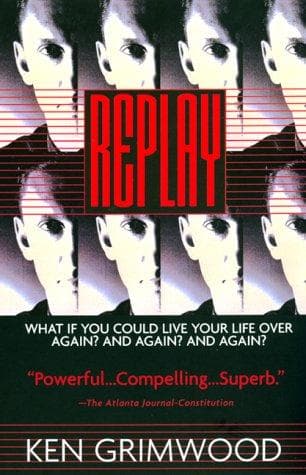
Ken Grimwood
Jeff Winston dies at forty-three and wakes at eighteen with his adult memories intact, much as Harry does. Grimwood explores what a second chance does to a man's relationships and regrets, a theme central to the source book.
Matt Haig
Nora explores alternative versions of her life after a crisis, weighing the choices that shaped her. Readers who enjoyed Harry's reflections on what he might have done differently will find the same questions handled with gentle warmth.
Audrey Niffenegger
Henry's involuntary time travel leaves him unable to control where he lands in his own life, a loss of agency that echoes Harry's. The love story at its heart is as emotionally direct as the source book's.