
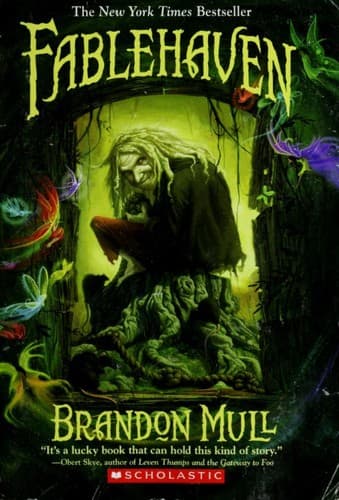
Fablehaven
Brandon Mull
Like the Grace children, siblings Kendra and Seth stay with grandparents and discover a secret preserve of magical creatures, with rules that are dangerous to break, just as in The Field Guide.
Reader-supported: when you buy through links on our site, we may earn an affiliate commission. Learn more
We earn a commission if you buy through these links. Learn more
Find Similar Booksby Tony DiTerlizzi, Holly Black
A sibling fantasy that reads like a naturalist's notebook: an illustrated field guide to hidden creatures makes the old house feel alive, and it's a fast, funny entry point into the Spiderwick world.
The Field Guide is the opening volume of The Spiderwick Chronicles, a middle-grade fantasy written by Holly Black and illustrated by Tony DiTerlizzi. It follows three siblings, Mallory, Jared, and the twins Simon, who are sent to stay with a great-aunt in an old country house. Soon they discover a mysterious book tied to the estate, and the strange creatures on the grounds begin to make their presence felt.
The book's most distinctive feature is its form. Much of it is built around the field guide itself, with sketches, marginal notes, and careful cataloguing of the creatures, so reading often feels like browsing a naturalist's notebook rather than following a conventional plot. The narrative moves briskly with short chapters, and the sibling relationships are more squabbling and teasing than sentimental, which gives the story its humor.
The experience is quick and cozy-spooky rather than frightening. It works as a self-contained introduction to the world, though it is clearly built to lead into the rest of the series. Readers who enjoy illustrated books, small hidden worlds, and the idea that ordinary places might be full of secrets will find it especially satisfying.
The story's core appeal is the sense that magic is tucked into everyday places. The old estate and its grounds feel ordinary at first, then gradually reveal layers of creatures that most adults would never notice. The book rewards readers who enjoy noticing small details and wondering what else might be out there.
The central object is a catalogue of creatures, and the book uses that format to deliver information in a playful way. Sketches and annotations do part of the storytelling work, so the reader feels like a researcher piecing together a mystery. This gives the book a tactile, scrapbook quality that plain prose fantasy lacks.
Each of the three children has a distinct temperament, and their rivalries drive much of the humor and tension. The book treats sibling friction realistically rather than as a problem to be solved in the first chapter. Their gradual teamwork feels earned because they start out as an irritated, mismatched group.
The creatures can be unsettling, but the tone stays playful, so younger readers get a thrill without much dread. The mix of comedy and eerie details is a big part of why the book has stayed popular with its target age group. It is a good example of spooky fiction that is tuned for comfort as well as curiosity.
Readers coming in as adults may find the characters thinly drawn and the plot straightforward, with many episodes that feel designed to set up later books. The book is also less ambitious than some fantasy written for older readers, and its creature descriptions can feel episodic rather than deeply systematic. The overall tone is light, so anyone hoping for emotional depth or moral complexity may be disappointed. Some of the book's gender and sibling dynamics also reflect the conventions of its era.
Reviews from readers on YouTube. Their opinions are their own.
Book details and cover from Google Books.
Ready to read The Field Guide?
Get your copy on Amazon, or listen to it on Audible. We earn a commission if you buy through these links.
Brandon Mull
Like the Grace children, siblings Kendra and Seth stay with grandparents and discover a secret preserve of magical creatures, with rules that are dangerous to break, just as in The Field Guide.
Peter Brown
Another beautifully illustrated story set in the wild, where a robot learns about the animals around her; it shares Spiderwick's sense of wonder at observing nature closely.
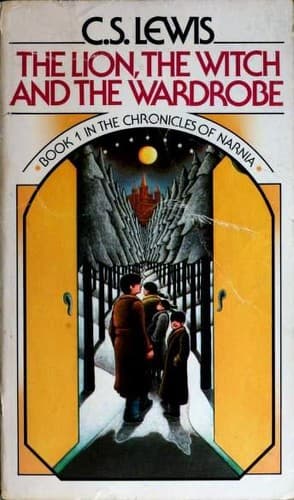
C. S. Lewis
The classic tale of siblings sent to an old house who find a magical world, with the same mix of sibling rivalry, discovery and danger that drives The Field Guide.
Lemony Snicket
Three resourceful siblings facing peril in gloomy houses, told in short punchy chapters with dark humour; readers who enjoyed the Graces' teamwork will root for the Baudelaires.