
We earn a commission if you buy through these links. Learn more
The Lion, the Witch and the Wardrobe
by C. S. Lewis
Guide by the Books of the Day editors · Updated · How we write our guides
A cozy-looking fantasy with real moral weight: four evacuated siblings enter a snowbound land where a lion's courage matters more than comfort, told with unhurried warmth.
What Creators Say About The Lion, the Witch and the Wardrobe
2 creators reviewed The Lion, the Witch and the Wardrobe on YouTube between 2014 and 2017, with 203.6K views between them. Their opinions are their own; we picked these reviews, we didn't write them.
What It's About
The Lion, the Witch and the Wardrobe, published in 1950, is the first book in The Chronicles of Narnia. It opens during the Second World War, when four Pevensie children are sent from London to the countryside to live with an old professor. Exploring the house on a rainy day, the youngest, Lucy, climbs into a wardrobe and finds a snowy wood on the other side, the first sign of a land under a long winter.
Lewis writes in a brisk, conversational voice that addresses the reader directly, with the narrator stepping in to comment, explain, and sometimes scold. The chapters are short and the pace is quick, so it reads easily even for adults who come back to it. Much of the pleasure lies in the everyday details of the Professor's house, the bickering between siblings, and the gradual shift from playful adventure to something graver.
Reading it now, it helps to know it is a fantasy written by a scholar of medieval literature who wanted to make an old-fashioned kind of wonder available to children. The book is often read as Christian allegory, though Lewis preferred to present it as a story that could be enjoyed without any decoding. Expect a short, warm read with a clear moral sense rather than a dense or ambiguous one.
Read this if you…
- love classic children's fantasy and want to revisit a book you loved as a child
- want a read-aloud that works for children around eight and up as well as adults
- like stories where moral choices are clear and told with warmth
Skip it if you…
- want morally complex characters or a dark, gritty fantasy world
- are put off by heavy-handed narration or strong religious undertones
Key Ideas
- 1
Wonder that enters through an ordinary door
The book's central trick is placing the impossible inside a very English, very domestic setting. A wardrobe in a country house feels safe and familiar, which makes the leap into a frozen kingdom feel earned. Lewis builds the sense of discovery slowly, so the reader shares the children's amazement rather than being handed a fantasy world all at once.
- 2
Betrayal, shame, and the hope of forgiveness
One of the sharpest threads concerns a younger brother who makes a selfish choice with serious consequences for his siblings. Lewis treats his failure seriously without making him a villain beyond return. Readers who think about how people recover from their worst decisions will find the middle of the book more thoughtful than its fairy-tale surface suggests.
- 3
Winter as a symbol of enforced joylessness
The White Witch rules a land where it is always winter but never Christmas. The image of a kingdom locked in cold and forbidden feasting gives the story its emotional stakes. Lewis uses sensory detail, such as food, warmth, and light, to make the stakes felt by a child reader without needing much explanation.
- 4
A gentle allegory you can take or leave
Many readers notice Christian symbolism in the figure of Aslan and the shape of the story. Lewis did not insist on a one-to-one code, and the story works as plain adventure for those who ignore it. This gives the book a flexibility that lets parents, teachers, and adult rereaders bring their own interpretations without spoiling the experience for younger readers.
Limitations
Critics often point to the dated gender roles in the book, with the girls given more caring and supporting parts while the boys take the lead in battle. The Turkish Delight episode and the portrayal of the Witch have also drawn comment about racial and cultural stereotyping. Characterization is fairly thin, and the Christian symbolism can feel obvious to readers who do not share it. The narrator's asides, though charming, can slow the story for some modern readers.
Questions Readers Ask
- Is The Lion, the Witch and the Wardrobe still worth reading as an adult?
- Yes, especially if you want to see why the book became a classic. Its wartime setting, sibling dynamics, and clear prose hold up well, and it is short enough to read in an afternoon. Adults often notice the religious imagery more than children do, so it can reward a second reading. Expect a simple style rather than literary complexity.
- Should I read the Narnia books in publication order or chronological order?
- Publication order begins with this book, which is how most readers first met Narnia. Chronological order begins with The Magician's Nephew, which explains how the world was created. This book works well as a starting point because it introduces the world through the eyes of outsiders, but either order is workable and the books are fairly self-contained.
- Published
- 1950
- ISBN
- 9780060765446
- Difficulty
- beginner
- Category
- Children's Books
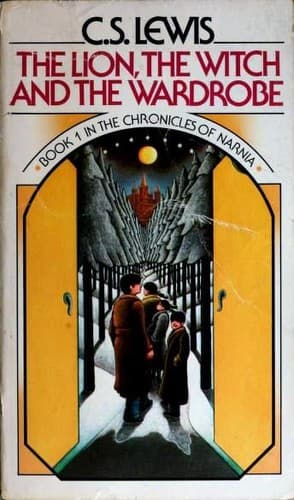
Book details and cover from Google Books.
Ready to read The Lion, the Witch and the Wardrobe?
Get your copy on Amazon, or listen to it on Audible. We earn a commission if you buy through these links.