
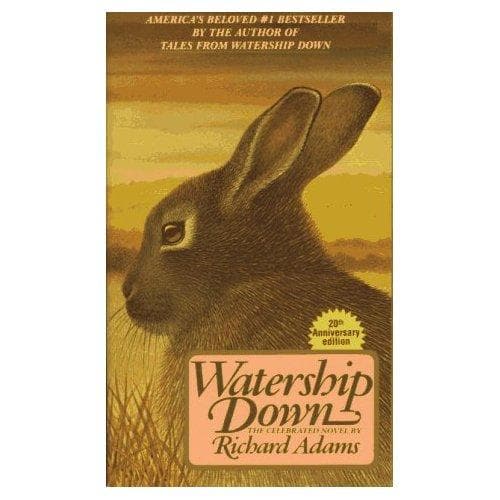
Watership Down
Richard Adams, Richard Adams
Like Buck's story, this epic follows animals through danger and hardship from their own perspective, with a strong sense of instinct, leadership and the harshness of the natural world.
Reader-supported: when you buy through links on our site, we may earn an affiliate commission. Learn more
We earn a commission if you buy through these links. Learn more
Find Similar Booksby Jack London
Guide by the Books of the Day editors · Updated · How we write our guides
A short, muscular novella that uses one dog's hard journey to ask what civilization strips away and what survives underneath, and it still moves fast.
2 creators reviewed The Call of the Wild on YouTube between 2017 and 2025, with 575.9K views between them. Their opinions are their own; we picked these reviews, we didn't write them.
The Call of the Wild is a short novel from 1903 about Buck, a large, well-treated house dog in California who is suddenly stolen and shipped north to the Yukon during the gold rush, where strong sled dogs are in enormous demand. Buck has to learn new rules fast: whom to fear, whom to obey, and how to survive cold, hunger, and cruel handlers. He passes from owner to owner, and each one shows him a different kind of human power, from kindness to indifference to brutality.
London writes in a plain, direct style with short declarative sentences and very little interior commentary. The narrator mostly stays outside Buck's head, describing what he does and what happens around him rather than explaining what he feels, so the reader has to infer much of the emotional weight. That restraint is the book's main pleasure. Fights, cold, exhaustion, and the physical toll of hauling freight are rendered with concrete, sensory detail, and the pace rarely lets up.
Reading it is a quick, intense experience rather than a slow immersion. It works more as an adventure and a parable about instinct than as a deep character study, and most readers finish it in a single sitting. Expect blunt treatment of violence, suffering, and animal cruelty, and an argument about dominance that the book states openly rather than hides. It is short enough to be a good first novel for a reluctant reader, but it has a lot to say.
Buck starts out comfortable and bound by the manners of a judge's estate. When he is taken away, those habits fall off quickly, and the book suggests that much of what we call civilized behavior depends on circumstances. London is less interested in sentiment than in showing how fast a creature adapts when the rules change, and how little the old comforts count once hunger and fear set the terms.
The title points to the central tension: an animal raised among people still carries inherited drives that have been dormant. As Buck is worked harder and the environment grows harsher, those drives come to the surface. The book treats instinct as a real force rather than a metaphor, which is why it feels so physical. Readers who are curious about how early twentieth-century writers thought about heredity and nature will find this idea especially interesting.
Almost every relationship in the book is built on dominance: owners control dogs through fear, food, and the whip, and dogs learn to read those signals. The few moments of genuine attachment stand out sharply against this background. London asks what loyalty means when one party holds all the power, and the answer he gives is harsh but clear. The book is less a love story about dogs than a study of what a bond can and cannot survive.
London's style is one of the most distinctive things about the book. By keeping the narration tight and withholding explanation, he forces the reader to watch and judge, much as a person would watch an animal. The effect is sparse but gripping, and it makes the emotional beats hit harder. Anyone interested in how short, plain prose can carry intensity without ornament will find a useful model here.
The book's views on race, Indigenous peoples, and the natural hierarchy reflect early 1900s assumptions, and some passages are jarring to modern readers. Its 'survival of the fittest' framing can feel simplistic, and the people in it are mostly types rather than fully drawn individuals. Readers who want rich human characters or a gentle tone may be frustrated. The story's sense of how dogs and wolves really behave is also more philosophical than scientifically accurate, so it works best as literature rather than natural history.
Book details and cover from Google Books.
Ready to read The Call of the Wild?
Get your copy on Amazon, or listen to it on Audible. We earn a commission if you buy through these links.
Richard Adams, Richard Adams
Like Buck's story, this epic follows animals through danger and hardship from their own perspective, with a strong sense of instinct, leadership and the harshness of the natural world.
Anna Sewell
A classic told by a horse who passes through kind and cruel owners, much as Buck does, showing how humans shape an animal's fate and character.
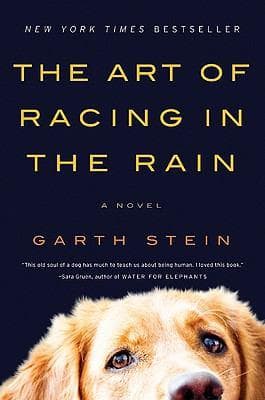
Garth Stein, Christopher Evan Welch
Narrated by a dog with a deep inner life, it offers a modern, more emotional take on seeing human behaviour through an animal's eyes and loyalty.
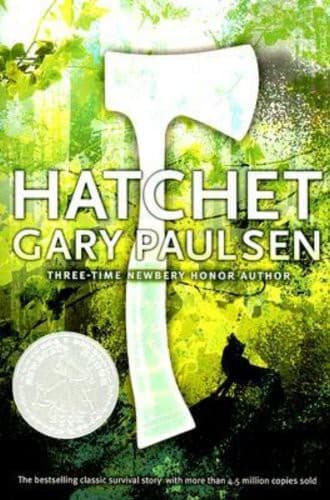
Gary Paulsen
A lean, gripping survival story in the Canadian wilderness where, like Buck, a young boy must shed comfort and learn the hard rules of nature quickly.