Reader-supported: when you buy through links on our site, we may earn an affiliate commission. Learn more

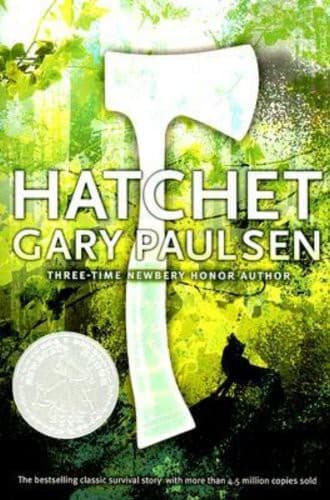
Cover of Hatchet
Buy on AmazonBuy on Bookshop.orgListen on Audible

We earn a commission if you buy through these links. Learn more

Find Similar Books

Hatchet

by Gary Paulsen

Guide by the Books of the Day editors · Updated · How we write our guides

A tight, practical survival story that treats a thirteen-year-old's fear, grief, and problem-solving with unusual seriousness, and works well for readers who like to see how things get done.

What Creators Say About Hatchet

2 creators reviewed Hatchet on YouTube between 2013 and 2021, with 427.6K views between them. Their opinions are their own; we picked these reviews, we didn't write them.

Hatchet Video SummaryGradeSaver on YouTube321.1K views · 2021
Hatchet by Gary Paulsen (Book Summary and Review) - Minute Book ReportMinute Book Reports on YouTube106.5K views · 2013

What It's About

Hatchet follows Brian Robeson, a thirteen-year-old flying north to visit his father, when the pilot suffers a heart attack and the small plane goes down in a lake in the Canadian wilderness. Brian is left with the clothes he is wearing, a hatchet his mother gave him, and no adult to rely on. Most of the book is his attempt to stay alive from one day to the next: finding water, making fire, getting food, building shelter, and dealing with injury and fear.

Paulsen writes in short, plain sentences from a close third-person view, so the reader stays inside Brian's head. The pleasure is largely procedural. Problems are laid out clearly, mistakes are costly, and the pacing is brisk. Brian's inner life comes through memory and through what he slowly admits about his parents and the home he left behind.

It reads quickly and suits readers who enjoy problem-solving and tense, quiet survival. Adult readers may find the prose spare and the emotional range narrow, since this is a book that works through action and attention more than through lyrical description or complicated characters.

Read this if you…

  • enjoy survival stories built around practical problem-solving
  • want a fast, gripping read with a young protagonist facing real danger
  • are interested in how fear and grief shape a person's choices under pressure

Skip it if you…

  • want lyrical prose, complex supporting characters, or a large cast
  • prefer survival books that focus on expert technical manuals rather than a fictional narrative

Key Ideas

  1. 1

    Competence built one problem at a time

    Brian does not become capable all at once. He tries things, fails, adjusts, and gradually learns what the land offers and what it refuses to give. The book's attention to practical detail makes the slow growth of his skill feel earned rather than convenient.

  2. 2

    Fear as the real obstacle

    Early on, panic and despair are as dangerous as hunger or cold. Paulsen shows how a frightened mind makes bad decisions, and how calm, repeated routines become a way of holding fear at bay. Brian's survival depends as much on his temperament as on his tools.

  3. 3

    Grief and the family he left behind

    Solitude gives Brian time to think about his parents' divorce and the feelings he has kept buried. The wilderness does not resolve these memories, but being alone with them forces him to face what he has avoided, which gives the story an emotional undercurrent beyond the survival plot.

  4. 4

    Nature as indifferent, not hostile

    The lake, the forest, and the animals are neither villains nor friends. They are conditions to be read and respected. This matter-of-fact view of the natural world keeps the book grounded and prevents the survival story from turning into melodrama.

  5. 5

    Plain style as a deliberate choice

    The spare, direct sentences are central to the book's effect. They keep the focus on what Brian sees, does, and feels in the moment, and they make a long stretch of isolation read with momentum rather than monotony.

Limitations

The survival details reflect a 1980s understanding of wilderness skills and some of the problem-solving can feel improbably tidy. Female characters are largely absent, and the emotional arc, while sincere, is simple and mostly internal. Adult readers may find the writing thin and the tension formulaic after a while. Those looking for deep characterization or sophisticated themes may feel the book aims at a younger audience than its survival premise suggests.

Questions Readers Ask

Is Hatchet appropriate for adults or only for younger readers?
It was written for middle-grade readers, and it is short and accessible for adults too. Many adults read it as a fast, absorbing survival story. Adults who want richer prose or more complicated characters may find it slight, but its focus on resourcefulness and fear is engaging at any age.
How does Hatchet compare to Robinson Crusoe?
Robinson Crusoe is longer, more reflective, and much more concerned with religion, labor, and colonial attitudes. Hatchet is leaner and more immediate, focusing on one teenager's day-to-day survival and emotional state. If you want a fast, modern take on being stranded, Hatchet fits well. If you want a long meditation on self-reliance, Crusoe is the richer choice.
Does Hatchet still hold up today?
The core story of a stranded teenager working through fear and practical problems remains compelling. Some survival techniques and the book's sense of technology reflect its 1980s origins, but the emotional focus and the pacing still work well for new readers.
Published
1986
ISBN
9780812471267
Difficulty
beginner
Category
Fiction

Book details and cover from Google Books.

Ready to read Hatchet?

Get your copy on Amazon, or listen to it on Audible. We earn a commission if you buy through these links.

Books Like Hatchet

View all →
Cover of My Side of the Mountain

My Side of the Mountain

Jean Craighead George

A boy runs away to live alone in the Catskill woods, building shelter and finding food with minimal gear, much like Brian does in Hatchet. Its quiet, practical focus on self-reliance will appeal to the same reader.

Cover of Island of the Blue Dolphins

Island of the Blue Dolphins

Scott O’Dell

Karana survives alone on a remote island for years, relying on her own ingenuity. Like Hatchet, it is a grounded survival story driven by resourcefulness and endurance.

Cover of The Call of the Wild

The Call of the Wild

Jack London

Buck must adapt to the harsh northern wilderness and rely on instinct and strength. Its raw, unsentimental look at nature mirrors the tough realism that draws readers to Hatchet.

Cover of Two Years Before the Mast

Two Years Before the Mast

Richard Henry Dana, Jr.

Dana records the hardships of life at sea in plain, observant prose. Readers who admire Hatchet's matter-of-fact accounts of physical hardship will find a similar tone here.

Explore More