
We earn a commission if you buy through these links. Learn more
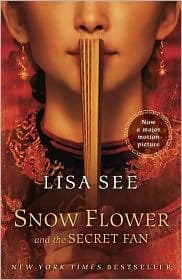
Snow Flower and the Secret Fan
by Lisa See
Guide by the Books of the Day editors · Updated · How we write our guides
A tender, heartbreaking novel about a lifelong friendship between two Chinese women, bound by a secret script and the rules of a rigid society, that asks what loyalty costs.
What Creators Say About Snow Flower and the Secret Fan
2 creators reviewed Snow Flower and the Secret Fan on YouTube between 2011 and 2014, with 3.6K views between them. Their opinions are their own; we picked these reviews, we didn't write them.
What It's About
Snow Flower and the Secret Fan follows Lily and Snow Flower, two girls in a rural village in nineteenth-century China who are paired as laotong, or old sames: a sworn bond meant to last a lifetime. The pairing comes with a private language of their own, nü shu, a women's writing system that men were largely unable to read, and the two use it to exchange messages on a fan. The story moves through their childhoods, the painful practice of foot binding, the arranged marriages that pull them into different households, and the slow strain that grows between them as their lives diverge.
Lisa See tells the story largely through Lily's account, so the reader hears her memories alongside the messages written in secret. That mix gives the book its distinctive texture: the intimacy of two voices speaking directly to each other, and the gaps that open when one of them is not telling the whole truth. The prose is clear and emotionally direct rather than ornate, and the pace favors domestic detail, family rituals, and the daily work of women's lives over plot machinery.
Reading it feels less like watching history from a distance and more like sitting close to two people trying to hold onto each other while the world keeps reshaping them. It rewards patience and a willingness to be moved, and it lingers after the final page.
Read this if you…
- love slow, emotionally driven historical fiction centered on women's relationships
- are curious about Chinese social history seen through private, everyday lives
- want a novel about friendship as intense as a romance, without a romantic plot
Skip it if you…
- need fast plot momentum or a clear mystery to keep you turning pages
- find scenes of cruelty toward women, such as foot binding, too painful to read
Key Ideas
- 1
Friendship as a binding, lifelong commitment
The laotong bond is not a casual childhood friendship. It is a contract between two girls that is expected to shape their whole lives, including marriage and family duties. The novel examines what it means to honor such a promise when circumstances push two people toward different futures, and how much of oneself a bond like this can demand.
- 2
A women's script as a hidden world
Nü shu gives the women in the story a space that men cannot easily enter or police. Writing becomes a form of resistance and intimacy at once. The book shows how a private language can preserve emotional truth in a world that otherwise leaves women little control over their own stories, names, or bodies.
- 3
Social rules written into women's bodies
Foot binding, arranged marriage, and the expectations of household rank are not background details here. They shape what the characters can want and what they can say. The novel presents these customs through their daily, physical consequences rather than as abstract history, which makes the cost to individual women concrete.
- 4
Memory, honesty, and the gaps between voices
Because the story alternates between recollection and secret messages, the reader must weigh what each narrator says against what she leaves out. The structure invites questions about how we remember people we loved, and how much we are willing to see when a friend's silence becomes a wall.
Limitations
Critics have questioned how much of the book's portrait of nineteenth-century Chinese village life rests on Western research and imagination, and some readers find the sentiment heavy or the emotional beats predictable. The middle stretches can feel slow for readers who want more plot. The novel also focuses on a narrow social class and region, so it offers a window onto women's lives rather than a comprehensive account of them. Readers who want historical precision should treat it as a novel, not a textbook.
Questions Readers Ask
- Is Snow Flower and the Secret Fan good for book clubs?
- Yes. It raises rich questions about friendship, loyalty, gender, and tradition, and the foot binding scenes often prompt strong reactions. Its moderate length and accessible prose make it easy for groups to read together, and the fan messages give discussion a concrete focal point.
- How does it compare to Memoirs of a Geisha?
- Both are Western-published novels set in East Asia that focus on women's constrained lives. Memoirs of a Geisha follows one woman's rise in a glamorous, specialized world, while See's book is more intimate and rural and centers on the bond between two friends. Readers who enjoy one often find the other rewarding.
- Published
- 2005
- ISBN
- 9789867088222
- Difficulty
- beginner
- Category
- Fiction
Book details and cover from Google Books.
Ready to read Snow Flower and the Secret Fan?
Get your copy on Amazon, or listen to it on Audible. We earn a commission if you buy through these links.