
The Way of Kings
Brandon Sanderson
Like The Black Prism, it builds a detailed magic system with clear rules and a large world, and it pays off careful reading with satisfying reveals about how its powers work.
Reader-supported: when you buy through links on our site, we may earn an affiliate commission. Learn more
We earn a commission if you buy through these links. Learn more
Find Similar Booksby Brent Weeks
Guide by the Books of the Day editors · Updated · How we write our guides
Brent Weeks builds a fantasy world where magic is sorted by color, then makes the fight over who holds the highest office as tense as any battle.
1 creator reviewed The Black Prism on YouTube between 2018 and 2019, with 65.3K views between them. Their opinions are their own; we picked these reviews, we didn't write them.
The Black Prism is an epic fantasy in which magic is literally a matter of color. Its wielders are sorted into the hues of the spectrum, and the most powerful rise through a rigid hierarchy built around a single office: the Prism, who is said to command all the colors at once. Weeks sets this structure against a court full of ambition, where the question of who will hold power next matters as much as who can fight. It is the opening volume of the Lightbringer series.
The book moves between several viewpoints and a fair amount of political scheming, and Weeks is willing to let plots run for chapters before paying them off. Expect a steady mix of intrigue, duels, and battlefield set pieces, with the magic explained through use rather than long lectures. The prose is brisk and chapters often end on a hook, which makes it easy to read quickly. Some readers will find the cast sprawling at first, since many characters have their own agendas and loyalties shift.
Reading it feels less like a quiet character study and more like watching a long game played in public and in private. The emotional payoff comes from patience with the politics and from characters whose choices carry real cost. If you want a fantasy world that rewards close attention to how power is organized, it has plenty to offer.
Color determines what a person can do and where they fit in society. The book treats this as a structure that shapes families, loyalties, and ambitions, not just a tidy set of powers. Watching characters push against their assigned place gives the magic system its emotional weight, and it makes the rules feel like something people argue about rather than footnotes.
The Prism's position is central to everything, so the story keeps asking what happens when a powerful office changes hands. Succession, legitimacy, and the cost of inheriting authority drive much of the conflict. Readers who enjoy stories where a throne or title is the real prize will find this focus satisfying and often unsettling.
Negotiations, betrayals, and alliances carry the same tension as sword fights in this book. Weeks often shows people manipulating each other several moves ahead, and the outcome of a conversation can matter more than a battle. This makes the court scenes some of the most gripping passages, especially for readers who like strategy.
The narrative juggles several storylines and ends chapters on sharp turns to keep momentum. This makes the book fast to read, but it also means some threads take a long time to come together. Readers who like patient, interlocking plots will get the most out of the design, while those who want steady focus may find it scattered.
Common criticisms include a sprawling cast, a slow opening that can test patience, and a plot that sometimes leans on reveals and convenient timing. Some readers find the characterization uneven, with certain figures more vivid than others. The book also ends as a setup for the rest of the series rather than a fully closed arc, so readers need to be willing to commit to the trilogy or beyond before they can judge it as a whole.
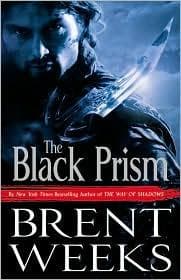
Book details and cover from Google Books.
Ready to read The Black Prism?
Get your copy on Amazon, or listen to it on Audible. We earn a commission if you buy through these links.
Brandon Sanderson
Like The Black Prism, it builds a detailed magic system with clear rules and a large world, and it pays off careful reading with satisfying reveals about how its powers work.
Patrick Rothfuss
Its carefully structured magic and sharp, observant prose will appeal to readers who enjoyed the precise, rule-based sorcery of The Black Prism's colour magic.
Scott Lynch
Its con-artist protagonist, clever schemes and gritty city setting match the morally complicated, plot-driven feel of Brent Weeks's world.
George R. R. Martin
Like The Black Prism, it follows rival factions jockeying for a throne, with shifting alliances and characters whose loyalties are never simple.