
To Kill a Mockingbird
Harper Lee
The obvious companion: a small-town trial that exposes a community's racism, told with the same moral gravity and attention to how ordinary people choose between fairness and fear.
Reader-supported: when you buy through links on our site, we may earn an affiliate commission. Learn more
We earn a commission if you buy through these links. Learn more
Find Similar BooksGuide by the Books of the Day editors · Updated · How we write our guides
A murder trial on a Pacific Northwest island becomes a slow reckoning with wartime prejudice, a buried love affair, and the small compromises a community makes to keep its peace.
2 creators reviewed Snow Falling on Cedars on YouTube between 2022 and 2024, with 2.7K views between them. Their opinions are their own; we picked these reviews, we didn't write them.
Snow Falling on Cedars is set on the fictional San Piedro Island in Puget Sound in 1954. A Japanese-American fisherman, Kabuo Miyamoto, is on trial for the death of a white neighbor whose body was found in the water near Kabuo's fishing nets. The local newspaper editor, Ishmael Chambers, covers the case, and the trial pulls him back to a teenage romance with Kabuo's wife, Hatsue. Guterson moves between the courtroom and the past, including the years before and during the Second World War, when the island's Japanese residents were uprooted and the islanders' old grievances took on new shape.
The prose is patient and lyrical, with long descriptive passages about the sea, the cedar forests, and the weather. The courtroom sections have the pace and tension of a legal drama, but the book is more interested in memory and character than in the verdict itself. Its structure asks you to hold several timelines and points of view at once, which rewards close attention and can feel slow if you want the plot to move quickly.
Reading it feels immersive and somber, closer to a long, careful meditation on guilt, loyalty, and prejudice than to a thriller. The emotional weight builds gradually, and many of its best moments are quiet ones.
The novel shows how suspicion of Japanese Americans did not end with the war. Old resentments, land disputes, and fear of outsiders continue to shape how the islanders judge Kabuo, and the trial becomes a test of whether the community can see past them.
Ishmael's recollections of his youth and his time at war color how he sees the case and the people involved. Guterson uses shifting memories to show that the past is never simply over, and that what people choose to remember affects what they do now.
The trial raises the question of whether a legal process can establish what really happened. The book is less concerned with a neat answer than with how evidence, testimony, and social assumptions combine to decide who is believed.
The island's sea, fog, and cedar forests are not decoration. Guterson uses the natural world to frame the characters' lives, emphasizing endurance, the pull of place, and the sense that human conflicts are small against the weather and tides.
Some readers find the prose overwrought, with repeated images of snow, sea, and cedar that can feel heavy-handed. The shifting timelines and multiple viewpoints can make the early chapters hard to track. The romance and the wartime sections are sometimes described as sentimental, and critics have debated how fully the book engages with the internment experience beyond its effect on the central characters. It is also a novel of its era, so its portrayal of 1950s island society may feel dated to readers who want a more contemporary perspective.
Book details and cover from Google Books.
Ready to read Snow Falling on Cedars?
Get your copy on Amazon, or listen to it on Audible. We earn a commission if you buy through these links.
Harper Lee
The obvious companion: a small-town trial that exposes a community's racism, told with the same moral gravity and attention to how ordinary people choose between fairness and fear.
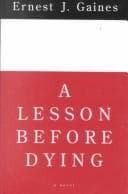
Ernest J. Gaines
Like Guterson's novel, it begins with an unjust trial and becomes a quiet, deeply humane meditation on dignity, prejudice and what a community owes its most vulnerable members.
Walter van Tilburg Clark
A tense Western study of mob justice and suspicion of outsiders, for readers who appreciated how Snow Falling on Cedars examines the gap between law and genuine justice.

Jamie Ford
Set in nearby Seattle, it pairs a tender cross-cultural first love with the forced removal of Japanese American families, echoing Ishmael and Hatsue's story with a warmer tone.