
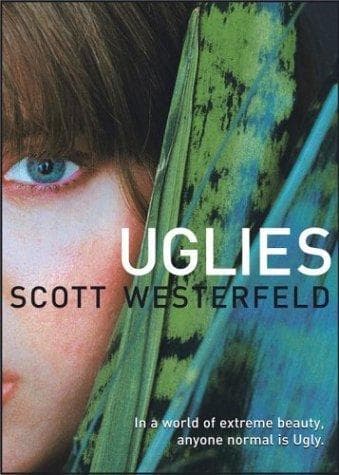
Uglies
Scott Westerfeld
Like Shatter Me, it follows a teenager in a controlled society questioning the rules imposed on her, with a fast pace and a sharp sense of what conformity costs.
Reader-supported: when you buy through links on our site, we may earn an affiliate commission. Learn more
We earn a commission if you buy through these links. Learn more
Find Similar Booksby Tahereh Mafi
Guide by the Books of the Day editors · Updated · How we write our guides
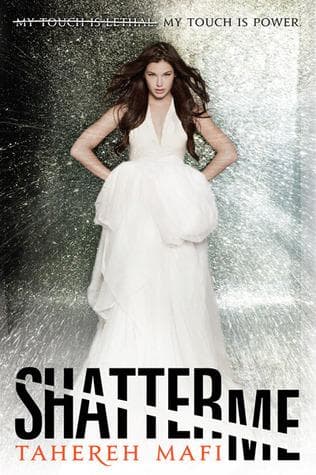
A fast, emotionally charged YA dystopia where the page layout itself mirrors a heroine who is terrified of her own touch, with a love story that drives much of the momentum.
2 creators reviewed Shatter Me on YouTube between 2013 and 2023, with 317.3K views between them. Their opinions are their own; we picked these reviews, we didn't write them.
Shatter Me is a 2011 young adult dystopian novel by Tahereh Mafi and the first book in a long-running series. Its narrator, Juliette, has been confined for a long time after her touch began to injure people. Her skin is lethal, and the regime that holds her wants to turn that danger into a weapon.
Mafi writes the book as if the page itself were under strain. Lines are broken, sentences are struck through, words are scattered across white space, and certain images return again and again. The effect mirrors Juliette's fractured sense of self, and it is the first thing most readers will notice. The prose is lyrical in short bursts but can feel repetitive when the emotion runs high for long stretches.
Reading it feels more like living inside a sealed, anxious head than watching a plot unfold. The chapters are short, the romance is intense, and the pace moves quickly through quiet, claustrophobic scenes. Expect a fast read that asks you to meet the book's style on its own terms, and expect the wider world to come into focus slowly rather than all at once.
Juliette's power is a physical threat that isolates her from everyone she might love. The book keeps returning to the fear of accidental harm, so touch becomes a source of dread rather than comfort. This gives the story a constant, bodily tension that drives many of its scenes and shapes how the heroine relates to others.
Much of the narration is Juliette's private assessment of herself, and it is often harsh. Her sense of being unworthy colors every decision, and the story tracks how she slowly begins to question those judgments. The emotional arc depends on whether her self-doubt can give way to something steadier, which is the heart of the character's growth.
Mafi uses typography, strikethroughs, and spacing to show a mind under pressure. Rather than only describing distress, the page enacts it. Some readers find this vivid and immersive, while others see it as a device that can overshadow the plot. Your reaction to this technique will strongly shape how much you enjoy the book.
The regime in the story treats gifted individuals as assets to be controlled and deployed. The worldbuilding is sketched rather than fully explained, so the political menace comes mostly through how characters are handled. The threat feels personal and institutional at once, which keeps the dystopian element tied closely to the heroine's experience.
Love interests offer Juliette a chance at connection and a sense that she might be wanted, but they also complicate her loyalties and choices. The romantic material is central rather than decorative, and it carries much of the emotional weight. Readers who came for a strong relationship thread will find plenty here.
The most common criticism is that the stylistic choices can feel gimmicky, and that repetition of images and emotional statements can slow the narrative. The political setting is sketched rather than explained, so readers who want a detailed sense of how the regime works may be disappointed early on. The love triangle is a frequent point of contention and can overshadow other threads. Later books in the series change tone and direction, so the first volume works best as a self-contained introduction.
Book details and cover from Google Books.
Ready to read Shatter Me?
Get your copy on Amazon, or listen to it on Audible. We earn a commission if you buy through these links.
Scott Westerfeld
Like Shatter Me, it follows a teenager in a controlled society questioning the rules imposed on her, with a fast pace and a sharp sense of what conformity costs.
Suzanne Collins
Its first-person heroine faces a brutal state system and high-stakes danger, with the same blend of survival tension and a growing sense of personal defiance.
Marie Lu
A dystopian story with alternating perspectives, a rebellious heroine and a romance tangled up with political secrets, suited to readers who enjoyed Juliette's struggle.
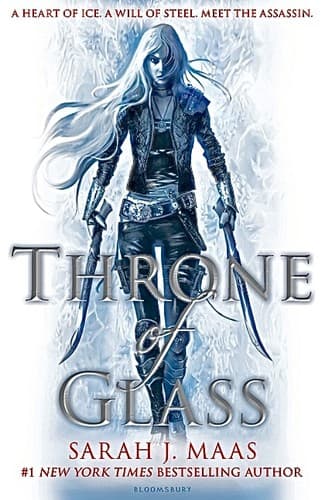
Sarah J. Maas
A heroine caught between danger and attraction, with a romance that develops alongside a larger fight against a cruel ruler, much like the emotional arc in Shatter Me.