
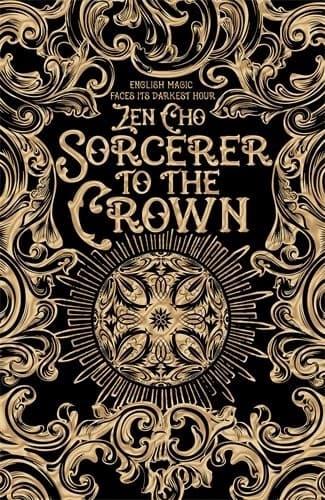
Sorcerer to the Crown
Zen Cho
Like Kowal's glamour, magic here is bound up with Regency society and propriety, but Cho adds sharp wit and questions about who is allowed to practise it.
Reader-supported: when you buy through links on our site, we may earn an affiliate commission. Learn more
We earn a commission if you buy through these links. Learn more
Find Similar BooksGuide by the Books of the Day editors · Updated · How we write our guides
A Regency-style fantasy that reads like Jane Austen, where a young woman's illusion-making skill becomes the tool for protecting her sister in a season of courtship.
2 creators reviewed Shades of Milk and Honey on YouTube between 2010 and 2015, with 2.4K views between them. Their opinions are their own; we picked these reviews, we didn't write them.
Shades of Milk and Honey is a Regency-era novel set in an England where glamour, a discipline of illusion-making, is a respectable accomplishment for young women. Jane Ellsworth is a skilled glamourist, and the story follows her through the social season as she and her sister Melody look for suitable husbands. Kowal writes in the manner of Austen: measured sentences, close attention to calls, dinners, letters, and who is saying what to whom.
The magic is more practical than flashy. Glamour has rules, training, and a physical cost, and Kowal treats it as a craft rather than spectacle. That restraint is part of the pleasure. The fantasy elements sit inside ordinary social maneuvering, and the stakes are small and personal even when they feel enormous to Jane.
Reading it feels like a gentle comedy of manners with a slowly building sense of unease. The pace is unhurried and the romance is understated. Readers who enjoy Austen's dry narration will likely appreciate the wit, though anyone expecting large set pieces or a fast plot may find it quiet.
Magic here is closer to painting or embroidery than to sorcery. Jane's ability depends on training, practice, and a real bodily cost, which gives her competence a tangible texture. Kowal uses this to make the fantasy feel like a profession, with its own standards and limits, rather than a source of easy solutions.
The novel treats courtship as a set of moves made under scrutiny: who calls on whom, what gets said at dinner, and which reputations can survive a misstep. Jane's problem is less a villain than a system that rewards appearance and money, and the book is sharp about how much a young woman has to manage without being able to say so openly.
Jane and Melody want similar things but have very different assets. Melody's beauty opens doors that Jane's talent cannot, and the friction between them is handled with honesty and affection. The relationship gives the story its emotional core and keeps the romance from overwhelming it.
Kowal's narration borrows the irony, precision, and gentle social observation of early nineteenth-century novels. The fantasy premise is introduced matter-of-factly, so the reader accepts it as part of the world. This blend is the book's main distinction and the reason many readers describe it as charming.
The pace is deliberately slow, and some readers will find the first half focused on social routine more than plot. The magic system is intentionally modest and is not explored in the kind of detail fantasy fans might want. The romance is restrained, which pleases some readers and frustrates others. The book is the first in a series, so some threads are left open, and its gentle tone and period conventions may feel familiar to readers who already know Regency fiction well.
Book details and cover from Google Books.
Ready to read Shades of Milk and Honey?
Get your copy on Amazon, or listen to it on Audible. We earn a commission if you buy through these links.
Zen Cho
Like Kowal's glamour, magic here is bound up with Regency society and propriety, but Cho adds sharp wit and questions about who is allowed to practise it.
Susanna Clarke
The book Kowal's is often compared to: English magic in the Napoleonic era, told in a period voice. Longer and darker, but rich for fans of historical magic.
Jane Austen
Anne Elliot, overlooked and older than her sisters, shares much with Jane Ellsworth. Austen's quietest, most tender novel about second chances and steady character.
Jane Austen
The direct inspiration: sisters, suitors, entailed estates and a mother eager to see daughters married, with misjudged men and slowly revealed true worth.