
Brave New World
Aldous Leonard Huxley
Like Scythe, it presents a society that looks calm and sensible on the surface while quietly reshaping what people are allowed to feel, value and fear.
Reader-supported: when you buy through links on our site, we may earn an affiliate commission. Learn more
We earn a commission if you buy through these links. Learn more
Find Similar BooksGuide by the Books of the Day editors · Updated · How we write our guides
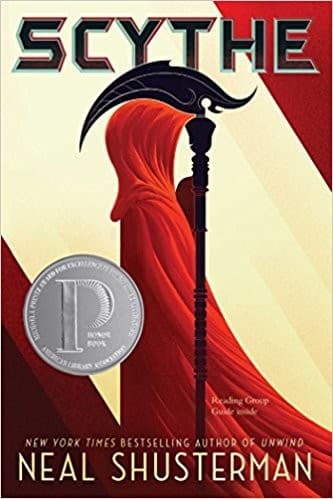
Shusterman's Scythe asks what a society owes its people when death itself has been engineered away, and it makes you feel the moral weight of killing as a civic duty.
2 creators reviewed Scythe on YouTube between 2019 and 2020, with 181.2K views between them. Their opinions are their own; we picked these reviews, we didn't write them.
Scythe is set in a future where disease, aging, and accidents have been largely eliminated and people can no longer die by ordinary means. An all-seeing artificial intelligence called the Thunderhead manages the world's resources, but it leaves one problem to humans: population. The answer is a licensed order of Scythes who glean people at random to keep numbers in check. Two teenagers, Citra and Rowan, are chosen to apprentice under a Scythe, and both would rather be almost anything else.
Shusterman writes in a clean, fast, mostly plain style that alternates between the two apprentices. Chapters are short, the pace is brisk, and much of the worldbuilding arrives through rules, rituals, and the everyday logic of an institution that has made killing respectable. The violence is present but not gratuitous. The bigger effect comes from the constant moral questions the characters are forced to confront about fairness, mercy, and who gets to decide.
Reading it feels like a young adult novel that takes its own premise seriously. It is absorbing and easy to finish in a few sittings, and it leaves you turning over questions about power, complicity, and whether a system can be trusted simply because it is efficient and kind-seeming. It works as a standalone opening and as the first book of a trilogy.
The premise is less about futuristic gadgets than about what happens to meaning, ambition, and fear when nobody dies of illness or old age. Shusterman uses this setting to ask why people would still work hard, take risks, or care about one another. The answer the book gives is uneasy, and it shapes how every character behaves.
Gleaning is not a crime here; it is a licensed, respected profession with rules and a code of conduct. The book is interesting because it treats the Scythes as people with pride and standards rather than as villains. That makes the moral discomfort more persistent, since the reader is asked to judge a practice the characters have normalized.
The Scythedom claims to serve the greater good and to act with restraint. Shusterman tests that claim by showing how power, rivalry, and personal ambition can grow inside a system built on high principles. The theme is less about evil people and more about how good intentions can slide into something worse.
The Thunderhead is benevolent and rarely intervenes, which makes it hard to resent. The book explores what it means to hand moral choices to a system that claims to know better, and whether humans lose something essential when they stop making hard decisions themselves.
Citra and Rowan are teenagers forced into adult responsibilities they never chose. Their friendship, doubts, and diverging loyalties drive much of the story. The emotional core is their struggle to hold onto their own sense of right and wrong while a system asks them to set it aside.
Critics often point to the young adult voice, which some readers find flat or repetitive, and to characters who can feel more like vehicles for ideas than fully developed people. The premise also asks you to accept a number of rules about gleaning and the Thunderhead that can strain credibility when you examine them closely. The middle stretch can feel slower than the opening. As the first book of a trilogy, it establishes much more than it resolves, so readers wanting a complete story may need to continue with the sequels.
Book details and cover from Google Books.
Ready to read Scythe?
Get your copy on Amazon, or listen to it on Audible. We earn a commission if you buy through these links.
Aldous Leonard Huxley
Like Scythe, it presents a society that looks calm and sensible on the surface while quietly reshaping what people are allowed to feel, value and fear.
Margaret Atwood
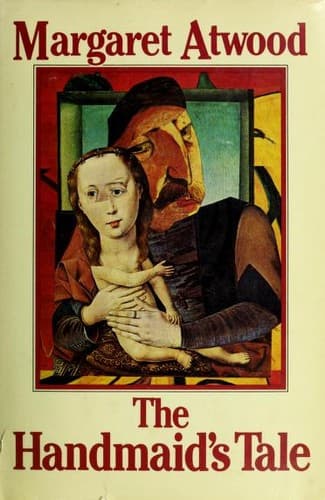
It shares Scythe's focus on how an orderly system uses rules and ritual to control people, and it keeps the reader uneasy with a narrator who notices everything.
Michael Dean, George Orwell
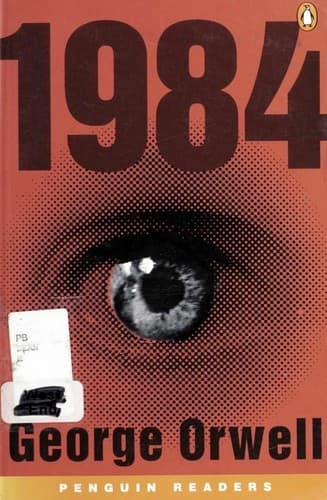
Its watchful, bureaucratic state and its questions about truth and obedience will appeal to readers who enjoyed the tense, surveillance-minded world of Scythe.
Suzanne Collins
A teenage protagonist, a state that stages violence as spectacle, and a fast, plot-driven narrative make it a natural next step for Scythe fans.